International

Home International

CSRD: EU revolutionizing corporate sustainability accountability and decisions

Introduction

The EU Corporate Sustainability Reporting Directive (CSRD), many years in the making, is revolutionary.  CSRD will replace the questionable smorgasbords of stand alone inserts on corporate sustainability profiles.  It does so by requiring firms to provide detailed framed descriptions on integrating sustainability into all facets of corporate decision-making.

This includes Scope 3 considerations on suppliers and end-users.

Most important, CSRD will become an international gold standard since all firms with significant business in the EU most submit CSRD reports.

In total, CSRD obliges disclosures on 13 different areas.

With CSRD, sustainability will be at the forefront in recording past and planning future endeavours.

Because it is highly complex to systemize descriptions of sustainability for every aspect of company activities and decision-making, the reporting process will be phased in and will organically evolve.

Beyond doubt, CSRD is a radical departure from ESG, which, for many companies, has become a public relations exercise.

CSRD overview

The Corporate Sustainability Reporting Directive (CSRD) became effective January 5, 2023.  It replaces the Non-Financial Reporting Directive (NFRD).  EU Members States had until by July 2024 to integrate CSRD into their laws.

CSRD goes much beyond NFRD by requiring the integration of risks, targets  opportunities and due diligence, relative to environment and people, in corporate strategies and business models.  This includes global financial activities and short- and medium term data to guide decision making.

Consequently, CRSD assists investors, civil society organizations consumers and other stakeholders assess and compare the sustainability performance of firms, based on standardized reporting.

These common standards pre-empt adhering to multiple voluntary criteria common to ESG.  The voluntary ESG boundless characteristics typically result in gaps in accountability.  This is especially so since ESG offers little or nothing on comparing annual sustainability performances.

Firms falling under the umbrella of CSRD are large companies previously subject to the NFRD; other listed companies;  listed small and medium size enterprises; large private European firms; and non-European corporations with significant business in the EU.

Companies outside the EU with significant business in the EU that must comply with CSRD stipulations are those having securities listed in a EU market; a huge EU subsidiary; and a large connection to an EU group such as a holding company, or a EU parent group. 

CSRD reporting

The essential information must cover quantitative, qualitative descriptions on 1) sustainability themes such as climate change; pollution; biodiversity and ecosystems; water waste and marine resources; plus resources use and circular economy; 2) social challenges including working conditions of a firm’s own workforce and workers in the value-chain, diversity, consumers/end users and community impacts; and 3) governance related to human rights and business ethics, all integrating Scope 3.

The technical reporting rules known as the European Sustainability Reporting Standards (ESRS) became law in December 2023.

Apart from general disclosures, all ESRS standards necessitate a materiality assessment.  Should such assessments not apply, an explanation must be provided.  Also, some reporting components are voluntary.

The draft ESRS standards were originally conceived by the European Commission with the technical advice of the group previously known as the European Financial Reporting Advisory Group (EFRSG). The EFRSG was a multi-stakeholder independent body including investors, companies, auditors, civil society, trade unions, academics and national standard-setters.

A hefty multi-stage series of EFRSG consultations followed and terminated in June 2023 with a 4-week public consultation.

Refinements of the EFRSG became the blueprint point of departure for an organic continuing process for improvements and clarifications that, among other things, optimize interoperability with International Sustainability Standards Board (ISSB) standards and the Global Reporting Initiative.  This facilitates matters for those companies that wish to comply with one and/or the other.  The EU aims for a seamless global compatibility and comparability framework on sustainability reporting.

Accordingly, not only will the evaluation criteria become an evolving/living universal foundation for rating the sustainability of companies, but they will also guide firms on how to improve their practices and standings.

A company has the option of having its draft CSRD report audited by a third party.  Material so collected must appear in annual reports and are subject to audit.

Penalties for non-compliance are determined by EU Member States.

Scope 3 inclusion sets CSRD apart

Scope 3 emissions dive into the entire value chain of a firm, from suppliers to end-users, typically representing the majority of emissions associated with a company.

The most flagrant example of the importance of including Scope 3 in corporate sustainability descriptions is that of fossil fuels, the dominant global warming sources.  It is estimated that 75% of total emissions, and 90% of a fossil fuel firm’s emissions, are attributable to the burning of these fuels.

Across all categories of firms, Scope 3 represents an average of 70% of company-specific emissions.

By including Scope 3 in a firm’s sustainability statements, at the very least, creates an incentive for companies to put emissions reduction pressure on suppliers and/or change certain suppliers.

Year-by-year reporting comparisons helps guide corporate investment choices.

Phased-in start timelines

Recognizing that extensive sustainability reporting could be especially burdensome for firms with less than 750 employees, the ESRS makes way for a phased-in reporting process.

The first phase of CSRD reports will begin in 2025, based on 2024 corporate performances.  This phase covers firms listed on an EU-regulated market that have more than 500 employees.

Large companies with less employees, listed as well as non-EU listed, must submit their first report in 2026, for the financial year 2025.  Such companies must meet two of the following criteria: over 250 employees, €50 million ($55 million) in turnover, €25 million ($28 million) in total assets.

Listed and non-EU listed small and medium size enterprises (SMEs), along with small and non-complex credit institutions, and captive insurance undertakings, will have the obligation to submit their CSRD reports in 2027, with respect to the 2026 fiscal year.  Plus they will have a 2-year opt-out option after that.

SME reporting standards are more supple and will be capped.  Draft versions of these less demanding standards are underway.

For non-listed SMEs that may have to submit sustainability information to banks, investors, customers and other stakeholders, the EFRSG conceived a simpler voluntary guide.

Non-EU companies with net revenues over €150 million ($165 million) annually earned in the EU; have a branch with either a turnover exceeding €40 million ($44 million); or a subsidiary that is a large company or a listed SME, will have to report on the sustainability impacts at the group level of that non-EU company, starting with the financial year 2028.  The first sustainability statement is to be published in 2029.  There will be different standards for such cases.

For EU firms not listed, such as an EU subsidiary of a non-EU headquartered company, reporting is obligatory for firms having two of the following characteristics in their profiles for two consecutive fiscal years.  These characteristics are 1) total assets €25 million ($28 million) as of December 2023; 2) net revenue €50 million ($55 million) as of December 2023; and an average of 250 employees.

The takeaway

The CSRD will be an effective international corporate sustainability crusader because it applies to all large companies and SMEs doing business in the EU.  Since the overwhelming majority of multinational large firms and SMEs with international markets conduct significant business in the EU, the CSRD impacts are world-wide.

The thoroughness of the CSRD process lends credibility to corporate descriptions of sustainability progress to-date and influences on a broad sphere of decision-making.  Without the CSRD portrait requirements on sustainability risks and opportunities, it is hard direct firms towards more sustainable practices.

The CSRD is much more than a compliance exercise with lofty ESG narrations.
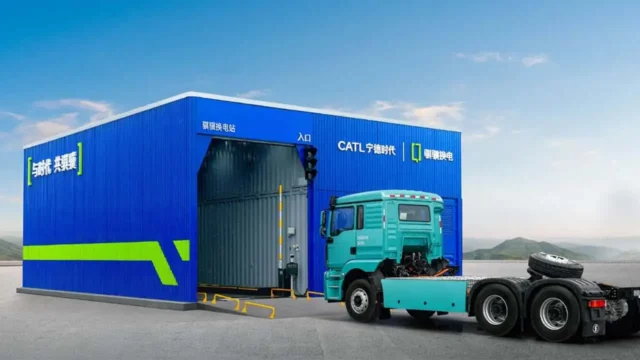
Oil & gas decline: Cracks where light gets in (not Canada)

Cleantech investments outpacing fossil fuels

Trump invaded Venezuela to assert greater global dominance via subordination of the world’s oil sector, and calls climate change a hoax.

Not as well-known, there is a global green revolution is in progress.

Two-thirds of the 2024 record of $3 trillion invested in energy sources was dedicated to cleantech such as renewables, electric vehicles (EVs), grid storage (batteries) and energy efficiency.

For 2025, estimates of global investments in cleantech range from $2.3 trillion to $3.3 trillion, according to BloombergNEF and International Energy Agency (IEA) respectively.

Renewables progress to-date

In 2024, renewables captured 92% of new global power capacity, adding 518 gigawatts (GW), a 15% increase, bringing total capacity to 4.44 terawatts (TW).  Asia, Europe and North America represented 85% of this achievement.

For the period 2010-2023, solar accounted for 80% of the renewables capacity increase.

Ironically, despite Trump, solar and wind were attributable to 94% of U.S. new power capacity installations in Q1 2025 plus an increase of 20% in domestic solar manufacturing. In California where gas is the principle source of power generation, gas consumption between January and August 2025 was 18% lower than for the same period in 2024.  In those first 8 months of 2025, California solar generation increased 17%.

China alone consistently represents 60% of global renewable energy capacity growth.

India is aligned with its 2030 goal for 2.5 times renewables growth.  This would make India the second largest market for renewable capacity expansion.

The EU renewables capacity is anticipated to amount to 71% of EU electricity generation by 2030.

On a global scale, by 2030, the International Energy Agency (IEA) 2025 annual renewable energy report foresees global renewable capacity to be 2.2 times that of 2022 levels reaching 4.6 TW.

The IEA optimistic scenario suggests 2.8 times growth is possible.

Whatever scenario prevails, it translates into renewable power capacity growing more during 2025 to 2030, than in the previous 5 years.  This would be more than China, EU and Japan existing power capacity combined.

Nevertheless, this would not be enough.  Global renewables investments would have to double between 2025 and 2030 to meet climate and energy targets.

EVs

For 2025. the IEA and Ember estimated EVs came in at more than 25% of the world vehicle market, 20 million units.  That’s a big jump from 2024, for which 20% of global vehicle sales were EVs, 17 million EVs.

This is so despite Trump and Canada’s Mark Carney being instrumental in slowing down EV sales in North America.

Of EVs manufactured in China, 95% are equipped with the more affordable lithium-iron phosphate (LFP) batteries, not requiring the expensive nickel or cobalt.  The absence of cobalt addresses ethical considerations.

Other global EV manufacturers are now transitioning to LFP batteries.  This is a critical development as the battery typically comes in at 40% of an EV’s cost.  Those that don’t get onboard for LFP batteries could experience a “Kodak crisis.”  The transition is a challenge since China now produces 99% of LFP batteries in the world.

Ford is preparing to shift to LFP batteries  and Tesla is already equipping its standard range Model 3 and Model Y with LFP batteries.

Volkswagen’s battery affiliate, PowerCo, is currently considering a shift to LFP.

Yet even LFP batteries may soon be history.  Sodium-ion batteries, which don’t require any critical minerals, are now market-ready.  Up to 2025, sodium-ion batteries have been used for energy storage, but in 2027 China’s CATL will be able to mass produce sodium-ion batteries at a cost less than the LFP versions.  EVs so-equipped will be more affordable than gas-powered vehicles and have good cold weather performance.

With advent of more attractively priced EVs, EV sales will take off as is already the case in China.

And China’s BYD is manufacturing highly attractively priced short-haul heavy duty battery electric trucks.

EVs displaced oil demand by 1.5 million barrels/day in 2024.   Petroleum demand for road transportation is expected to peak in 2027.  Peak passenger vehicle oil demand is projected for 2025.

For 2 and 3 wheelers, peak oil consumption has already been reached.

The exceptions are the U.S. and Canada which are not following global EV sales trends as both countries have abandoned regulations and other initiatives supporting EVs.

 Oil exceeding demand

Between January and September 2025, there was an oil glut or surplus of 1.9 million barrels per day, (b/d). The glut is expected to spiral up to an untenable 4 million b/d 2026.  Yet in September 2025, the supply increased by 5.6 million b/d more compared to the preceding year.

China will heavily influence global supply and demand as it represents 25% of global crude oil imports and, as of 2025, these imports peaked and started to decline.

Promising oil financial results will increasingly be harder to achieve because of a combination of oil prices at an all-time low, the least costly to exploit wells now being spent, and inflation/geopolitics.

For a profitable trajectory, the oil price/barrel must increase 5% annually, but this is not happening.  The breakeven oil price is now $47, and for oil sands, $57.

Renewables displacing natural gas market

As of 2025, U.S. liquified natural gas (LNG) export terminals comprise 8 currently operating, 8 under construction and another 10 approved, but not yet under construction.  In addition, the U.S. Dept. of Transportation Maritime Administration is reviewing 5 LNG export terminals.

Globally, there is a plethora of liquid natural gas (LNG) export terminals, approximately 230 are in operation or will be fully operational, within the next few years.

The gas demand side of the equation paints a different picture.

China, the world’s largest energy consumer, experienced a 24% decline in natural gas imports in 2024.  Massive deployment of renewables, together with politically motivated imports of Russian gas are behind this.

Japan, Europe and South Korea, which represent half of the world’s natural gas imports, are likely to undergo a 20% drop in LNG use by 2030.

Japan’s gas consumption has dipped 20% since 2018, peaked in 2024, and has since dipped 25% as a consequence of the recommissioning of nuclear capacity.

Japan resells more imported LNG than it uses, 40% of its imports, due to greater domestic renewables and nuclear capacity.   But with declining markets for natural gas, import markets being oversupplied and low prices prevailing, this economic direction is now considered high risk.

For the EU, which is entirely dependent on imports for gas supplies, gas consumption dropped by 20% between 2021 and 2024, likely peaked in 2024.  By 2030, based on 2024 levels, EU gas use may drop another 29% by 2030, and 67% by 2040.

The U.K., Germany and Chile reduced imports of gas and coal by 1/3 since 2010.

In the U.K., electricity generated by imported fossil fuels dropped from 45% to 25% in the last 10 years.

Bulgaria, Romania and Finland, formerly dependent on gas imports from Russia, have reduced gas imports nearly to zero.

Denmark has cut fossil fuel imports more than half.

Japanese LNG consumption peaked in 2014 after the Fukushima catastrophe,

In India, only 2% of power capacity stems from natural gas. The 32% of power generation from natural gas did not produce any electricity.  Consequently, 8% of India’s gas-fired power supplies have become stranded assets.

Pakistan, once a gleam in the eye of LNG exporters, has halted to LNG projects.   Pakistan has engaged in a radical transition to renewables.  During the last two years Pakistan installed 40 GW of solar.  This is extraordinary since its entire power generation capacity in 2023 was 46 GW.

Pakistan now has enough distributed solar power potential to meet all of its needs, including those of isolated communities. Distributed energy now furnishes more energy to the country than power from the grid.

China leading the way

China’s $942 billion investments in cleantech in 2024, was not far off from global fossil fuel investments in that year, $1.2 trillion.  If the value of cleantech production and services are included in China’s cleantech thrusts, it comes to $1.9 trillion in 2024, or 10% of China GDP.

In 2025, up to July, China’s cleantech export earnings were $120 billion, an amount which exceeded the U.S. earnings on fossil fuel exports, $80 billion.  For 2024, earnings from China’s cleantech exports were $180 billion, and U.S. fossil fuel exports, $150 billion.

And, with critical minerals being the pillars of a green transition, it’s hard to keep up China’s green transition.  In this regard, China is the world’s top refiner for 19 of the 20 top minerals and on average accounts 70% of refining market share.

China produces 80% of world solar PV modules and battery cells.

By the end of April 2025, China had 2.02 TW of installed renewables capacity, up from 1.83 TW reached in 2024.

As well, the impressive Chinese cleantech portrait includes 70% of global EV sales and 40% global EV exports. China’s EVs came in at 54% of domestic EV market share in 2025.

On public transportation, China had 48,000 km of high-speed rail at the end of 2024 and will add another 12,000 km by 2030, 50 subway systems with over 10,000 km of track, substantial light rail and had 542,600 e-buses, 84% pure electric, on its roads in 2022.

Heat pumps are massively being deployed in China, replacing coal for household heating.

The cumulative global impacts of these changes are phenomenal.

The result is China is single-handedly reducing global prices of cleantech, EVs and energy storage, thus changing global energy and economic paradigms.

Trump’s enemy within and Canada’s capitulation to fossil fuel sector

The Trump administration views cleantech as an enemy within.

However, the U.S. business community must plan for competitiveness in the global green economy now.  They cannot afford to delay a catch up after Trump becomes history.

Because the cleantech manufacturing in the U.S. entails commitments of billions to the green revolution, it cannot be reversed.  The timelines for construction of new manufacturing plants are measured in years, and supply contracts can span 5 years.

It is Canada that will be the big loser.

Canada’s “national interest” projects are exempt from other existing legislation, according to Law C-5 and supported by Budget 2025.  National interest projects announced so far include the following:

On November 27, 2025 a Memorandum of Understanding (MOU) was signed between Prime Minister Mark Carney and Alberta Premier Danielle Smith, for a new oil pipeline from Alberta to the British Columbia (BC) coast, even though the Canadian government-owned Trans Mountain pipeline from Alberta to the BC coast operates under capacity, cost C$50 billion in subsidies plus Canadian taxpayers contribute C$3 billion/year to operate it.

BC opposes the pipeline.

On December 2, 2025, at a meeting of the Assembly of First Nations in Ottawa, a resolution was adopted objecting to the new pipeline.  One should expect other protests to come from First Nations.

The hope is not strong for private industry promoters to step up to the plate.

The MOU also comprises:

Abolition of the regulation not permitting oil tankers along the BC coast:  At the December 2 Assembly of First Nations meeting, there was an unanimous rejection of ending the moratorium on tankers floating on BC coasts.

Weakening the Alberta the industrial carbon price, the Output-base Compliance System, that is supposed to increase the industrial carbon price per tonne from C$95 now, to up to $170 by 2030: Under the MOU, the parties will review a proposed on a carbon price of C$130/tonne on or before April 1, 2026.

An Alberta waiver from the clean electricity regulations that set limits on carbon dioxide pollution from almost all electricity generation sources, targeting fossil fuels: The regulations provide a mix of compliance flexibilities and do not prescribe specific technological solutions. The MOU exemption, strictly for Alberta, may translate into weakening of Alberta’s agenda to phase out coal-fired electrical generation.  This is nice since Alberta placed a 7-month moratorium on permits for wind energy projects ending February 2025.  Nearly half of the projects that were to go ahead before the moratorium have not been placed back on the table.

While both the clean energy regulation and industrial carbon price policies were carved out for Alberta, other provinces would ask for similar treatment.

The abolition of the cap on oil and gas emissions by 2030:  The cap would have allowed a 16% increase in oil and gas production by 2030-32, relative to 2019.  This magic would be achieved with the application of carbon capture utilization and storage (CCUS) which would supposedly result in a 35% GHG reduction by 2030, based on 2019 levels.  Yet not a single CCUS project has met goals for emissions reduction, costs and timelines.

For the new pipeline, Alberta must support the CCUS project of the Pathways Alliance, an Alliance of the 6 major oilsands producers:

An extension of the timeline on methane reduction, strictly carved out for Alberta.

Support for nuclear power in Alberta.

This MOU is a gift from heaven to Paul St-Pierre Plamondon the populist ethnocentric anti-immigrant leader of the Quebec independence party, Parti-Québecois (PQ).  St-Pierre Plamondon rejects being associated with a fossil fuel state. He considers federalism to be a malicious ideology. The PQ is in first place in the polls for the upcoming Quebec election around October 2026.

Steven Guilbeault, former minister of Environment and Climate Change Canada, afterwards minister of Canadian identity and culture, has resigned as a cabinet minister.

Other national interest projects are presented below:

1) Phase II of the LNG Canada export terminal on the BC Pacific coast;

2) construction of 4 small modular reactors (SMRs) at the Darlington Ontario site, despite SMRs being an unproven technology with poor economies of scale, such that a SMR cost is 5 times the cost of renewables to produce 1 GW of energy;

3) removal of a cap on oil and gas emissions irrespective of the above-mentioned MOU;

4) Pathways Alliance federal support, for a $16.5 billion project, whether or not there is a new oil pipeline;

5) less stringent greenwashing clause in the Competition Act, a regulation that had required companies backup their present and future emission reduction claims, and;

6) the Ksi Lisims Pacific coast offshore LNG project with the terminal to be constructed in South Korea and despite Indigenous opposition to the 800-kilometre Prince Rupert Gas Transmission to transport gas from the northeast BC northwest-Alberta northeast border.

Additional “national interest” projects concern critical minerals, a small northern Canada hydro-electric initiative and a possible BC north coast transmission project. The smorgasbord of projects constitute climate minuses cancelling out the few pluses.

In September 2025, Prime Minister Mark Carney “paused” the 20% for 2026 zero emission vehicle (ZEV) mandate.  The mandate refers to the percentage of ZEV vehicles each manufacturer must sell in a given year.  It had been set for 20% for 2026.

A July 24, 2023 announcement by the former Minister of the environment on the termination of fossil fuel subsidies had so many exemptions, it changed nothing.

The takeaway

To sum up, the oil and gas market will decline, while supply will go up.

The transition to cleantech is unstoppable because of the attractiveness of low prices and energy security that comes with reducing reliance on foreign fossil fuel imports.

Add to that, two-thirds of fossil fuel energy consumed is wasted, or does not contribute to the intended tasks.

Private sector and general public consumers will make the transition to clean solutions when there are price, choice and environmental advantages at the outset.  These transition attributes are enhanced by the absence of the volatility lottery of fossil fuel prices.

Many COP30 participating nations, subnational governments, cities, the European Parliament and others that want a roadmap for phasing out fossil fuel are planning the First International Conference on the Just Transition Away from Fossil Fuels, April 28-29, in Colombia.  This would leave the fossil fuel export nations out in the cold, while preempting blockage of a phase out roadmap.

As for Canada, the “national interest” projects, especially the federal-Alberta governments’ MOU, are mainly fossil fuel initiatives that head Canada towards stranded assets and national disunity.

Economic and environmental policies among most fossil fuel importing countries are aligned for a global green transition. The remaining nations will have to go with the flow.

COP29: China, Trump and the EU, each own way: Green vs. stranded fossil assets

Update Dec. 5, 2024 Chart of cargo containers with Chinese, US and European Union flags

For climate action, China has chosen long-term extraordinary innovation investments and scale to wean off fossil fuels.

The European Union (EU) is making progress for energy independence by 2027, though with some Chinese technologies.

Too, the UK and Brazil have set ambitious climate targets

The U.S., Trump administration will enhance paths towards stranded fossil fuel assets. The private sector will continue floundering on clean tech innovation and base performance on the short-term, quarterly reports.

Canada will emulate the U.S.

China

China spent $676 billion on clean tech in 2023, over double that of any other nation.

The good news is that China’s power emissions may peak by 2025, ahead of its 2030 target and the first annual decline since 2016. Should China succeed in plateauing emissions in 2025, the Paris Agreement target to halve emissions by 2030, could have been a possibility, if it weren’t from Trump.

This potential appears unimaginable since China accounted for 30% of global emissions in 2022, 11 billion tonnes.

China’s 2024 drop in annual emissions is anticipated to be about 7.2% or 8.2%.

The bad news are potential impacts on economies outside China regarding their clean tech manufacturers competing with much more affordable and more advanced Chinese exports.

There appears to be a pattern for China’s clean tech successes, high up front government support for research and development plus oversupplying the domestic Chinese market.  This formula has had mixed consequences.

China’s oversupply of clean tech industry typically achieves excellent economies of scale for offering low prices, but often results in profit declines, or even losing money, due to fierce competition in the domestic market.

To make up for the domestic low margins, prices for Chinese export markets are set to be both profitable and affordable choices in these markets.

European Union

The European Union, post Russian invasion of Ukraine, like China, has an agenda to sever dependence on fossil fuels. The EU aims for energy independence via a green transition by 2027.

While there was a 911-like spike in LNG imports from the U.S. immediately after the invasion, thanks to intensive emphasis on renewables, heat pumps, efficiency and other measures, EU gas imports were down 20% in 2023 and anticipated to peak by 2025.

Electric vehicle (EV) sales trends indicate a displacement in European oil consumption of 3.3 million barrels/day by 2030.

U.S. and Canada

Trump promised to pull out of the Paris Agreement.

Though the Inflation Reduction Act (IRA) and Bipartisan Infrastructure Law (BIL) have been outstanding in supporting the building of clean tech factories, EV purchases and the installation of home energy saving solutions, e.g. heat pumps, and solar panels, Trump wants to water down these milestone laws to suit his agenda.

Nonetheless, Trump will have to take into account that in 2023 the clean energy sector, including storage and EV charging, came in at 40% of U.S. energy jobs, with a 200% growth in that year.

The EV and battery projects announced and associated with the Inflation Reduction Act and Bipartisan Infrastructure Law will create of 201,900 jobs.  This sector could generate another 931,000 jobs.

Still, since the U.S. innovation gap with China widened even with the original IRA and BIL in place, expect that gap to grow when Trump unbelievably dilutes the legislation.

Trump referred government backing of the green economy as a “green new scam.”

Further contributing to the innovation gap, emission standards across all sectors will become more lenient.

Most notably, the overriding energy themes will be in “drill, baby drill,” for increasing oil and gas production.

What will Trump do when global fossil fuel demand peaks and U.S. clean tech jobs outnumber oil industry employment?

Sadly, Canada will follow in U.S., as always, and continue to be a fossil fuel exporting nation.  The next likely Prime Minister, Pierre Poiliève, will make sure of that.

UK and Brazil step up at COP29

At COP29, the UK pledged to reduce emissions by 81% by 2035 from 1990 levels and Brazil has prepared a comprehensive climate plan for a 59% to 67% GHG reduction by 2035 based on 2005 levels.

Electric Vehicles and batteries

China’s dominance in affordable electric vehicle (EV) and battery sectors are prominent examples of technological leadership and the Chinese oversupply business models.

At first glance, one might get the impression that China is an unlikely leader in these sectors.

Compared to Western economies, China has considerably fewer cars, vans, buses, freight and other trucks per 1,000 inhabitants at 231, very low compared to the U.S. 908; Canada 790; Germany 628; and  U.K. 600.

In part, low vehicle ownership in China is a consequence of being the global leader public transit. China has 46,000 km of high-speed rail, 50 subway systems with over 10,000 km of track, substantial light rail and had 455,000 e-buses on its roads in 2022.

Yet, with EVs having reached 53% of the Chinese vehicle market in September 2024, China represented 69% of the global EV registrations in 2024, up until October.  That’s because Chinese EVs are considerably more affordable than EVs in other countries.

China’s EV tech lead goes back to the 1990’s when China started to invest in EV research.  Back then, China had realized Chinese manufacturers of internal combustion engine vehicle (ICEV) models could not compete in export markets that are too overcrowded with competitors.

Thereupon, China developed a complex compilation of measures that pushed manufacturers towards producing New Energy Vehicles (EVs), the consequences being manufacturing of ICEVs became more expensive to produce and EVs less expensive.

Today, additional more compelling contributing factors to Chinese affordable EVs and batteries include government support for quickly getting over the time hump to get a return on investment. Overall, China’s EV financing covers innovation, development, minimizing production costs and start-ups.

China’s holistic long term vision has been a key to reducing EV battery costs.  China has invested more on battery research than all other nations combined and has a plethora of EV R & D programs.

Unimageable in Western economies, China’s CATL, the largest battery producer in the world, has 20,000 employees dedicated to R & D.

BYD, the largest EV manufacturer in China and second biggest battery producer, is a rare integrated EV and battery firm making most parts in-house.  These achievements are thanks to its 900,000 employees, of which more than 110,000 are R & D staff.

By early 2022, China accounted for 80 percent of global battery production capacity and controls, 75% of battery cell manufacturing, 90% of anode and electrolyte production, 60% of battery component manufacturing, and refining for more than half of global lithium, cobalt and graphite.

The battery technology-related savings have manifested into 95% of Chinese made EVs equipped with the less costly lithium iron phosphate (LFP) batteries.  LFP batteries are nearly exclusively manufactured in China.

Outside China, NMC batteries (lithium-nickel-manganese-cobalt-oxide) are typically used.

Compared to the NMC batteries, LFP batteries are cheaper to manufacture, have higher stability and are easier to recycle.

However, on performance, LFP batteries are not yet as good as lithium-ion ones.  But technological advances are in the process of closing the performance gap.

CATL and BYD alone, have 90% of the LFP market.

The results are battery costs are about 18% less in China than elsewhere.  This is critical for the pricing of an EV since the battery typically comes in at 40% of an EV’s cost.

However, until now, China’s LFP batteries have been destined for the more affordable entry level small low- to mid-cost models.

Hyundai is about to change all that, challenging China’s LFP cartel with an ultra-high capacity 300 Wh/kg LFP battery to be produced without Chinese components by end 2025.  Average Chinese LFP battery capacity is 200 Wh/kg.

If Hyundai succeeds in its LFP development plan, it will have a LFP battery with longer range than the typical NMC battery and would be the first LFP battery for high performance EVs.

If all goes according to plan, Hyundai may be able to produce affordable EVs with LFP batteries for both entry level and performance models, with impressive range and not subject to tariff barriers.

Also in progress, BYD is constructing a factory for third generation batteries, sodium-ion batteries, for scooters and micro vehicles, for starters.  BYD believes it could eventually produce sodium-ion batteries that will be less than the cost of LFP in the long term.

CATL is working on its improved new enhanced version of sodium-ion batteries for small and short range vehicles and China’s Chery will have a factory for the fourth generation, solid-state batteries.

As well, China’s EVs benefit from better economies of scale associated with oversupplying. Chinese EV manufacturers bet attractive pricing will create demand to meet supply.  Oversupply may be an understatement as China’s 200 EV manufacturers will have launched about 110 EV models by end 2024.  With all the competition, the average domestic profit margin is slim, averaging 5% in 2023, with some models sold below cost.

As indicated above, the profits are made on exports, while still maintaining a price advantage.  The BYD lineup average price is $30,000.

While the U.S. and Canada have imposed 100% tariffs on Chinese EVs, BYD is entering a new foreign market nearly every week, launches about 10 new models/year, and has an operating manufacturing plant in Thailand, plus facility projects in Mexico, Hungary, Turkey, Brazil and Indonesia.

These are important considerations, since the revenues of legacy automakers depend on global markets, not North America alone.

Legacy EV and battery manufacturers outside Asia cannot compete with the scale, pace of innovation and/or vertical integration of their Asian competitors.

Legacy firms depend on a plethora of external suppliers.

All the more for making the future of Western legacy automakers uncertain.

Tariffs and other barriers to affordable EVs

The U.S. and Canada 100% tariffs on China’s EVs, batteries and components will boomerang regarding a growing innovation gap and legacy automakers’ competitivity in critical global markets.

Not bothered by the United States-Mexico-Canada Agreement on trade, Biden and Trump intend to keep Chinese EVs made in Mexico out of the U.S.

Since the U.S. also has a trade agreements with Morocco and South Korea, many Chinese EV components investors had been planning to build plants in these countries.

A Trump reworking of the Inflation Reduction Act and Bipartisan Infrastructure Law, upon which the Moroccan and South Korean projects are premised, may see the aforementioned investments put on pause.

The Biden administration has already implied that Chinese EVs manufactured elsewhere would not be eligible for $7,500 consumer credit applicable to North American built vehicles.

Trump may put the final nail on this escape route.

The Trump additional 25% import tariffs for all goods from Canada and Mexico might apply to Canadian EVs and batteries too.

Contrasting the U.S. an Canada, the European Union has manufacturer-specific trade barriers on Chinese EVs, the EU varying tariffs range from 8% to 35%, on top of an existing 10% duty.  The highest tariff is aimed at SAIC Motor Corp, likely because the company is state-owned.

The EU doesn’t want to set the tariffs too high because the EU hopes to attract China’s manufacturers to invest in factories in the EU.  Production of Chinese EVs in Europe would remove tariffs and many Chinese EV manufactures are doing just that.

In addition to the BYD EV plants planned for Hungary and Turkey, other Chinese EV stakeholders, such as Geely vehicles and CATL, are engaged in major investments in Europe.

Even with the EU tariffs, many Chinese EV imports will still be somewhat more affordable than their European competitors.

The European Commission (EC) concluded that the average Chinese EV battery electric vehicle (BEV) imports cost 32% less than European EVs in 2023.

The 2024 prognosis is that China’s EV imports will come in at 25% of the European EV market share.

A large portion of these imports are Tesla, Dacia and BMW EVs.

Legacy automakers

The China advantage spells trouble for EVs produced by legacy automakers.

Battery projects in Western economies may be outdated before production begins.

Better technology and better prices cannot be stifled by protectionism.

Many legacy automakers have not gotten over the hump for a return on investment.

In June 2024, Ford claimed it loses $100,000 for every EV sold, its EV division lost $4.7 billion in 2023 and expected losses to hit $5.5 billion in 2024.  Thus, Ford plans to offer more of the more profitable plug-in hybrids.

Meanwhile, GM is mumbling about offering different battery chemistries and enlarging its plug-in hybrid lineup.

Volkswagen, the largest German employer with 10 factories in the country, is experiencing economic troubles too and looking to plug-in hybrids as the way forward.

In late October 2024, Volkswagen announced it will be shutting down 3 plants in Germany and cut wages by 10% for 140,000 employees.

Among other things, Volkswagen cited a drop in third quarter 2024 profit levels by 42% associated with lower then projected, or insufficient, EV sales, to recover the high EV transition costs; increased competition from European EV imports from China; and sharp declines in the Volkswagen market in China, where EV sales now exceed ICEVs.

Since traditionally 40% of Volkswagen sales have been in China, the deterioration of the Volkswagen market in China constitutes a heavy blow for the company.

Likewise, BMW and Mercedes Benz are dependent on the Chinese market, for 32% of global sales and 28% respectively.

This puts Volkswagen, Mercedes Benz and BMW in a conundrum.

Germany opposed EU tariffs on EV imports from China.

Oversupply in renewables

China is determined to reduce its dependence on fossil fuel imports while Trump aims to increase oil and gas production.

Accordingly, the China clean tech oversupply business model applies to the solar panel, and wind turbine sectors.

In the China’s wind sector, production overcapacity during 2022 and 2023 brought about low domestic market profit margins, while in the U.S. and Europe, the margins were 2 to 3 times higher.

Consequently, the Chinese turbines prices in Europe and the U.S. were lower than their European and U.S. competitors.  Six of the 10 top windpower producers are Chinese.

For solar panels, despite China’s mindboggling increases in the annual solar installation rate, China’s solar manufacturers were caught with an oversupply having exceeded China’s storage and transmission capacity.

In the coming two years, the Chinese solar modules manufacturing capacity may actually double world demand.

As is the case with the Chinese EV sector, excessive renewables competition within China has led to unprofitably low domestic prices, compensated by exports of more profitable and affordable exports.

Trump’s proposed 20% tariffs on all solar and wind imports from China could affect the prices of renewables in the U.S.

The takeaway

China, the EU, the UK and Brazil will accelerate weaning off fossil fuels, leaving the U.S., and Canada too, to increase the production of these fuels as the market for these fuels dwindles.

China will persist in manufacturing more clean tech, solar, wind, EVs, batteries/storage, plus electrifying its industries at levels greater than the rest of the world combined.

For the U.S., action on climate change to compete with China, will take inconceivable huge hits with Trump, while fossil fuel production will be administered steroids.  The U.S. clean tech private sector will continue to lag on innovation, constrained by an investment community which only understands  quarterly reports.  The U.S. will continue to lose ground on clean tech leadership.

Canada has much to lose, especially with Conservative Pierre Poiliève, the likely next Prime Minister, aligned with Trump on denial of climate change, increasing oil and gas production and many other issues.

The EU seeks win-win formulae with rational environmental and economic considerations.  The EU may show the way forward.

China, the EU, UK and Brazil will stand out as global climate leaders.

Nuclear debacles: UK, Canada, U.S., IEA and others

Canadian Darlington Nuclear Facility

Nuclear cost and time overruns

While nuclear power has gained interest as a low carbon solution, cost and time overruns have dampened this interest.

A Boston University study of 400 nuclear plants over 80 years indicated that, on average, building nuclear plants cost double the before construction projections, and 64% exceeded their timelines.  Average costs go 120% over original budgets, with the majority more than doubling.

High maintenance costs add to the unattractiveness of the nuclear option, in particular, the old reactors in the U.S. and France.

There is no shortage of examples of cost and timeline overruns.

In 2008, the U.K government made an announcement on its first nuclear power plant, since 1995, the U.K. Hinkley Site C.  Back then, the AP 1000 project was to be completed by 2020.

Subsequently, the project joint venture project group revealed it would not be completed until 2025. It ended up with a government bailout out and nationalization with a financing contribution from Chinese entities.  Construction began in March 2017, with a timeline of 10 years.  Now, 16 years after the original announcement, the project is still not completed.  And the termination date has once more been revised, this time to 2030, more likely 2031, and by then only one of two reactors will be operational.

The Hinkley Site C AP 1000 original budget was US$11.3 billion, but the cost has been upped to US$62.7 billion.

The Netherlands approved 2 nuclear reactors 1-1.6 gigawatt (GW) each, expected to run up to US$5.5 billion by 2030. The revised cost is US$13 billion.  There is no plan.

Like Hinkley Point Site C,  Vogtle and Summer in the U.S., Flamanville in France and Olkiluoto in Finland, were all financial and scheduling fiascos.

Many view China as an exception, with 43 GW of nuclear capacity added between 2012 and 2022, building 3 nuclear reactors per year for the past 5 years, down from 7/year between 2016 and 2018.  Notwithstanding, China’s nuclear path hasn’t been smooth.  Poised to triple renewables capacity by 2030 with the addition of 3,100 GW of capacity, 300 GW of new solar and wind capacity installed in 2023, perhaps China will give up on nuclear.

Decline of the nuclear sector

During the period of 2000 to 2022, nuclear capacity as a percentage of global power generation declined by half, from 17% in 2000, to 9% in 2022.

The global number of nuclear reactors peaked in 2022 at 438 and that dropped to 407 in 23 counties by mid-2023.  The average age of a reactor was 31.4 years in 2022.

All of the world’s reactors are losing money or are economically unviable.  The costs of storage, typically for 250,000 years, are not factored in, massively subsidized.

In absolute terms, the global nuclear power supply increased 4% in 2022 compared to 2021, trailing all other power sources.

The long lead time to arrive at the operational stage means that no nuclear plant for which the planning began in 2020 can be completed before 2030.  Too late for compliance with the Paris Agreement.

Successful nuclear programs

Successful nuclear programs in the U.S., France and South Korea were the object of major military involvement from the outset, including financing, technology requirements, safety, human expertise and weapons-grade enrichment of uranium.  Each of these governments selected a one GW-scale model.

These military programs ran 20 to 30 years, thus were replicable for commercial use.  This kept commercial reactor costs down. 

Nuclear boosters’ learning disabilities

The International Energy Agency believes nuclear capacity will reach a new record in 2025.

At COP28, the U.S. lead the way for a pledge involving 25 nations to triple nuclear power generation.

In the nuclear development pipeline, China plans comprise 22 GW, India 6 GW; Turkey 4.5 GW; South Korea 4 GW; and Egypt 3.3 GW.

Rowing against the current as well, in a big way, is Ontario, Canada.  More on Canada in the near last segment.

Small modular reactors, learning disabilities on steroids

Much hope for a nuclear renaissance lies with small modular reactors (SMRs), compact nuclear reactors.  But SMRs have yet to get beyond start-ups.  Not only are SMRs unproven, there are many competing designs, maybe 57.

SMRs, which produce less than 1 GW, cannot not achieve the necessary economies for a manufacturing scale, aren’t faster to construct, are inefficient and decommissioning is slow plus expensive.  At best, one would have to wait until 2030 for scaling up SMR tech to be commercially viable.

Most governments, with the exception of China and Canada’s Ontario Premier, Doug Ford, don’t see the case for SMRs.  After all, the costs are five times that of an onshore wind farm or solar project to produce the same amount of energy.

Notwithstanding SMRs are a failed technology, the U.S. government is pouring billions into SMRs. The U.S, has yet to have an operational SMR.

The U.S.-based NuScale had planned a SMR project for Oregan.  It pulled out due to cost overruns.

The Utah Associated Municipal Power Systems (UAMPS) too, decided to back the construction of NuScale SMRs, a six-reactor 462 MW SMR project.  Utah townships pulled out after the costs, upped to US$89 megawatt hour (MWh) from the original estimate of US$59/MWh, proved to be too high and timeline target for 2030 didn’t seem realistic.  This, despite U.S. government providing US$1.4 billion.

Canada’s learning disabilities

Ontario, Canada

Of the 19 nuclear commercial reactors in Canada, 18 are in Ontario.

In Summer 2023, the Doug Ford government announced it would double the size of the Bruce Power nuclear station on the eastern shore of Lake Huron, currently the world’s largest.

At the Pickering station near Toronto, the refurbishing of the first two of four unit A reactors went C$1.5 billion over budget, leading to abandoning the refurbishing of the other two Unit A reactors.  In 2020, Ford had said Pickering would be shut down by 2025.

Nevertheless, on January 29, 2024, the Doug Ford administration announced it would refurbish all four Pickering Unit B reactors.  The government’s expects the refurbishment to cost C$19.4 billion with completion in eleven years, but that amount is uncertain.

Ontario Power Generation is currently reviewing the extension of the Pickering operating license until December 2026.  If approved, the refurbishment would begin thereafter.  The Ford government intends to start refurbishing the Pickering B plant after 2026.  As a result, Ontario plans for decommissioning Pickering put on hold prime waterfront real estate for 30 years.

The Ontario Darlington station on the north shore of Lake Ontario cost C$14.5 billion, 4 times the originally estimated amount, with the timeline from planning to operation 1981 to 1993, 12 years.  The Darlington plant cost overruns led to the Ontario Hydro equivalent to bankruptcy in 1988.  Debt retirement costs have jacked up Ontario electricity rates.

The Darlington 4 reactors are now being refurbished with C$12.8 billion budgeted.  To cover the costs of the refurbishing, Ontario would need to have an electricity tariff of 13.7 (24.4) cents per kWh.

Divulged in Summer 2023, the Darlington site, which has one SMR under construction, will get 3 more SMRs.  Never mind SMRs are several times more expensive than renewables.

In the interim, until the expanded Ontario nuclear network is completed, the fossil fuel, natural gas, will be called upon to fill the supply gaps.

Lastly, Ontario still does not have secure nuclear waste storage sites.  Currently, the province’s nuclear waste is stored in open pools or in casks in commercial grade warehouses alongside Lake Ontario.

New Brunswick, Canada

In New Brunswick, Canada, the only functioning Canadian nuclear station outside Ontario, the Point Lepreau CANDU reactor, commissioned in 1983, underwent a refurbishment, beginning March 2008.  The refurbishment was supposed to cost C$1.4 billion and take to 18 months to complete.  However, the time overrun went 3 years longer, to 2012, at a cost of another C$1 billion contributing to NB Power’s C$4.6 billion debt.  Not daunted by empirical evidence, a second refurbishment is being considered for 2041.  This assumes ongoing problems of unpredicted and planned outages and C$1 billion in lost production and repairs will be resolved.

Quebec, Canada

The current Coalition Avenir Québec government is considering re-starting operations of its Bécancour nuclear plant Gentilly-2, shut down in 2012.

The hic in Quebec energy action plan for 2035 is that it assumes optimum electrification without a plan for reducing demand.  In 2021, Quebec consumed 23,000 kilowatt hours (kWh) per person while in France it was 7,000 kWh.

The takeaway

The global nuclear sector is mostly stagnant.  Typically, since 2018, there are 3 new plants per year.

Also, it doesn’t help that plants must run 90% of the time to earn revenues.  Most nuclear technologies are not amenable to changes in required production output, up or down.

It appears Ontario Canada, China, the U.S., the U.K., the IEA and a global nuclear cult are the last of the nuclear faithful, no matter what the facts are.  And China is not too sure.

The nuclear faithful will find this article misleading.

China’s electric vehicles go global: Protectionism won’t work

BYD Seal

Electric vehicle (EV) imports from China will account for 25% of EV sales in Europe in 2024.

Now China-based EV and battery firms are on the verge of coming to North America and there is no such thing as batteries without content from China.  This is the context for U.S. protectionist legislation.

What follows is a most comprehensive plethora of reasons on why 1) protectionism won’t work and 2) North American and European EV manufactures are vulnerable to disruptive market threats from inexpensive Chinese EV alternatives.

Shell, two CEOs, two cultural shifts: Green transition to business-as-usual

Updated, October 27, 2023

New vison, clean tech acquisitions and fossil fuel divestments

Under the leadership of Shell CEO, Ben van Beurden, 2014 to 2022, it really seemed that Shell was taking climate change seriously.  In 2017, Ben van Beurden purported that the “biggest challenge” for the company was to acquire public acceptance.  He asserted “If we are not careful, broader public support for the sector will wane.”

Perhaps, the most astonishing component of the new orientation was the Ben van Beurden plan to divest of US$30 billion of assets.  Amazingly, Shell had decided to sell its US$8.5 billion in assets in Canada’s oil sands.

Likewise encouraging, Shell assured it would comply with the Paris Agreement; concluded peak oil would occur in the next few years; set a goal to cut its carbon emissions by 20% by 2035, 50% by 2050, issued a joint statement with lead investors for Climate Action 100+  representing US$32 trillion in assets, to deliver on the Paris Agreement; withdrew from the far right climate denial organization, the American Legislative Exchange Council; and advised the Canadian Association of Petroleum Producers (CAPP) that the CAPP climate and energy-transition-related policy positions constitute a “misalignment.”

The flip side to the disavowal of traditional paths was the awesome pro-active Shell clean tech firms investment spree, entailing clean tech acquisitions, mergers and partnerships.  Many on the lengthy list of new clean tech can be found in my 2019 article.

In 2018, Martin Westelaar, then head of Shell’s gas and new energy division, described Shell’s green transition as one of modestly beginning with a budget of US$1-2 billion year up to 2020, to prepare the case for shareholders to get on side for a doubling of such investments to US$4 billion annually after 2020.

In 2019, Westelaar gave reason to believe that the Shell acquisition of First Utility, the largest electricity supplier in the UK, was a steppingstone for entry into a global solar market, presuming solar would become the biggest source of low carbon energy.

Westelaar had exclaimed “electrification is the biggest trend in energy … it’s easier to grow in growing markets”.  And Shell wants to play a lead role in the new energy landscape to become “largest electricity power company in the world in the early 2030s.”

In April 2019, Brian Davis, formerly Global Vice President, Energy Solutions from 2016 to 2020, vaunted the Shell vision of a global transition to electrification, including electric vehicles, batteries, microgrids.   

February 11, 2021 press release officializes green transition

Boasting Shell’s new vision as an oil and gas industry energy transition leader, in a Shell February 11, 2021 media release, Ben van Beurden, is quoted as saying “Our accelerated strategy will drive down carbon emissions and will deliver value for our shareholders, our customers and wider society.”

This announcement indicated Shell that Shell’s corporate-wide carbon emissions peaked in 2018, its oil production peaked in 2019 and the firm would pursue divestments averaging US$4 billion a year.  Doing so, he portrayed Shell becoming less vulnerable to oil and gas prices.

Ben van Beurden, depicted the Shell makeover crystal clear in the dispatch: “We must give our customers the products and services they want and need – products that have the lowest environmental impact.  At the same time, we will use our established strengths to build on our competitive portfolio as we make the transition to be a net-zero emissions business in step with society.”

Accordingly, the communiqué implies the integration of environmental and social ambitions.

This integration proposal comprises linking 10% of the bonuses of directors to lowering carbon emissions; US$2-3 billion annually for Renewables and Energy Solutions to become a world leader in clean power as a service; and 500,000 charging stations by 2025.

New CEO, “ruthless” transition to oil and gas prioritization and clean tech fire sale

All changed when Wael Sawan became the CEO of Shell in January 2023.

Beginning June 2023, Wael Sawan implemented corporate reorganizational changes to put the emphasis on the “ruthless” approach to maximising value, specifically “absolutely committed to our upstream business.”  This new approach entailed a shift priorities in favour of oil and gas production and scaling back renewables.  Sawan prescribed a ‘fundamental cultural shift” critical to re-establish investor confidence.

That meant that only green power projects with high returns or in sync with the value chain of Shell would get corporate support.  Sawan even had the audacity to declare that these changes would benefit schoolchildren in countries like Pakistan!

To greenwash  the environmental consequences of the makeover, Shell announced it had not abandoned its goal to becoming a net-zero company by 2050.

But the bluffing in that message became obvious in September 2023 when news broke out that Shell aimed to divest its majority or all shares in Sonnen, a major competitor with Tesla in the energy storage sector.

Just prior to the revelations on Sonnen, Shell sold Octopus Energy, a German and UK retail energy business, meaning 1,800 employees were no longer with Shell. 

Flurry of resignations

In June 2023, Thomas Brostrom, who had been the Shell, VP for renewable generation, and head of offshore wind, quit after his position was downgraded to a new regional role.  Brostrom had been Ørsetd North America wind chief until joining Shell in 2021.  The Danish Ørsetd is the world leader in offshore wind development.

Also in June 2023, Shell’s power trader, Steffen Krutzinna resigned over what for him was “heart-breaking,” to the effect that Shell was putting short-term profits over social and environmental responsibilities.  He posted on LinkedIn “I perceive that as a pivotal shift in corporate values.” “I don’t want to be part of that, so I’m out.”

Not long after in July 2023, Melissa Reid, who had been Shell’s UK offshore wind manager chief, left too.  She had led Shell’s successful bid for the ScotWind seabed license.

A year earlier, Caroline Dennett, a consultant for an independent agency Cloutt, terminated her working relationship with Shell with an open letter to Shell executives and its 14,000 employees regarding Shell’s “double-talk on climate.”  Expressing her disgust, “…they are not winding down on oil and gas but planning to explore and extract much more.”

Aside from the aforementioned resignations, anxieties of Shell staff still with the company were reflected in posts by employees.

Virtual “A Conversation with Wael”: Staff pacification

Responding to internal anxiety over Shell’s recentering Shell’s goals, Wael Sawan planned a virtual meeting with staff,  “A Conversation with Wael” for October 17, 2023.  The advance promotion advised the meeting would “deepen our conversation on the opportunities and dilemmas we face as we position Shell to win in the energy transition.”

The Wael Sawan October 17, 2023 message confirmed Shell believes in “urgent climate action” notwithstanding the about-face.

Sawan assured Shell staff that Shell is simply modifying the strategy delivery.

He explained this second cultural shift as the challenge of the affordability of clean tech.

These are lies.

Major job cuts in low carbon unit, not strategy tweaking

The Wael “conversation” sequel on tweaking the strategy, came quickly, on October 25, 2023, when Shell announced that it will cut 200 jobs in its low carbon solutions unit, originally known as Shell New Energies.  Some of these jobs will be transferred to other corporate divisions, and an additional 130 position roles are “under review” in 2024.  Ergo, anxieties among employees will go up many notches.

Ideological shift, not clean tech affordability or potential, nor belief in urgent climate action

Renewables are now the least expensive sources of power and 90% of the sources of global annual newly installed electrical generation capacity has been renewables since 2022.

Sawan conveniently ignored the growth curve of electric vehicle (EV) sales to-date, EVs having reached an inflection point.  EV sales in China and EU may reach 50% of the market in 2025.  In North America, there is an ongoing tsunami of investments in EV and battery production facilities because EV demand exceeds supply.

Most automakers are committed to a full transition of their respective lineups to electrification.

This is the backdrop for the year 2022 being an historic year.  For the first time ever, investments in the green transition, US$1.7 trillion, exceeded those unabated fossil fuel supply and power at US$1 trillion.

Since 2021, the growth of investments in clean tech have outpaced those of fossil fuels three-to-one

The greenwashing is self-evident.

The takeaway

1) It is possible for a fossil fuel company to become a diversified energy company committed to the Paris Agreement.

2) The old guard fundamentalists remain in denial and, guided by the rearview mirror, believe the future must be like the past.

3) Powerful shareholders having the characteristics described in item #2, plus addiction to quarterly reports, are among the biggest hurdles to a fossil fuel firm migration to clean tech.

Critical minerals: Global and Canadian portraits

Updated May 1, 2023, Pure lithium

Global developments in a nutshell

For the rest of this century, most of the world’s needs for critical minerals can be accommodated from mined resources in democratic countries and 95% recycling of battery content.  China and the European Union have policies in place to optimize electric vehicle (EV) battery recycling.

Australia towers above the rest as a source of half of global lithium resources.

Canada and the U.S. provide financial support for advancing critical minerals activities.

Howbeit, China’s critical mineral importation practices are admittingly problematic.  The antidotes are critical mineral deposits and policies of democratic counties plus EV manufacturers being sensitive to such concerns as integral parts of their public DNA image.

Too, South American lithium extraction practices pose large-scale unresolved environmental perils.

China: Largest emitter to green gamechanger, but…

China climate emergency global influence

China is several years ahead of other developed countries on the migration to a green economy, in clean technology production capacity, massive market penetration and green investments. China already has an extraordinary global green export potential. China leads in renewables, electric vehicles and battery production, incrementally regulating plastic solutions, high-speed rail, private clean tech investment, government environmental support and green bonds.  China’s concurrent climate actions are gamechangers destined to have huge global competition impacts on energy, economic, transportation, industrial and other paradigms, perhaps more so than the climate crisis.  But there are simultaneous contradictions. China is the world’s largest liquified natural gas importer, once again ramping up coal production and certainly not a leader on human rights.

Putin losing energy war: European climate emergency

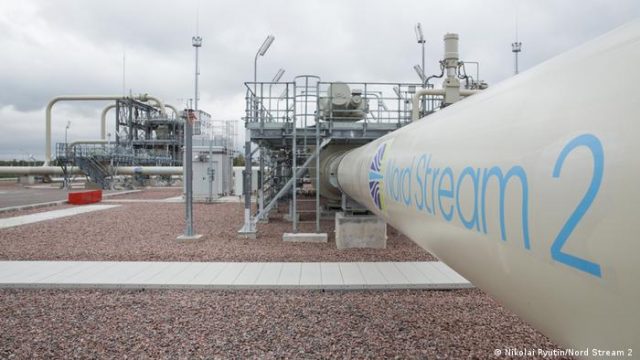
Nord Stream 2 gas pipeline padlocked

Putin’s war has created an electroshock for Europe because it depends on fossil fuel imports for 60% of its energy, one-third of which comes from Russia.  Organically evolving European Union (EU) plans target 2027 for a massive and rapid transition to a green economy and energy independence.  Renewables, electric vehicles, clean technologies and energy efficiency will all play major roles in the creation of fast-forward paradigms for global emulation.  For the immediate, by the end of 2022, EU plans entail cutting Russia gas imports by two-thirds, substitution fuel sources plus ramping up renewables and energy efficiency.  These EU plans will be devastating for the Russian economy.  Russia needs European oil and gas revenues more than Europe needs these fuels.

Renewables, not gas, for Southeast Asia: Vietnam

Rooftop solar surge

The global natural gas industry, including that of Canada, has high hopes for weaning Southeast Asia from coal dependency.  Concurrently, low-cost renewables are swiftly changing the electrical power landscape in this part of the world.  Vietnam, caught in the squeeze between the two competing types of power sources, is favouring a clean energy metamorphosis.  The country now has the greatest installed solar energy capacity in Southeast Asia.  Government policies are both supportive and handicaps.  Grid infrastructure is woefully insufficient.  International support is critical to solidify the transition to clean energy.

Shipping sustainability: Oxymoron but paradigm to change

Container ship powered by dirty oil, updated April 27, 2023

Cargo and cruise ships represent 2.6 percent of global emissions and could reach 17 percent by 2050.  Nearly all these ships use cheap dirty heavy oil with high sulphur content.   International regulations aren’t helpful as they are lax and difficult to enforce.  Fortunately, Maersk, the largest container shipping company in the world, has created the conditions for an industry-wide sectoral revolution by setting 2040 as a target to achieve net-zero emissions, requiring all new vessel acquisitions be carbon-neutral and has already ordered 12 green methanol powered ships.  Concurrently, many new technological solutions are under development including ones associated with electric, wind and biofuel energy sources.  Stringent territorial waters and docking standards, Maersk technological catalysts, financing of emerging remedies, could advance clean technologies quickly.  Finally, open-loop scrubbers are widely used as a band-aid to remove sulphur from the exhausts to transfer the pollutants into the sea.

Fossil fuel sector contrasts: Green transition engaged, but not enough

Not all fossil fuel companies the same

Not all Big Oil firms are alike. Some are engaged in a rapid green migration, many are sitting on the fence and others are still in climate denial. Meanwhile, the value of fossil fuel assets are declining but the industry is camouflaging this by selling assets and debt financing to keep shareholders happy.

Canada’s Green Economy needs public investment

Both the Intergovernmental Panel and Climate Change and the International Energy Agency have concluded that public policies, rather than the availability of resources, are among the key determinants for a shift from fossil fuels to clean technology development and deployment.  Public banks are critical agents for change along these lines.

Public financial institutions and the green economy around the world

Starting with some of the largest public banks, in July 2013, both the World Bank and the European Investment Bank announced that they will limit to the bare minimum investments in fossil fuel projects, while shifting the lion’s share of their respective energy investments to renewables.