Political landscape
No Canadian government has ever met its own climate targets. It seems that whenever it comes time to implement policies for achieving such goals, backtracking and greenwashing take precedence.
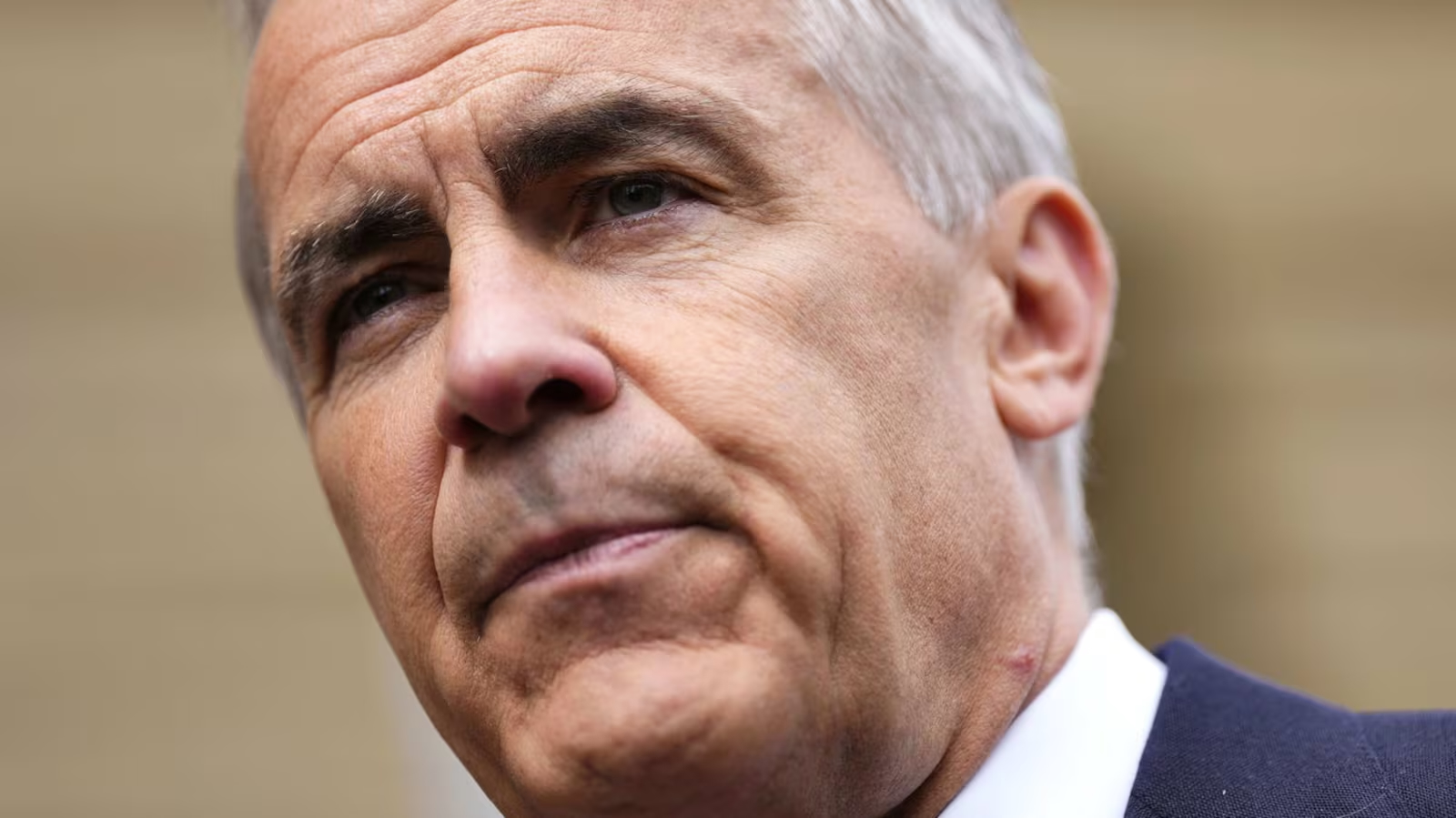
The Carney administration supports oil and gas exports and has done away with Trudeau climate initiatives.
But this hasn’t changed much.
For example, the Trudeau era cap on oil and gas emissions allowed increases in oil and gas production up to 2030 that magically entailed a reduction of emissions, thanks to ineffective carbon capture and storage technologies.
The Trudeau government sanctioned the Trans Mountain pipeline expansion and the Bay du Nord Newfoundland offshore oil projects.
And it broke its promise on ending oil and gas subsidies.
On culture, Carney dropped existing policies to fend off Trump’s tariffs, but Trump imposed new tariffs anyway on what he called “nasty” Canada.
Carney before becoming Prime Minister
Previously, Mark Carney, was climate champion and said that some sectors not adapting to climate realities will disappear.
In 2019, while Governor of Bank of England, Carney made a statement that we must reduce CO2 by 45%, relative to 2010, in the next decade, to achieve carbon neutrality by 2050.
However, once Prime Minister, at a press conference last July 16, 2026, Carney explained that he was easing climate regulations in order to attract investments that will reduce our emissions.
Carney’s oil and gas strategy
Mark Carney wants to build a new pipeline, the West Coast Oil Pipeline, with 90% of the costs to be assumed by the Canadian government. On August 1, 2026, the Canadian government gave notice that it will build the West Coast Oil Pipeline as a “national interest” project under the Building Canada Act. This will allow the pipeline project to proceed without adequate environmental assessments.
Never mind that the Canadian government-owned Trans Mountain pipeline, from Alberta to the BC coast, operates under capacity, cost up to C$50 billion in subsidies, plus Canadian taxpayers contribute C$3 billion/year to operate it.
On July 2, 2026, Carney and BC Premier David Eby agreed to accelerate the development of four major liquefied natural gas export projects as part of a broader agreement aimed at expanding energy exports and strengthening the country’s trade infrastructure. The Canada-British Columbia Cooperative Prosperity Agreement identifies four liquified natural gas (LNG) export terminals, namely LNG Canada Phase 2; Ksi Lisims LNG; Cedar LNG; and Woodfibre LNG, as priority projects.
Further on LNG projects, the Carney administration is in negotiation to support a $30 billion Marinvest LNG project on the Quebec St. Lawrence west coast hooked up to a 1000 km gas pipeline for transporting shale gas to the 3 floating LNG production terminals at the port. The plan entails a $10 billion loan to First Nations to make it appear as a First Nation project with a name change to Kino Aski to highlight First Nation partnership on the corporate website.
Most of the projected output of Canada’s LNG export terminals do not have any anchor markets. Worrisome, since projects are planned over multi-decade prospects.
Oil and gas imports plateauing and set to decline
Never mind, two-thirds of the 2025, $3.3 trillion in global investments related to energy was dedicated to cleantech and infrastructure, $2.2 trillion, the rest to fossil fuels. The $2.2 trillion comprises renewables, electric vehicles (EVs), grid storage (batteries), heat pumps, energy efficiency and much more.
Never mind that Carney’s quadrupling of Canada’s military budget by 2035 to comply with Trump’s military target of 5% of GDP for foreign countries, sabotages Canada’s financial potential to buttress a cleantech sector. For a developed country, Canada is extremely weak in cleantech.
Never mind China will heavily influence global oil supply and demand as it represents 25% of global crude oil imports and, as of 2025, its oil and diesel consumption started to decline.
Never mind, in the EU, which is entirely dependent on imports for gas supplies, gas consumption dropped by 20% between 2021 and 2024, likely peaked in 2024. By 2030, based on 2024 levels, EU gas use may drop another 29% by 2030, and 67% by 2040.
Never mind, China, the world’s largest energy consumer, experienced a 24% decline in natural gas imports in 2024. Massive deployment of renewables, together with politically motivated imports of Russian gas are behind this.
Pakistan now has enough distributed solar power potential to meet all of its needs, including those of isolated communities. Distributed energy now furnishes more energy to the country than power from the grid.
From 2021 to 2025, Pakistan shifted from generating 3% of electricity from solar, to 22%. This led the government to cancel LNG cargoes scheduled for 2026-2027 and seek to renegotiate long-term contracts.
Regardless of all the warning signs for declining LNG imports, LNG exporters are planning to increase production in the US in particular. LNG exports will grow 3 times faster in 2026 to 2030 compared to 2021 to 2025.
EVs
Never mind, Carney abolished the zero emission vehicle sales (ZEV) interim targets, which was supposed to begin in 2026, to better align with Trump’s abolition of vehicle emission regulations. Canada’s revised target is 90% ZEVs by 2040. Nearly all vehicles will be electric by then anyway.
Carney, alongside Trump, are setting up the North American automakers, including Japanese automakers, to fall so far behind those of the rest of the world that they risk being unable to catch up with not only Chinese brands, but also those of South Korea and Europe. Another round of US and Canadian bailouts of North American automakers may soon be on the horizon.
Consider that in 2025, the IEA and Ember estimated EVs came in at more than 25% of the world vehicle market, 20 million units. This will likely rise to 29% in 2026.
China’s EV market share projection for year 2026 is 60%, with 100% fully electric vehicles, or battery electric vehicles (BEVs), at 40%. China’s 2026 EV June 2026 market share was 63%. If current trends continue, EV sales in China will rise to 100% by 2030, 100% BEVs by 2035.
European EVs reached 37% of vehicle sales in June 2026.
Since road transportation represents 45% of global oil demand, the ongoing transition to EVs surely impacts requirements for oil imports.
Back in 2024, EVs displaced oil demand by 1.5 million barrels/day. Petroleum demand for road transportation is expected to peak in 2027. Peak passenger vehicle oil demand occurred in 2025.
For 2 and 3 wheelers, peak oil consumption has already been reached.
China’s EV exports are currently displacing 270,000 b/d. Half of this stems from the exports of two-wheelers, mainly motorcycles, mainly to Southeast Asia.
Canadian natural gas to feed US and Canadian AI data centers
On supporting Canadian natural gas exports, Carney is promoting selling natural gas to feed US AI data centres.
Never mind that 75% of global AI capacity is in the US and the proliferation of US data centres is such that most of these data centres constitute overcapacity, primarily doing the same thing. There being no monopoly reference, as is the case with Internet Google searches, the data centres are competing to be the top gun. It doesn’t seem to matter that at least 50% of AI answers are slop, that is, misinformation or just plain wrong.
Never mind that US data centres have yet to prove they are profitable, largely financed by subsidized private debt. They are losing money, even with operating costs declining.
OpenAI (the creator of ChatGPT) went from a $5.09 billion net loss in 2024 to a $38.53 billion net loss in 2025. In Q1 2026, Elon Musk’s xAI had a $2.5 billion loss and has had to rent out space to competitors. The vast amounts of debt incurred for data centres has created an inflated bubble which would burst, if the growth stopped.
Never mind that the US data centres were the principal culprits representing 47% of the global increase 2025 emissions.
The energy to power Jeff Bezos’ planned humongous US AI data centre in Pecos, Texas will stem from 35 natural gas turbines onsite, which combined, will provide 7.65 gigawatt (GW) of power, spewing out 33 million tons of CO2/year, the largest CO2 source in the US.
On Canadian AI data centres, a secret internal note reveals Carney aims for a network of massive AI centres in Canada that would provide new markets for Canadian natural gas. The internal note provides a list of potential data centres powered by natural gas, including the 7.5 GW Wonder Valley project, which could become one of the top 10 AI data centres in the world.
In another secret backgrounder, Canada divulges talks with TC Energy for a national natural gas pipeline network to furnish energy for Canadian AI data centres.
Consistent, the Carney administration repealed the Clean Energy Regulation to open the door to the major Alberta gas company, Capital Power, for its intentions to supply large AI centres in the province.
Oil and gas: Middle East war
South Korea’s Kim Sung-hwan, the Minister of Climate, Energy and Environment, indicated that the Middle East war crisis has created a “growing national consensus that we must undergo a fundamental energy transition.”
Approximately 80% of Middle East oil is destined for Asian markets.
In April 2026, Asia became the largest export market for Chinese EVs, jumping 40%.
Nepal, Bangladesh, Sri Lanka, Pakistan, Bhutan and the Maldives have emerged as major markets for Chinese EVs.
Along with the Chinese EV exports, China is also furnishing Asian countries with batteries, charging infrastructure and digital ecosystems, together changing the vehicle ecosystems.
Unlike Western economies, South Asia does not impose tariffs on Chinese EVs, a catalyst for Chinese EV consumer demand and adopting green transition targets.
Net energy importers such as the Philippines and Thailand depend on oil for electrical power generation.
On natural gas, Qatar and UAE gas exports are primarily for the Asian market, 90% of gas that passes through the Strait of Hormuz typically heads for the Asian markets, 10% for the European share.
Pakistan, Bangladesh and India account for two-thirds of the LNG exports through the Strait of Hormuz. Pakistan, as indicated earlier, is making a dramatic shift to renewables and the same goes for India. Bangladesh progress on weaning off gas is complex, but a 15.4% decline in gas use was achieved in 2025.
The convergence of economic and environmental imperatives are such that solar PV costs have declined 90% in the last decade and storage 92% in the last 15 years.
Summing up, when the 2026 data is complete, it will illustrate a compelling phasing out of fossil fuels.
Thus, with current Canadian oil and gas plans largely aimed at Asian markets, Canada is headed towards stranded assets, once its national interest priority projects are fully operational.
Abandoning Canadian culture while being the object of US tariffs anyway
Despite Mark Carney cancelling new requirements for US digital services entering the Canadian market, Trump threatens a new 50% tariff on a broad range of Canadian products, that represent 5% of Canadian exports to the US, to become effective August 19, 2026. The purpose of rescinding proposed exigencies on US digital services was to avoid Trump imposing new tariffs.
In 2025, Carney cancelled the implementation of The Digital Services Act to impose a 3% tax on US internet services, such as Netflix and Spotify, to correct the anomaly that these companies were earning revenues in Canada, but not paying taxes
Carney overruled The Canadian Radio and Television Commission, (CRTC) to raise the amount to be paid by the foreign/US digital services from 5% to 15% to furnish funding for Canadian productions, and place Canadian and francophone content alongside popular options suggested for viewing.
Carney did this even though the CRTC role is that of an independent government body free of political interference. Carney’s overrule of the CRTC ruling substituted the C$2 billion from the proposed new taxes, with C$600 million of government funds. The Canadian cultural and broadcaster milieu were understandably enraged.
The CRTC decision is a response to US digital services having become an integral part of what Canadians see on their screens, competing with Canadian TV and radio broadcasting and other media cultural sources. The Janet Yale led review group published a report in 2020 to the effect that US digital services must be subject to the same rules as Canadian media and cultural sources, paying fair taxes and contributing to Canadian productions and discoverability.
The Online News Act too was never applied, this Act requiring digital services to provide compensation to the sources of Canadian news they offered, to combat theft and assure a healthy Canadian media industry. Only Google complied and Meta simply stopped covering Canadian news.
Never mind that the only difference between Canadian sources and US digital services in Canada is the latter is virtual, while competing for the same Canadian market.
The takeaway
Carney may be viewed as the worst Prime Minister since Stephen Harper. However, in reality, he is just more explicit than previous Liberal governments in siding with powerful lobbies and avoiding conflicts with the US. Former Liberal administrations applied smoke and mirrors to achieve similar outcomes.
The $70 billion Quebec-Newfoundland Churchill Falls agreement with $10 billion from the federal government on 14 GW of clean energy, including the supplements of 2.7 GW from an additional turbine at Gull Island and 2 GW from wind turbines, may look like a Carney administration commitment to clean energy. Rather it is the fruit of longstanding Quebec-Newfoundland negotiation, an opportunity the federal government could not refuse serving as a distraction from the Carney penchant for oil and gas but fitting with the Carney goal of interprovincial collaboration on major energy projects.
Yet, too many Canadian believe Liberals are the best option to clean up the messes created by Liberal governments.
Even dead fish can go with the flow.
Despite the dysfunctionalities of Canada’s electoral system, which fosters strategic votes against the greater of two evils, by supporting the lesser evil, and voting for what one wants may seem to be wasted, it is clear that next election Canadians must rise above these dysfunctionalities. Change will come should Canadians collectively vote for the policies they want for the upcoming four years.
In the meantime, it is clear that Carney’s policies will fail to address the challenges of our times.
Global changes in energy/economic paradigms will have impacts on Canada. Best to support these changes and do what one can as an individual and/or influence by-elections in the interim.