“Drill, baby drill” Trump will flop

Introduction
The current oil and gas gluts and planned expansion projects will hit walls as demand around the world for fossil fuels is already on trajectories to decline.
China, the largest importer of fossil fuels, is engaged in a transition to a green economy at such a humongous pace, it is difficult to keep up with developments.
Too, China’s affordable electric vehicle (EV) global sales are on launching pads to take the world by a storm, leaving the U.S. to become a dinosaur.
U.S domestic power trends favour renewables over natural gas.
South and Southeast Asia, perceived by the liquified natural gas (LNG) industry as the next hot markets, are turning to renewables.
Lastly, Europe, South Korea and Japan, half the global LNG market, are engaged in a transition away from fossil fuels.
Fossil fuels glut
Oil
According to the International Energy Agency, oil production will outstrip demand from now until at least 2030. Two principal factors point in this direction.
First, growth in oil demand in Asia, aviation and petrochemicals will be more than offset by a decline in demand associated with transportation sector electrification and better fuel efficiency plus the climate action of critical fossil fuel importing jurisdictions, most notably in China and Europe, along with other countries. More on the climate achievements and momentum of these jurisdictions follow in subsequent article segments.
Second, Guyana, Brazil and Argentina are increasing their supplies to global markets.
Hence, Trump is his worst enemy by encouraging expansion of U.S. oil production.
This could be exacerbated by a pending price war with Saudi Arabia.
For the U.S., the bottom line is the oversupply has contributed to the current price of oil, around $70/barrel, too low for U.S. expansion. The U.S. oil industry is hesitant to expand, and more focused on shareholder returns.
For U.S. oil production to expand, the price must rise to $80 or more, becoming more unlikely due to the indefinitely long global glut.
Natural Gas
There’s already a natural gas glut, as per the conclusions of the for Institute Energy Economics and Financial Analysis (IEEFA). This glut will get much worse, very much the result of the U.S. massive natural gas expansion projects.
Globally, the LNG supply capacity may increase to 666.5 million tonnes per annum (MTPA) by 2028. That’s greater than the IEA assessment of demand prospects for 2050, 482 MTPA.
The U.S has about 20 new LNG project terminal projects, with 4,667 km of pipelines. If pending applications are combined with the 360 MTPA of approved projects and added to current production, the U.S. would be on a path to produced 430 MTPA of natural gas, by 2029 to 2035.
This would far exceed the current global capacity of 400 MTPA.
The U.S. expansion projects and the European gas import substitutes, post Russian invasion of Ukraine, have driven up the international price of natural gas and U.S. domestic power rates as a side-effect.
In January 2024, Biden had tried to put a temporary pause on pending LNG-related projects. One year later, in January 2025, Trump ordered resuming reviewal of applications for pending projects.
Trump chose to ignore the implications of increasing U.S. gas exports.
Even current capacity alone indicates there will be costly stranded assets before 2030. Quite the risks, given the price tags of large export terminals are $15 to $25 billion, the lifespan of a export terminal is 30 to 50 years, and import terminals cost around $3 billion.
There are also the obstacles to the financing of long timelines for building LNG related infrastructures. Terminal construction can take from just under 4 to 5.1 years.
For an idea of the expenditures for pipelines, 13 of them adds up to more than $62 billion.
Further, the poor economics of the U.S. natural gas sector demise is already evident. While U.S. natural gas supplies are 78% shale gas, 30% to 40% being by-products from shale oil sites, the more productive/profitable shale U.S. oil and gas wells have been depleted. Since shale gas wells have a productive life duration of 3 years, the industry looks like its heading for another financial conundrum, a repeat of the shale industry meltdown in early 2020s.
Swelling the global supply situation, Norway, Russia, Congo, Gabon, Nigeria, and potentially Mozambique and Tanzania, are, and/or my soon be, contributing to more gas supplies on global markets.
The gas export stakeholders continue to pin hopes for larger LNG supplies to supply new markets in South and Southeast Asia, To serve the power needs of these markets, home-grown renewables projects are the better options since they are relatively inexpensive, and construction timelines are short.
Significant, China has its own shale gas potential. Together with China’s goal severance from fossil fuels dependencies, this will lessen the need for LNG imports. It is estimated that China has 31.57 trillion cubic metres (1,115 trillion cubic feet) of recoverable shale gas.
Eventually, the global gas oversupply bottom line will lead to lower prices, something that threatens the viability of the U.S. shale gas sector. These lower prices will likely last for quite some time.
Green transition is well-underway
China’s oil and gas imports decline
China, the world’s largest energy consumer, representing 25% of global oil imports and 18% of global LNG imports, is weaning off oil and gas at spellbinding rates.
China is the most electrified nation in the world and the pace of electrification continues to spiral.
No wonder, the peaks of China’s crude oil consumption and refined oil are 2025 and were 2023 respectively. Crude oil imports declined 2% in January 2025. By 2035, China’s refined oil products consumption is projected to drop 25-40%, based on the peak year 2023.
On natural gas, though China is the largest importer of gas in the world, consumption and emissions are destined to drop through to 2030, because gas is more expensive than coal and not green; wind and solar total capacity to-date have exceeded China’s target; coal capacity is used primarily for peaking periods; there has been a shift to supercritical coal power plants with less emissions than traditional coal facilities; and, most important, China has an overarching goal for a peak emissions deadline with an emphasis on energy independence.
China’s EVs domestic and global market expansion:
In 2024, China’s affordable and advanced tech EVs captured 60% of the global EV market, 53% of its domestic vehicle market.
Chinese EV manufacturers are now poised to conquer ALL major global markets outside North America. The BYD momentum to-date entails manufacturing plants and projects in 7 countries and entering a new country nearly every week, with an average selling price of $16,700.
Concurrently, legacy automakers, for which China is a major market, are losing market share in the country, because they cannot compete with China’s EV’s which have better designs, prices and technologies.
The EV Trump effect
The Trump administration wants to stop attacks on gas-powered vehicles
Contributing to the demise of North American-based legacy automakers, Trump’s plan is to roll back corporate average fuel economy standards from the 2025 level to that of 2019.
The reversal on vehicle emissions will result in 25% more emissions/vehicle mile than current 2025 rules and an average fuel economy dip of 15%. The brakes have been put on the transition to EVs.
The Trump package would also prohibit California and 13 other waiver states to adopt stricter emission rules than those of the federal government, beginning 2026. During his first term, Trump had blocked waivers of the previous administration, but the Biden unblocked this restriction.
As for Musk, he believes the termination of EV consumer credit will hurt Tesla’s competitors more than Tesla. Ford claims it loses $100,000 per EV sold and EV-related 2024 loses will be well over $5 billion.
Accordingly, the Trump administration has sent clear signals to legacy automakers in U.S market to change priorities to favour lineups of more of the more profitable gas guzzlers.
The U.S. EV market share will not come close to the Bloomberg projection of 13% for 2024 or the IEA prediction of 11%.
EVs, the U.S. aside
Notwithstanding Trump’s undermining the EV sector in the U.S., by 2030, the global EV fleet will displace 3.3 million b/d (b/d) by 2030, up from 385,000 b/d in 2022.
China, renewables and keeping pace with rising electricity demand
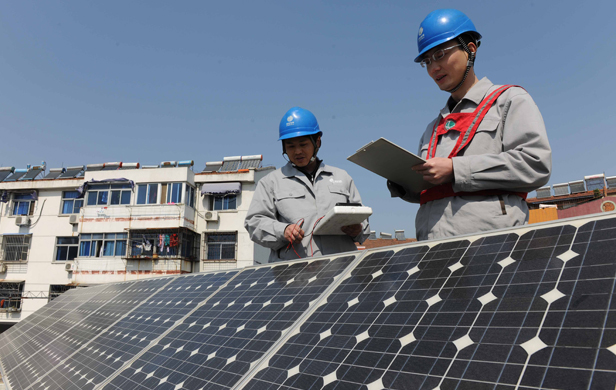
China’s renewables have reached 50% its power supply with the installation of 357 GW of solar and wind in 2024, an 18% increase from the previous year.
The result is China’s renewables target for 1.2 TW by 2030 was reached in 2024, 6 years ahead of schedule.
Yet these achievements have not been enough since China’s electricity demand has risen faster than the economic growth since 2020. The country’s electricity demand increased 7% in 2024, and the forecast is for an annual average of 6% through to 2027. In addition to the electricity consumption growth associated with the manufacturing of clean tech and energy intensive industrial sectors, there are new phenomena, such as the latest highs in consumption for air conditioning and 5G networks.
The U.S and renewables
Most inconsistent with Trump’s view for America, 93% of 2024 power capacity additions stemmed from clean energy. U.S. solar set a record in 2024, at 30 gigawatts (GW), accounting for 61% of U.S. utility scale power capacity additions for the year.
And the U.S. Energy Information Administration (EIA) predicts 2025 solar new capacity will reach 32.5 GW. That’s far less than the 2025 EIA projection for gas at 4.4 GW of added annual capacity and lower than wind for this year at 7.7 GW.
U.S. solar additions combined with energy storage, will come to 81% of U.S. of 2025 capacity additions.
Interesting, Texas is the U.S. windpower leader and its solar sector is booming, 11.6 GW estimated for 2025.
The other 50% of global LNG markets
Elsewhere, the combined LNG imports of Japan, Europe and South Korea, which account for half of LNG demand, declined in 2023. The descent is expected to continue through to 2030.
European gas imports were down 20% in 2024 and consumption is expected to peak in 2025. EU gas imports trajectory is expected to continue to decline through to 2030.
Japan previously the world’s largest LNG importer, is another country where imports of gas are descending, 8% in 2023, another 9% in 2024. Increases in nuclear and renewables capacity will assure continuation of the gas use tumble. Since 2018, LNG imports fell 20%.
For South Korea, traditionally the largest importer of U.S. LNG, imports dropped 5% in 2023. With the planned increases in solar, wind and nuclear capacity, by 2035, LNG imports may drop by 20%.
In Southeast Asia, LNG projects are on pause with significant transitions to renewables underway, especially in Vietnam and the Philippines.
In South Asia, Pakistan proclaimed a halt to LNG projects while engaging in a radical transition to renewables. During the last two years Pakistan installed 40 GW of solar, extraordinary since its entire power generation capacity in 2023 was 46 GW. This profound departure from past energy policies may soon get a big boost, to the tune of $1billion in climate funds, from the International Monetary Fund.
India, like Pakistan, has no plans for plans for new LNG plants.
This spells trouble for U.S. export contracts which typically integrate flexibility for the termination of shipments.
In Canada, most of the LNG projects have been shelved, the results of high cost for terminal construction and pipelines along with public political opposition to new projects.
The takeaway
It is clear that the current oil and gas gluts will get worse with demand for fossil fuels at the precipice of a global decline.
China alone, the world’s largest energy consumer, is engaged in a mindboggling rate of electrification and decarbonization of its economy. This will significantly reduce global fossil fuel demand, peak oil has already been reached and peak gas very soon.
China’s affordable EVs are penetrating global markets, leaving the U.S., and probably Canada, way behind in road transportation. Road transportation traditionally represents 25% of petroleum consumption.
Renewables around the globe are displacing natural gas demand.
This is even happening in the U.S, where 93% of new capacity in 2024 was attributable to renewables. Solar and energy storage combined, will come in at over 80% of power additions in 2025.
South and Southeast Asia emerging economies are engaged in a transition to renewables. Thus the prospects for bets on the LNG industry exports are fiction.
Ditto for South Korea LNG demand.
The European momentum on renewables, EVs, heat pumps and other decarbonization measures, are unstoppable.
Better technology at better prices are globally agnostic, as such, cannot be stopped by the phantasms of the President of the U.S.
The world is already engaged in the energy transition and all the new economic paradigms that go with it.
The Trump drill baby drill objective will flop globally and domestically.