Energy

Home Energy

“Drill, baby drill” Trump will flop

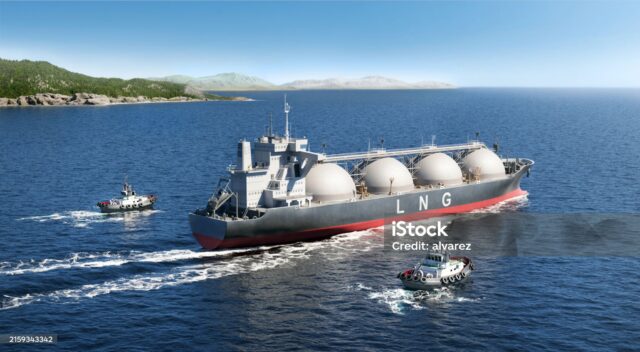
LNG export terminal

Introduction

The current oil and gas gluts and planned expansion projects will hit walls as demand around the world for fossil fuels is already on trajectories to decline.

China, the largest importer of fossil fuels, is engaged in a transition to a green economy at such a humongous pace, it is difficult to keep up with developments.

Too, China’s affordable electric vehicle (EV) global sales are on launching pads to take the world by a storm, leaving the U.S. to become a dinosaur.

U.S domestic power trends favour renewables over natural gas.

South and Southeast Asia, perceived by the liquified natural gas (LNG) industry as the next hot markets, are turning to renewables.

Lastly, Europe, South Korea and Japan, half the global LNG market, are engaged in a transition away from fossil fuels. 

Fossil fuels glut

Oil

According to the International Energy Agency, oil production will outstrip demand from now until at least 2030.  Two principal factors point in this direction.

First, growth in oil demand in Asia, aviation and petrochemicals will be more than offset by a decline in demand associated with transportation sector electrification and better fuel efficiency plus the climate action of critical fossil fuel importing jurisdictions, most notably in China and Europe, along with other countries.  More on the climate achievements and momentum of these jurisdictions follow in subsequent article segments.

Second, Guyana, Brazil and Argentina are increasing their supplies to global markets.

Hence, Trump is his worst enemy by encouraging expansion of U.S. oil production.

This could be exacerbated by a pending price war with Saudi Arabia.

For the U.S., the bottom line is the oversupply has contributed to the current price of oil, around $70/barrel, too low for U.S. expansion.  The U.S. oil industry is hesitant to expand, and more focused on shareholder returns.

For U.S. oil production to expand, the price must rise to $80 or more, becoming more unlikely due to the indefinitely long global glut.

Natural Gas

There’s already a natural gas glut, as per the conclusions of the for Institute Energy Economics and Financial Analysis (IEEFA).  This glut will get much worse, very much the result of the U.S. massive natural gas expansion projects.

Globally, the LNG supply capacity may increase to 666.5 million tonnes per annum (MTPA) by 2028. That’s greater than the IEA assessment of demand prospects for 2050, 482 MTPA.

The U.S has about 20 new LNG project terminal projects, with 4,667 km of pipelines.  If pending applications are combined with the 360 MTPA of approved projects and added to current production, the U.S. would be on a path to produced 430 MTPA of natural gas, by 2029 to 2035.

This would far exceed the current global capacity of 400 MTPA.

The U.S. expansion projects and the European gas import substitutes, post Russian invasion of Ukraine, have driven up the international price of natural gas and U.S. domestic power rates as a side-effect.

In January 2024, Biden had tried to put a temporary pause on pending LNG-related projects.  One year later,  in January 2025, Trump ordered resuming reviewal of applications for pending projects.

Trump chose to ignore the implications of increasing U.S. gas exports.

Even current capacity alone indicates there will be costly stranded assets before 2030.  Quite the risks, given the price tags of large export terminals are $15 to $25 billion, the lifespan of a export terminal is 30 to 50 years, and import terminals cost around $3 billion.

There are also the obstacles to the financing of long timelines for building LNG related infrastructures. Terminal construction can take from just under 4 to 5.1 years.

For an idea of the expenditures for pipelines, 13 of them adds up to more than $62 billion.

Further, the poor economics of the U.S. natural gas sector demise is already evident. While U.S. natural gas supplies are 78% shale gas, 30% to 40% being by-products from shale oil sites, the more productive/profitable shale U.S. oil and gas wells have been depleted. Since shale gas wells have a productive life duration of 3 years, the industry looks like its heading for another financial conundrum, a repeat of the shale industry meltdown in early 2020s.

Swelling the global supply situation, Norway, Russia, Congo, Gabon, Nigeria, and potentially Mozambique and Tanzania, are, and/or my soon be, contributing to more gas supplies on global markets.

The gas export stakeholders continue to pin hopes for larger LNG supplies to supply new markets in South and Southeast Asia,  To serve the power needs of these markets, home-grown renewables projects are the better options since they are relatively inexpensive, and construction timelines are short.

Significant, China has its own shale gas potential.  Together with China’s goal severance from fossil fuels dependencies, this will lessen the need for LNG imports.  It is estimated that China has 31.57 trillion cubic metres (1,115 trillion cubic feet) of recoverable shale gas.

Eventually, the global gas oversupply bottom line will lead to lower prices, something that threatens the viability of the U.S. shale gas sector.  These lower prices will likely last for quite some time.

Green transition is well-underway

China’s oil and gas imports decline

China, the world’s largest energy consumer, representing 25% of global oil imports and 18% of global LNG imports, is weaning off oil and gas at spellbinding rates.

China is the most electrified nation in the world and the pace of electrification continues to spiral.

No wonder, the peaks of China’s crude oil consumption and refined oil are 2025 and were 2023 respectively.  Crude oil imports declined 2% in January 2025.  By 2035, China’s refined oil products consumption is projected to drop 25-40%, based on the peak year 2023.

On natural gas, though China is the largest importer of gas in the world, consumption and emissions are destined to drop through to 2030, because gas is more expensive than coal and not green; wind and solar total capacity to-date have exceeded China’s target; coal capacity is used primarily for peaking periods; there has been a shift to supercritical coal power plants with less emissions than traditional coal facilities; and, most important, China has an overarching goal for a peak emissions deadline with an emphasis on energy independence.

China’s EVs domestic and global market expansion:

In 2024, China’s affordable and advanced tech EVs captured 60% of the global EV market, 53% of its domestic vehicle market.

Chinese EV manufacturers are now poised to conquer ALL major global markets outside North America.  The BYD momentum to-date entails manufacturing plants and projects in 7 countries and entering a new country nearly every week, with an average selling price of $16,700.

Concurrently, legacy automakers, for which China is a major market, are losing market share in the country, because they cannot compete with China’s EV’s which have better designs, prices and technologies.

The EV Trump effect

The Trump administration wants to stop attacks on gas-powered vehicles

Contributing to the demise of North American-based legacy automakers, Trump’s plan is to roll back corporate average fuel economy standards from the 2025 level to that of 2019.

The reversal on vehicle emissions will result in 25% more emissions/vehicle mile than current 2025 rules and an average fuel economy dip of 15%.  The brakes have been put on the transition to EVs.

The Trump package would also prohibit California and 13 other waiver states to adopt stricter emission rules than those of the federal government, beginning 2026.   During his first term, Trump had blocked waivers of the previous administration, but the Biden unblocked this restriction.

As for Musk, he  believes the termination of EV consumer credit will hurt Tesla’s competitors more than Tesla.  Ford claims it loses $100,000 per EV sold and EV-related 2024 loses will be well over $5 billion.

Accordingly, the Trump administration has sent clear signals to legacy automakers in U.S market to change priorities to favour lineups of more of the more profitable gas guzzlers.

The U.S. EV market share will not come close to the Bloomberg projection of 13% for 2024 or the IEA prediction of 11%.

EVs, the U.S. aside

Notwithstanding Trump’s undermining the EV sector in the U.S., by 2030, the global EV fleet will displace 3.3 million b/d (b/d) by 2030, up from 385,000 b/d in 2022.

China, renewables and keeping pace with rising electricity demand

China’s renewables have reached 50% its power supply with the installation of 357 GW of solar and wind in 2024, an 18% increase from the previous year.

The result is China’s renewables target for 1.2 TW by 2030 was reached in 2024, 6 years ahead of schedule.

Yet these achievements have not been enough since China’s electricity demand has risen faster than the economic growth since 2020.  The country’s electricity demand increased 7% in 2024, and the forecast is for an annual average of 6% through to 2027.  In addition to the electricity consumption growth associated with the manufacturing of clean tech and energy intensive industrial sectors, there are new phenomena, such as the latest highs in consumption for air conditioning and 5G networks.

The U.S and renewables

Most inconsistent with Trump’s view for America, 93% of 2024 power capacity additions stemmed from clean energy.  U.S. solar set a record in 2024, at 30 gigawatts (GW), accounting for 61% of U.S. utility scale power capacity additions for the year.

And the U.S. Energy Information Administration (EIA) predicts 2025 solar new capacity will reach 32.5 GW.  That’s far less than the 2025 EIA projection for gas at 4.4 GW of added annual capacity and lower than wind for this year at 7.7 GW.

U.S. solar additions combined with energy storage, will come to 81% of U.S. of 2025 capacity additions.

Interesting, Texas is the U.S. windpower leader and its solar sector is booming, 11.6 GW estimated for 2025.

The other 50% of global LNG markets

Elsewhere, the combined LNG imports of Japan, Europe and South Korea, which account for half of LNG demand, declined in 2023.  The descent is expected to continue through to 2030.

European gas imports were down 20% in 2024 and consumption is expected to peak in 2025.  EU gas imports trajectory is expected to continue to decline through to 2030.

Japan previously the world’s largest LNG importer, is another country where imports of gas are descending, 8% in 2023, another 9% in 2024.  Increases in nuclear and renewables capacity will assure continuation of the gas use tumble.  Since 2018, LNG imports fell 20%.

For South Korea, traditionally the largest importer of U.S. LNG, imports dropped 5% in 2023. With the planned increases in solar, wind and nuclear capacity, by 2035, LNG imports may drop by 20%.

In Southeast Asia, LNG projects are on pause with significant transitions to renewables underway, especially in Vietnam and the Philippines.

In South Asia, Pakistan proclaimed a halt to LNG projects while engaging in a radical transition to renewables.  During the last two years Pakistan installed 40 GW  of solar, extraordinary since its entire power generation capacity in 2023 was 46 GW. This profound departure from past energy policies may soon get a big boost, to the tune of $1billion in climate funds, from the International Monetary Fund.

India, like Pakistan, has no plans for plans for new LNG plants.

This spells trouble for U.S. export contracts which typically integrate flexibility for the termination of shipments.

In Canada, most of the LNG projects have been shelved, the results of high cost for terminal construction and pipelines along with public political opposition to new projects.

The takeaway

It is clear that the current oil and gas gluts will get worse with demand for fossil fuels at the precipice of a global decline.

China alone, the world’s largest energy consumer, is engaged in a mindboggling rate of electrification and decarbonization of its economy.  This will significantly reduce global fossil fuel demand, peak oil has already been reached and peak gas very soon.

China’s affordable EVs are penetrating global markets, leaving the U.S., and probably Canada, way behind in road transportation. Road transportation traditionally represents 25% of petroleum consumption.

Renewables around the globe are displacing natural gas demand.

This is even happening in the U.S, where 93% of new capacity in 2024 was attributable to renewables.  Solar and energy storage combined, will come in at over 80% of power additions in 2025.

South and Southeast Asia emerging economies are engaged in a transition to renewables.  Thus the prospects for bets on the LNG industry exports are fiction.

Ditto for South Korea LNG demand.

The European momentum on renewables, EVs, heat pumps and other decarbonization measures, are unstoppable.

Better technology at better prices are globally agnostic, as such, cannot be stopped by the phantasms of the President of the U.S.

The world is already engaged in the energy transition and all the new economic paradigms that go with it.

The Trump drill baby drill objective will flop globally and domestically.

India: Coal monopolizes, solar goals stymied

123rf

Renewables and Reality

In May 2025, India announced it has raised its renewables target of 500 gigawatts (GW) by 2030 to 900 GW. The Indian government claimed it is on track with 475 GW of installed renewables capacity in 2025, making it the world’s third-largest producer of wind and solar energy.

India’s Nationally Determined Contribution calls for 50% of the country’s energy requirements stemming from non-fossil fuels by 2030.

This where the narrative gets complex.  Renewables are underutilized.  Actual renewables power generation capacity is not reflected in the country’s power market share.

With many unsigned clean energy contracts, and a pipeline for many new renewables initiatives, between April 2024 and April 2025, only 30 GW of clean energy was installed, and coal still generated more than 75% of total output.

Energy Demand

Forecasts are such that India’s energy consumption will quadruple by 2047.

India’s power supply has increased 6% over the past decade while demand rose 5.6%.  This looks good, but this doesn’t consider dreadful heat waves caused by climate change.

Ultra extreme heat waves translating into high demand for electricity, especially for air-conditioning, can account for 50% of a household’s energy needs,

For India at-large, peak demand occurred at 250 GW in May 2024, an increase of 46 GW from the previous year.  This trend suggests energy demand could increase 50 to 80 GW by 2027. Despite India’s 2027 new capacity plan for 100 GW of renewables 28 GW of thermal and 13 GW of hydroelectric, this would still leave 20-40 GW of power shortages or about 8-12% as of 2026.

The good news is that solar costs are going down, so much, as to compete with coal.

Too, while thermal and hydroelectric plants have construction timelines of 5-8 years, solar projects can be completed in 1-2 years.

Coal remains on top of the power pyramid

In 2024, India’s power from coal and lignite thermal plants rose 5%, hitting a record of 1,357 billion kWh, up from 1,293 kWh in 2023.

Coal represents 79% of power sources and a 42% increase in coal production is planned for next 5 years.  The goal is to raise coal-fired power supply by 80 GW by FY 2031-32.

India has the second largest coal-fired fleet in the world at 240 GW of installed capacity.  In 2024, 100 GW of new coal-fired generation had been proposed or was under construction.

Fossil fuels has accounted for two-thirds of power capacity expansion.

Industry’s coal stakeholders reflect mixed signals.

Tata Power, India’s largest private power producer, had announced in 2021 that it would not be building any new coal plants.

In 2025, Tata divulged the construction of its first coal plant project in 6 years, since acquiring Prayagraj Power Generation Co Ltd (PPGCL) in 2019 through a joint venture.

Adani, one of the largest coal producers in India, in 2020, was a new player in the Indian solar market with the creation of Adani Green Energy Limited (AGEL).  AGEL aimed to have 25 GW of installed renewable energy by 2025.

In 2025, Adani power secured a $2 billion contract from the state-run Uttar Pradesh Power Corporation Ltd. for a 1,5 GW for a supper ultracritical coal power plant  Utter Pradesh estimated it will require 11 GW of thermal power by 2033-34.

Compounding the coal challenges, India is the world’s second largest producer of steel and the industry uses coal for steelmaking.  The steel sector relies on imports for its coking coal requirements.  Australian exports represented 53% of Indian coking coal supplies.

Though India has the fifth largest coal reserves in the world, it has to import coal to meet its needs!

Coal generation is projected to substantially increase until 2030 even if its share of installed capacity declines over this period.

India’s economy is expanding quickly while domestic coal is abundant and cheap, including low upfront costs.  India is the second-biggest coal consumer, behind China.

India relies on coal to improve the living standards of its population.

 Renewables Capacity and market share not the same

India is the third largest generator of solar power with more than 100 GW of capacity, behind China, the U.S.  This is quite the leap from 2014 when India only had 2.82 GW of solar capacity.

With solar prices continuing to decline, solar may appear to be taking on coal dominance in India, with a 100.33 GW of new capacity for FY 2024-25, up from 66.78 GW in FY 2022-23.

In the 2025 solar pipeline comprised 84 GW is under construction and 47.5 GW is out for tendering. Between 2018 and 2024, India added 113 GW of new power capacity, more than two-thirds from renewables, 88 GW, mostly solar coming in at 77 GW.

Why is it that between April 2024 and April 2025, 30 GW of clean energy was installed, but coal still generated more than three-quarters of total output.

Renewables use expansion is colossally impeded because India’s renewable energy sector has been experiencing many hurdles in 2025, including weak demand for tenders;land acquisition issues for projects; power agreement delays; grid integration complexities; minimal energy storage capacity; and project cancellations.

Especially noteworthy, the cost of capital for grid-scale renewable energy in India is 80% higher than in advanced economies, though low compared to emerging and developing economies.  The latter impacts on real and perceived risks for projects.

If matters would be going according to the national government’s plan, coal would represent 55% of India’s power market by 2030.  But will this be the case?

Renewables haven’t replaced coal, rather it has supplemented the power supply to keep pace with increasing electricity demand.

True, wind has progressed slowly, now representing 10.3% of the country’s capacity.

India is trying to incentivize solar tech manufacturing with its National Manufacturing Mission introduced in 2023.  The program has supported 48 GW of module manufacturing capacity.

One of the incentive success stories on solar tech domestic manufacturing is that of Tata Power’ s subsidiary, TP Solar.  TP Solar has a 4.3-GW solar cell and module manufacturing facility in the state of Tamil Nadu in southeast India.  This is the largest such facility in India.

Another beneficiary of the national program is Jupiter Renewables with a $231 million cell and module plants with production capacities of 4.2 GW and 3.6 GW respectively.

Most of the new projects planned support rural economic growth including job creation.

Energy Storage

India is barely implementing energy storage policies, energy storage being a nascent solution at this point.

Shortfalls can be avoided in the immediate future should India install and utilize 50 GW of new solar capacity with 15-30 GW of energy storage.

Unfortunately, only 4.86 GW of energy storage capacity was in place in India in December 2024.

India obviously needs to put its weight behind standalone energy storage systems. (SESS)

Accordingly India put out 11 tenders for 6.1 GW of SESS in Q1 2025.    This capacity surpassed energy storage tenders in 2024.  An incentive in the form of Viability Gap Funding (VGF) offers 30% support for standalone battery ESS capital expenditures.

Persistent execution and commercial bottlenecks have sabotaged the tenders and new funding.  Delays and cancellations of power sale and storage agreements, often associated with falling battery prices, are major obstructions.

Other barriers are inadequate battery supply chains, manufacturing and financing.  Battery cell manufacturing capacity is limited and depends on imported lithium and cobalt.  Refining and commercialization timelines and affordable financing constitute further roadblocks.

No wonder, awarded capacity of 6.4 GW had been cancelled.

With both solar and storage costs declining rapidly, moving quickly on combined solar and energy storage capacity is the rationale option.

While battery manufacturing and supply chains in India manufacturing leaves much to be desired, global battery manufacturing overcapacity will keep battery energy storage system (BESS) prices low until 2030.  More than enough low-cost BESS are on the market to meet India’s immediate needs.

Energy storage capacity in India in December 2024 was merely 4.86 GW.  For 500 GW of renewables capacity, India would require 364 GW of solar and 121 GW of wind, necessitating 73.93 GW/411.4 GWh of storage capacity.

India’s Ministry of Power issued energy storage guidelines which will be mandatory for future solar projects, but does not apply to existing solar installations.   This advisory applies to all power distribution companies and renewable energy implementing agencies (REIAs) to have a minimum of 2-hour located energy storage systems equivalent to 10% of solar capacity installed for all future projects.  The intention is to both address intermittence from solar sources plus electricity prices to ensure reliability of grid supply and reduce dependence on peak hour sources.

Distribution licences would include storage capacity guidelines for rooftop solar as well.

The takeaway

Should India be able to align renewables capacity targets with power market share, this would be a good news story.

Multiple bureaucratic, project and private sector cognitive dissonance impede renewables from having impacts such that coal would no longer occupy over 75% of power output.

Renewables have not replaced coal, rather it has contributed to the extraordinary additional power India requires for its needs.

These challenges are compounded by failure to beef up energy storage capacity to maximize the delivery of power from intermittent renewable energy sources.

Too many problems to solve, the renewables political hype doesn’t deliver.

Should India miraculously overcome the obstacles for a green transition, the country would concurrently become energy self-sufficient and tackle climate change.

That India is in second place as a global leader in solar power installed capacity is obviously insufficient.

Nuclear debacles: UK, Canada, U.S., IEA and others

Canadian Darlington Nuclear Facility

Nuclear cost and time overruns

While nuclear power has gained interest as a low carbon solution, cost and time overruns have dampened this interest.

A Boston University study of 400 nuclear plants over 80 years indicated that, on average, building nuclear plants cost double the before construction projections, and 64% exceeded their timelines.  Average costs go 120% over original budgets, with the majority more than doubling.

High maintenance costs add to the unattractiveness of the nuclear option, in particular, the old reactors in the U.S. and France.

There is no shortage of examples of cost and timeline overruns.

In 2008, the U.K government made an announcement on its first nuclear power plant, since 1995, the U.K. Hinkley Site C.  Back then, the AP 1000 project was to be completed by 2020.

Subsequently, the project joint venture project group revealed it would not be completed until 2025. It ended up with a government bailout out and nationalization with a financing contribution from Chinese entities.  Construction began in March 2017, with a timeline of 10 years.  Now, 16 years after the original announcement, the project is still not completed.  And the termination date has once more been revised, this time to 2030, more likely 2031, and by then only one of two reactors will be operational.

The Hinkley Site C AP 1000 original budget was US$11.3 billion, but the cost has been upped to US$62.7 billion.

The Netherlands approved 2 nuclear reactors 1-1.6 gigawatt (GW) each, expected to run up to US$5.5 billion by 2030. The revised cost is US$13 billion.  There is no plan.

Like Hinkley Point Site C,  Vogtle and Summer in the U.S., Flamanville in France and Olkiluoto in Finland, were all financial and scheduling fiascos.

Many view China as an exception, with 43 GW of nuclear capacity added between 2012 and 2022, building 3 nuclear reactors per year for the past 5 years, down from 7/year between 2016 and 2018.  Notwithstanding, China’s nuclear path hasn’t been smooth.  Poised to triple renewables capacity by 2030 with the addition of 3,100 GW of capacity, 300 GW of new solar and wind capacity installed in 2023, perhaps China will give up on nuclear.

Decline of the nuclear sector

During the period of 2000 to 2022, nuclear capacity as a percentage of global power generation declined by half, from 17% in 2000, to 9% in 2022.

The global number of nuclear reactors peaked in 2022 at 438 and that dropped to 407 in 23 counties by mid-2023.  The average age of a reactor was 31.4 years in 2022.

All of the world’s reactors are losing money or are economically unviable.  The costs of storage, typically for 250,000 years, are not factored in, massively subsidized.

In absolute terms, the global nuclear power supply increased 4% in 2022 compared to 2021, trailing all other power sources.

The long lead time to arrive at the operational stage means that no nuclear plant for which the planning began in 2020 can be completed before 2030.  Too late for compliance with the Paris Agreement.

Successful nuclear programs

Successful nuclear programs in the U.S., France and South Korea were the object of major military involvement from the outset, including financing, technology requirements, safety, human expertise and weapons-grade enrichment of uranium.  Each of these governments selected a one GW-scale model.

These military programs ran 20 to 30 years, thus were replicable for commercial use.  This kept commercial reactor costs down. 

Nuclear boosters’ learning disabilities

The International Energy Agency believes nuclear capacity will reach a new record in 2025.

At COP28, the U.S. lead the way for a pledge involving 25 nations to triple nuclear power generation.

In the nuclear development pipeline, China plans comprise 22 GW, India 6 GW; Turkey 4.5 GW; South Korea 4 GW; and Egypt 3.3 GW.

Rowing against the current as well, in a big way, is Ontario, Canada.  More on Canada in the near last segment.

Small modular reactors, learning disabilities on steroids

Much hope for a nuclear renaissance lies with small modular reactors (SMRs), compact nuclear reactors.  But SMRs have yet to get beyond start-ups.  Not only are SMRs unproven, there are many competing designs, maybe 57.

SMRs, which produce less than 1 GW, cannot not achieve the necessary economies for a manufacturing scale, aren’t faster to construct, are inefficient and decommissioning is slow plus expensive.  At best, one would have to wait until 2030 for scaling up SMR tech to be commercially viable.

Most governments, with the exception of China and Canada’s Ontario Premier, Doug Ford, don’t see the case for SMRs.  After all, the costs are five times that of an onshore wind farm or solar project to produce the same amount of energy.

Notwithstanding SMRs are a failed technology, the U.S. government is pouring billions into SMRs. The U.S, has yet to have an operational SMR.

The U.S.-based NuScale had planned a SMR project for Oregan.  It pulled out due to cost overruns.

The Utah Associated Municipal Power Systems (UAMPS) too, decided to back the construction of NuScale SMRs, a six-reactor 462 MW SMR project.  Utah townships pulled out after the costs, upped to US$89 megawatt hour (MWh) from the original estimate of US$59/MWh, proved to be too high and timeline target for 2030 didn’t seem realistic.  This, despite U.S. government providing US$1.4 billion.

Canada’s learning disabilities

Ontario, Canada

Of the 19 nuclear commercial reactors in Canada, 18 are in Ontario.

In Summer 2023, the Doug Ford government announced it would double the size of the Bruce Power nuclear station on the eastern shore of Lake Huron, currently the world’s largest.

At the Pickering station near Toronto, the refurbishing of the first two of four unit A reactors went C$1.5 billion over budget, leading to abandoning the refurbishing of the other two Unit A reactors.  In 2020, Ford had said Pickering would be shut down by 2025.

Nevertheless, on January 29, 2024, the Doug Ford administration announced it would refurbish all four Pickering Unit B reactors.  The government’s expects the refurbishment to cost C$19.4 billion with completion in eleven years, but that amount is uncertain.

Ontario Power Generation is currently reviewing the extension of the Pickering operating license until December 2026.  If approved, the refurbishment would begin thereafter.  The Ford government intends to start refurbishing the Pickering B plant after 2026.  As a result, Ontario plans for decommissioning Pickering put on hold prime waterfront real estate for 30 years.

The Ontario Darlington station on the north shore of Lake Ontario cost C$14.5 billion, 4 times the originally estimated amount, with the timeline from planning to operation 1981 to 1993, 12 years.  The Darlington plant cost overruns led to the Ontario Hydro equivalent to bankruptcy in 1988.  Debt retirement costs have jacked up Ontario electricity rates.

The Darlington 4 reactors are now being refurbished with C$12.8 billion budgeted.  To cover the costs of the refurbishing, Ontario would need to have an electricity tariff of 13.7 (24.4) cents per kWh.

Divulged in Summer 2023, the Darlington site, which has one SMR under construction, will get 3 more SMRs.  Never mind SMRs are several times more expensive than renewables.

In the interim, until the expanded Ontario nuclear network is completed, the fossil fuel, natural gas, will be called upon to fill the supply gaps.

Lastly, Ontario still does not have secure nuclear waste storage sites.  Currently, the province’s nuclear waste is stored in open pools or in casks in commercial grade warehouses alongside Lake Ontario.

New Brunswick, Canada

In New Brunswick, Canada, the only functioning Canadian nuclear station outside Ontario, the Point Lepreau CANDU reactor, commissioned in 1983, underwent a refurbishment, beginning March 2008.  The refurbishment was supposed to cost C$1.4 billion and take to 18 months to complete.  However, the time overrun went 3 years longer, to 2012, at a cost of another C$1 billion contributing to NB Power’s C$4.6 billion debt.  Not daunted by empirical evidence, a second refurbishment is being considered for 2041.  This assumes ongoing problems of unpredicted and planned outages and C$1 billion in lost production and repairs will be resolved.

Quebec, Canada

The current Coalition Avenir Québec government is considering re-starting operations of its Bécancour nuclear plant Gentilly-2, shut down in 2012.

The hic in Quebec energy action plan for 2035 is that it assumes optimum electrification without a plan for reducing demand.  In 2021, Quebec consumed 23,000 kilowatt hours (kWh) per person while in France it was 7,000 kWh.

The takeaway

The global nuclear sector is mostly stagnant.  Typically, since 2018, there are 3 new plants per year.

Also, it doesn’t help that plants must run 90% of the time to earn revenues.  Most nuclear technologies are not amenable to changes in required production output, up or down.

It appears Ontario Canada, China, the U.S., the U.K., the IEA and a global nuclear cult are the last of the nuclear faithful, no matter what the facts are.  And China is not too sure.

The nuclear faithful will find this article misleading.

China green shift global impact greater than COP

Expectations for COP29 in Azerbaijan, based COP28 in the United Arab Emirates?

The light getting in though the cracks is few countries are immune to competition with China’s sweeping expeditious green transition.

China’s brisk energy transition intentions are three-fold, decarbonization of its economy, domination of global clean tech manufacturing and reduced dependence on imported fossil fuels.

Renewables

The COP28 final statement calls for a tripling of renewables capacity by 2030.  China had an objective to triple renewables capacity by 2030 too, but China will reach its 2030 renewables capacity target in 2025, 1,2 TW (terawatts). The country will continue to increase capacity sharply thereafter.  By 2030, the forecast is for China is to hit 3.9 TW.  The aforementioned COP28 global ambition was for 11 TW by the end of the decade.

According to the IEA, China now accounts for 60% of global renewables capacity installed in 2023 and this will carry over into 2024.  The expansion of capacity is outpacing rising demand.  For 2023, China investments in renewables will attain the summit of US$177 billion.

For 2023, BloombergNEF projected China solar capacity additions to reach 208 gigawatts (GW), twice the entire U.S. solar capacity.

China’s new wind and solar capacity installations for 2023 may amount to 300 GW, astronomical compared to the global capacity increase of 338 GW in 2022.

By September 2023, total installed wind and solar capacity was 400 GW and 520 GW, respectively.  To put this in perspective, Hydro-Québec, one of the largest utility companies in North America, has a total production capacity of 47.5 GW.

All together, China is installing 20 GW of wind and solar per month.

By the third quarter of 2023, 53% of China’s power sources were wind, solar, hydro and nuclear.  That’s a giant leap from 2011 when coal accounted for 80% of the country’s power supply.

The scale of some of the renewables projects is staggering.  The Golmud Solar Park in Qinghai, the world’s largest solar park, has a capacity of 2.8 GW with 7 million solar panels spread over sands.  Even that is just the beginning.  The plan calls for expanding this park 6-fold in the next 5 years.

In 2022, plans were announced for 500 GW of onshore solar and offshore wind projects for Gobi Desert across Xinjiang, Inner Mongolia, and Gansu provinces.

To transport gargantuan new capacity, ultrahigh-voltage (UHV) lines projects are eye-popping.  State Grid Corp of China, the country’s largest State-owned utility, has started construction on 13 UHV lines covering 30,000 km.

China catapults economy-wide electrification

China is electrifying its economy at a mind-boggling rate, with 1.1 million electric buses and trucks; two-thirds of the global market for light EVs; electric subways and light rail; and 42,000 km of electric high speed passenger and freight rail.

Consequently, China’s Sinopec, a large petroleum refiner and distributor, anticipates peak gasoline will occur in 2023.

Coal

China’s electric power carbon emissions will peak in 2023 or 2024, ahead of the 2030 target, plateau for a while, and then enter an exponential decline.  This is attributable to mindboggling increases in renewables capacity, and an uptake in hydro capacity.

True, China has the world’s largest coal power plant fleet.  Yet, the opening of 2 coal plants per week or 106 GW of new power plants in 2022, responds to peaking requirements only.  While China reached 1,100 GW of coal power plants functioning in 2022, 775 GW of operational coal plants were shut down or were projects that never made it to construction.

Consequently, coal plants in China on average run 50% of the time.  Carbon Tracker has divulged that 40% of China’s coal plants are losing money.  The 5 major state-owned coal power plant companies are also experiencing heavy losses.

The capacity usage will fall further to 25% over the next two decades.

These contradictions are largely the result of provincial governments supporting their local coal enterprises and jobs.

A forthcoming plateau in infrastructure projects translates into less coal for cement production, a 2.7% reduction in 2023 and 61% reduction by 2036.  Likewise, petrochemical and aluminium production drops will contribute to lower demand for coal.

These factors should result in a decline in coal demand by 2024, as alluded above.  Not only many coal plants permitted up to 2023 will never get built, but also many existing coal plants will become stranded assets.

In China, likewise for Europe and India, 90% of coal plants will be uncompetitive by 2025.

EVs

The BloombergNEF Electric Vehicle Outlook 2023 reported that EV growth rates for 2022 were 62% world-wide and 95% in China.

In 2022, China had 600,000 electric buses on the road, at least 99% of the world total.  That year, it manufactured 138,000 e-buses for the domestic market.

There were 400,000 electric trucks on China’s roads in 2022.

China’s rate of light-duty EV growth is 4 times that of the U.S.  Total EVs sold in China are greater than in the rest of the world.  For the end of 2023, it is projected plug-ins will have reached 38% of sales.

Too, China is now the world’s largest exporter of EVs.  For 2022, exports from China acquired 11% of the European market.  An irony of sorts, Tesla’s Shanghai factory is China’s largest EV exporter.

North America is vulnerable to an invasion of EVs from China too.  China’s BYD will soon launch the BYD Seal in North America to compete with the Tesla Model 3.  Other Chinese EV brands are planning international expansion.  By contrast, North American EV and battery investments related to the U.S. Inflation Reduction Act and Canada’s Budget 2023 await production start-up dates.

Fascinating is the electrification of the three-wheelers for which China and India account for 90% of the global fleet.   There were 117 million 3-wheelers on the roads in the world by 2022, 70% of which were electric, though most with lead-acid batteries.  That jumps to 300 million if two-wheelers are included.

The 3-wheeler sales in 2022 were over 12 million units encompassing a major migration to lithium-ion batteries.  For the short-term, it is the two- to three-wheelers that will generate a noticeable decline in oil consumption.

The global share of EVs in two- and three-wheeler sales increased from 34% in 2015 to 49% in 2022.

Clean tech manufacturing

China has 9 of the 13 largest solar manufacturers in the world and 7 of the top 10 global wind manufacturers are in China.

Solar panels production was 310 GW in 2022; were about 500 GW for 2023; and 1000 GW in 2025, the latter 4 times the output worldwide.

Energy storage battery capacity to accommodate intermittent renewables power will go from 550 GWh in 2022; to 800 GWh in 2023, and 3,000 GWh in 2025.

By early 2022, China accounted for 80 percent of global battery production capacity.

China had 125 battery factories in 2022 and more than double are in the planning or construction phases  This despite, China having only 10% of lithium raw material, while Australia has 50%.

Lower battery prices give China an EV edge in global markets.  The average price of a Chinese EV battery is US$26,500.  That is one third of the transaction price in Europe and half that of the U.S.

An astonishing next generation battery head start is that of China’s BYD breaking ground in January 2024 for the first sodium-ion gigafactory, a technology still in the development stage for most. Sodium-ion batteries are composed of abundant iron and sodium, free the more expensive lithium plus nickel, cobalt and graphite.  This technology replaces lithium cathode material and can be combined with hard carbon anode.  It is less vulnerable to cold weather.  BYD will initially use these batteries for scooters and micro-vehicles.

Also, China’s leadership comprises a long-term view, having issued rules that all battery powered vehicle manufacturers must be responsible for battery recycling.  The policy also directs that the design of batteries facilitates recycling.  China is experimenting with a battery recycling framework.

Decarbonization

By far, China dominates global industrial production, 61% of global steelmaking, 57% aluminium manufacturing and 52% cement output, collectively more than half of global production.  The chemical and paper sectors represent 40% of the global share in these sectors.

China’s wide array of state-owned enterprises (SOEs) are pillars for backing a decarbonization goal under the umbrella of China’s 14th 5-year plan.  Under this plan, carbon neutrality will be accomplished by 2060, CO2 emissions will peak by 2030 and 50% of increased energy consumption will stem from renewables by 2025.

As for energy SOEs, they are immune to the straitjacket of oil and gas companies, incapable of changing their increased fossil fuel trajectories.   In this regard, SOEs are diversifying their portfolios, with a strong push for renewables and massively investing in research and development and innovation of clean technologies.

Belt and Road Initiative (BRI)

BRI is by far the most ambitious global economic development program involving over 115 countries.

From 2013 to 2022, fossil fuel infrastructure accounted for two-thirds of BRI power sector investments.

In September 2021, China announced it will not support new coal plants abroad, though not all new coal projects were shut down.

China has since established the BRI International Green Development Coalition with 134 international partners.  UN Environment will facilitate BRI recipients to achieve UN Sustainable Development Goals including green finance and energy, plus energy efficiency.

For the first half of 2023, 56% of the US$12.3 billion in BRI energy investments were allotted to renewables.  Colour coded prioritization of projects favours green ones. 

At COP29 in Azerbaijan, November 2024, China let it be known that since 2016, it invested $24 billion in developing countries.

China emissions to-date 

There are those who suggest China must act first before their own countries take action on climate change and China is addicted to coal.  China is acting first, leaving no excuses for the climate naysayers.

Granted, China emitted 31% of global emissions, 11,397 metric tonnes (Mt) in 2022.  This is more than twice as much as the U.S. for 2022 at 13.6%, with 5057 Mt.

This does not tell all.  On a per capita basis, China’s emissions are half that of the U.S.  Since 1751, China is responsible for  half the cumulative emissions as the U.S.

But this is history, China is migrating into a green transition quicker than most can assimilate.

The takeaway

The U.S.$369 billion Inflation Reduction Act (IRA) which is spurring a tsunami of investments in clean tech plus manufacturing of EVs and batteries is largely about closing the green economy gap with China.  One year after the IRA passage, in August 2023, private sector investment announcements in U.S. clean tech projects totaled up to US$278 billion and 170,000 jobs.

The domino effect on the European Union is such that it is exploring how to close the clean tech investment gap with the U.S.  The EU “lost” its solar industry in favour of China, European wind manufacturers are struggling to compete with lower cost Chinese turbines and 11% of the European EV market is represented by Chinese imports.

China’s march to dominate the green economy suggest a green transition will become a global competition imperative.

China will change the course of the global energy geopolitical titanic.

By contrast, the exclusion of reducing fossil fuel production in the COP28 final statement is not a milestone.

Shell, two CEOs, two cultural shifts: Green transition to business-as-usual

Updated, October 27, 2023

New vison, clean tech acquisitions and fossil fuel divestments

Under the leadership of Shell CEO, Ben van Beurden, 2014 to 2022, it really seemed that Shell was taking climate change seriously.  In 2017, Ben van Beurden purported that the “biggest challenge” for the company was to acquire public acceptance.  He asserted “If we are not careful, broader public support for the sector will wane.”

Perhaps, the most astonishing component of the new orientation was the Ben van Beurden plan to divest of US$30 billion of assets.  Amazingly, Shell had decided to sell its US$8.5 billion in assets in Canada’s oil sands.

Likewise encouraging, Shell assured it would comply with the Paris Agreement; concluded peak oil would occur in the next few years; set a goal to cut its carbon emissions by 20% by 2035, 50% by 2050, issued a joint statement with lead investors for Climate Action 100+  representing US$32 trillion in assets, to deliver on the Paris Agreement; withdrew from the far right climate denial organization, the American Legislative Exchange Council; and advised the Canadian Association of Petroleum Producers (CAPP) that the CAPP climate and energy-transition-related policy positions constitute a “misalignment.”

The flip side to the disavowal of traditional paths was the awesome pro-active Shell clean tech firms investment spree, entailing clean tech acquisitions, mergers and partnerships.  Many on the lengthy list of new clean tech can be found in my 2019 article.

In 2018, Martin Westelaar, then head of Shell’s gas and new energy division, described Shell’s green transition as one of modestly beginning with a budget of US$1-2 billion year up to 2020, to prepare the case for shareholders to get on side for a doubling of such investments to US$4 billion annually after 2020.

In 2019, Westelaar gave reason to believe that the Shell acquisition of First Utility, the largest electricity supplier in the UK, was a steppingstone for entry into a global solar market, presuming solar would become the biggest source of low carbon energy.

Westelaar had exclaimed “electrification is the biggest trend in energy … it’s easier to grow in growing markets”.  And Shell wants to play a lead role in the new energy landscape to become “largest electricity power company in the world in the early 2030s.”

In April 2019, Brian Davis, formerly Global Vice President, Energy Solutions from 2016 to 2020, vaunted the Shell vision of a global transition to electrification, including electric vehicles, batteries, microgrids.   

February 11, 2021 press release officializes green transition

Boasting Shell’s new vision as an oil and gas industry energy transition leader, in a Shell February 11, 2021 media release, Ben van Beurden, is quoted as saying “Our accelerated strategy will drive down carbon emissions and will deliver value for our shareholders, our customers and wider society.”

This announcement indicated Shell that Shell’s corporate-wide carbon emissions peaked in 2018, its oil production peaked in 2019 and the firm would pursue divestments averaging US$4 billion a year.  Doing so, he portrayed Shell becoming less vulnerable to oil and gas prices.

Ben van Beurden, depicted the Shell makeover crystal clear in the dispatch: “We must give our customers the products and services they want and need – products that have the lowest environmental impact.  At the same time, we will use our established strengths to build on our competitive portfolio as we make the transition to be a net-zero emissions business in step with society.”

Accordingly, the communiqué implies the integration of environmental and social ambitions.

This integration proposal comprises linking 10% of the bonuses of directors to lowering carbon emissions; US$2-3 billion annually for Renewables and Energy Solutions to become a world leader in clean power as a service; and 500,000 charging stations by 2025.

New CEO, “ruthless” transition to oil and gas prioritization and clean tech fire sale

All changed when Wael Sawan became the CEO of Shell in January 2023.

Beginning June 2023, Wael Sawan implemented corporate reorganizational changes to put the emphasis on the “ruthless” approach to maximising value, specifically “absolutely committed to our upstream business.”  This new approach entailed a shift priorities in favour of oil and gas production and scaling back renewables.  Sawan prescribed a ‘fundamental cultural shift” critical to re-establish investor confidence.

That meant that only green power projects with high returns or in sync with the value chain of Shell would get corporate support.  Sawan even had the audacity to declare that these changes would benefit schoolchildren in countries like Pakistan!

To greenwash  the environmental consequences of the makeover, Shell announced it had not abandoned its goal to becoming a net-zero company by 2050.

But the bluffing in that message became obvious in September 2023 when news broke out that Shell aimed to divest its majority or all shares in Sonnen, a major competitor with Tesla in the energy storage sector.

Just prior to the revelations on Sonnen, Shell sold Octopus Energy, a German and UK retail energy business, meaning 1,800 employees were no longer with Shell. 

Flurry of resignations

In June 2023, Thomas Brostrom, who had been the Shell, VP for renewable generation, and head of offshore wind, quit after his position was downgraded to a new regional role.  Brostrom had been Ørsetd North America wind chief until joining Shell in 2021.  The Danish Ørsetd is the world leader in offshore wind development.

Also in June 2023, Shell’s power trader, Steffen Krutzinna resigned over what for him was “heart-breaking,” to the effect that Shell was putting short-term profits over social and environmental responsibilities.  He posted on LinkedIn “I perceive that as a pivotal shift in corporate values.” “I don’t want to be part of that, so I’m out.”

Not long after in July 2023, Melissa Reid, who had been Shell’s UK offshore wind manager chief, left too.  She had led Shell’s successful bid for the ScotWind seabed license.

A year earlier, Caroline Dennett, a consultant for an independent agency Cloutt, terminated her working relationship with Shell with an open letter to Shell executives and its 14,000 employees regarding Shell’s “double-talk on climate.”  Expressing her disgust, “…they are not winding down on oil and gas but planning to explore and extract much more.”

Aside from the aforementioned resignations, anxieties of Shell staff still with the company were reflected in posts by employees.

Virtual “A Conversation with Wael”: Staff pacification

Responding to internal anxiety over Shell’s recentering Shell’s goals, Wael Sawan planned a virtual meeting with staff,  “A Conversation with Wael” for October 17, 2023.  The advance promotion advised the meeting would “deepen our conversation on the opportunities and dilemmas we face as we position Shell to win in the energy transition.”

The Wael Sawan October 17, 2023 message confirmed Shell believes in “urgent climate action” notwithstanding the about-face.

Sawan assured Shell staff that Shell is simply modifying the strategy delivery.

He explained this second cultural shift as the challenge of the affordability of clean tech.

These are lies.

Major job cuts in low carbon unit, not strategy tweaking

The Wael “conversation” sequel on tweaking the strategy, came quickly, on October 25, 2023, when Shell announced that it will cut 200 jobs in its low carbon solutions unit, originally known as Shell New Energies.  Some of these jobs will be transferred to other corporate divisions, and an additional 130 position roles are “under review” in 2024.  Ergo, anxieties among employees will go up many notches.

Ideological shift, not clean tech affordability or potential, nor belief in urgent climate action

Renewables are now the least expensive sources of power and 90% of the sources of global annual newly installed electrical generation capacity has been renewables since 2022.

Sawan conveniently ignored the growth curve of electric vehicle (EV) sales to-date, EVs having reached an inflection point.  EV sales in China and EU may reach 50% of the market in 2025.  In North America, there is an ongoing tsunami of investments in EV and battery production facilities because EV demand exceeds supply.

Most automakers are committed to a full transition of their respective lineups to electrification.

This is the backdrop for the year 2022 being an historic year.  For the first time ever, investments in the green transition, US$1.7 trillion, exceeded those unabated fossil fuel supply and power at US$1 trillion.

Since 2021, the growth of investments in clean tech have outpaced those of fossil fuels three-to-one

The greenwashing is self-evident.

The takeaway

1) It is possible for a fossil fuel company to become a diversified energy company committed to the Paris Agreement.

2) The old guard fundamentalists remain in denial and, guided by the rearview mirror, believe the future must be like the past.

3) Powerful shareholders having the characteristics described in item #2, plus addiction to quarterly reports, are among the biggest hurdles to a fossil fuel firm migration to clean tech.

Fossil fuel euphoria to meltdown: EU energy crisis to transition

The European Union (EU) target for an energy transition and energy independence is 2027.  EU just-in-time fossil fuel substitutes from countries other than Russia has got liquefied natural gas (LNG) and oil exporters and importers euphoric.  These latter stakeholders are in for a big surprise.  The EU REPowerEU strategy resulted in gas-fired power demand peaking in 2023, with an overall gas consumption drop by 29% to 52% by 2030 or, at the very least, no LNG import growth.  Somber news for oil exporters to the old Continent too, the EU electric vehicle sales growth appears to be heading for 50% of the total vehicle market by 2025, meaning EU peak oil is not far off.

All of this is happening against a global historic backdrop of 2023 marking the first time ever that clean tech investments are greater than those of the fossil fuel sector.

Ukraine green reconstruction: Global model opportunity

Updated July 20, 2023

Many stakeholders from Ukraine, the European Union and around the globe, including just-in-time working groups, international financing institutions and the private sector, are currently engaged in “Made in Ukraine” green reconstruction agenda.  The challenges are colossal.

Half of Ukraine’s power generation infrastructure has been destroyed or badly damaged.  It makes little sense to reconstruct a tangled web of centralized energy distribution networks.  Rather the emerging consensus among key players is for decentralized area-specific clean energy solutions that can be built quickly, secure energy independence and offer less vulnerability to attacks by aggressors.

Equally important, energy inefficient buildings have been destroyed beyond repair in many entire cities and/or districts.  Interdisciplinary international groups are in place to plan the rebuilding of communities respecting circular economy and energy efficient criteria and Ukrainian architectural history.  These strategies call for using up to 90% of the rubble to minimize emissions during the construction process and the manufacturing of building materials.

Regarding farming equipment and practices, drones conceived, manufactured and precision operated in Ukraine, along with imports, positions Ukraine to be a world leader in applying drones for agricultural tasks without the need for heavy equipment and airplane dust spraying.

As well, green steelmaking, critical minerals and many other possibilities will be integrated into the transition.

No guarantees, but all pertinent players are readying in sync for the humongous tasks ahead.

Big Oil, renewables, electric vehicles + clean tech: Fossil fuel windfalls

Wind, solar, storage + electric vehicle

Prior to the Russian barbaric invasion in Ukraine, announcements made by the oil and gas majors seemed to imply they were engaged in energy diversification.  This diversification has been typically presented as that of increasing the proportion of their assets in clean technologies while reducing the exploitation of fossil fuel reserves.

Now, with the oil and gas companies earning windfall profits linked to the Ukraine war, inflation and European urgent short-term requirements for fossil fuel sources substitutes, the real truth is coming out.  High fuel prices have revealed opportunist short term thinking prevails over lofty long-term goals.

Canada’s indecent descent on climate since 2021 fed election

Forest Wildfire

The Canadian federal election of September 20, 2021 brought the Liberals back to power, once again as a minority government.  As with previous elections, the Liberal election campaign leading up to voting day, placed a major emphasis on addressing climate change.  Though the Liberals failed to deliver on previous emission reduction targets, this time things appeared to be different in that a former climate activist, Steven Guilbeault, was appointed the Minister of the Environment and Climate Change Canada.

What has happened since this nomination constitutes a sad tale of giant steps backwards.  These are presented hereafter.

China: Largest emitter to green gamechanger, but…

China climate emergency global influence

China is several years ahead of other developed countries on the migration to a green economy, in clean technology production capacity, massive market penetration and green investments. China already has an extraordinary global green export potential. China leads in renewables, electric vehicles and battery production, incrementally regulating plastic solutions, high-speed rail, private clean tech investment, government environmental support and green bonds.  China’s concurrent climate actions are gamechangers destined to have huge global competition impacts on energy, economic, transportation, industrial and other paradigms, perhaps more so than the climate crisis.  But there are simultaneous contradictions. China is the world’s largest liquified natural gas importer, once again ramping up coal production and certainly not a leader on human rights.

Putin losing energy war: European climate emergency

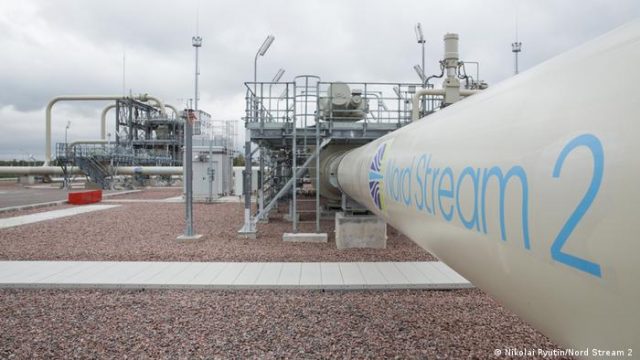
Nord Stream 2 gas pipeline padlocked

Putin’s war has created an electroshock for Europe because it depends on fossil fuel imports for 60% of its energy, one-third of which comes from Russia.  Organically evolving European Union (EU) plans target 2027 for a massive and rapid transition to a green economy and energy independence.  Renewables, electric vehicles, clean technologies and energy efficiency will all play major roles in the creation of fast-forward paradigms for global emulation.  For the immediate, by the end of 2022, EU plans entail cutting Russia gas imports by two-thirds, substitution fuel sources plus ramping up renewables and energy efficiency.  These EU plans will be devastating for the Russian economy.  Russia needs European oil and gas revenues more than Europe needs these fuels.

Canada’s 2030 climate plan: Designed to fail

Oil sands development

Canada’s 2030 Emissions Reduction Plan (ERP) was made public March 29, 2022.  Since the country’s oil and gas sector with methane included, plus transportation components, together, represent about half of Canadian emissions, one would have thought these sectors would be objects of strong climate initiatives.  Yet, for these sectors, the ERP appears to be the product of accommodation of industry lobbies.  The action items stupendously lack integrity and are weak.  As such, the ERP like all previous government emission reduction targets, will not achieve its goals.

Fossil fuel methane climate emergency: Solutions

Methane emissions underestimated

Methane emissions are underrated at one third of global warming gases, largely because fossil fuel sector methane emissions are underestimated by 70 percent.  Current data indicates the energy sector accounts for 40 percent of man-made methane.  Consequently, the COP26 non-binding pledges of over 100 nations for a 30 percent reduction by 2030 are not only dreadfully inadequate, but also, without standardized measuring, reporting and verification standards, oil and gas industry methane greenwashing is rampant.  The draft European Union (EU) plan to reduce methane emissions up to 80 percent by 2030 zeros in on methane accountability norms and establishes transparent extraterritorial requirements to cover imports.  The U.S. too, with the backing of the Inflation Reduction Act and the Bipartisan Infrastructure Law, now has the foundation for vigorous proposal to update its regulations and investments in methane reduction.  Sadly, Canada’s methane ambitions procrastinate and are fuzzy.  Lastly, stringent government actions would be less critical if the oil and gas industry applied existing technologies to capture fossil fuel methane and sell it for a net profit.

Shipping sustainability: Oxymoron but paradigm to change

Container ship powered by dirty oil, updated April 27, 2023

Cargo and cruise ships represent 2.6 percent of global emissions and could reach 17 percent by 2050.  Nearly all these ships use cheap dirty heavy oil with high sulphur content.   International regulations aren’t helpful as they are lax and difficult to enforce.  Fortunately, Maersk, the largest container shipping company in the world, has created the conditions for an industry-wide sectoral revolution by setting 2040 as a target to achieve net-zero emissions, requiring all new vessel acquisitions be carbon-neutral and has already ordered 12 green methanol powered ships.  Concurrently, many new technological solutions are under development including ones associated with electric, wind and biofuel energy sources.  Stringent territorial waters and docking standards, Maersk technological catalysts, financing of emerging remedies, could advance clean technologies quickly.  Finally, open-loop scrubbers are widely used as a band-aid to remove sulphur from the exhausts to transfer the pollutants into the sea.

Canada’s new plastics strategy falls far short of expectations

On a global scale, less than 10 percent of plastics are recycled.  Plastics are ubiquitous, meaning regulating its use is especially complex.  While Canada has only banned a half dozen of single-use plastics, the European Union and China are engaged in a holistic multi-year incremental approach to manage plastic production, distribution, consumption, recycling, disposal and substitution. Accordingly, the actions of these latter jurisdictions will influence global innovation and standards. By comparison, Canada’s plastic initiatives are symbolic greenwashing.

Green economy: Financial sector zigzags

Green financing improves but has a long way to go

BlackRock, the world’s largest investment firm, has indicated that those that don’t tackle climate change will lose money in 5 years. Some financial institutions have made multi-trillion commitments from now to 2030 to invest in the green economy while still focusing the majority of investments in fossil fuels. Canadian banks are among the global top fossil fuel investors.

Trudeau’s climate greenwashing mayhem

Justin Trudeau announced another of his Liberal government’s green plans in December. I have lost track of how many green plans we have had, but not a single one has met its targets. With the prime minister set to officially meet with the new U.S. president Tuesday, the Liberals’ environmental agenda looks embarrassingly unambitious by comparison.

Raising the price of carbon is one of the pillars of the government’s latest plan to reduce greenhouse gas emissions. But there are no magic bullets and piecemeal measures don’t work.

The new U.S. administration has announced plans for an international climate conference led by President Biden on April 22, which is Earth Day.

In other regions that have carbon pricing mechanisms, such as the European Union and China (with its pilot schemes), climate change abatement plans consist of many complementary measures, including stringent legislation.

Want to invest in Canada’s clean economy? Good luck

0

As of last year, close to one thousand institutions with three per cent of global savings under management have engaged in some form of divestment from fossil fuels.

In June 2019, Norway’s parliament unanimously voted in favour of directing its $1.06 trillion Government Pension Global Fund (GPGF), the Norges Bank, to divest more than $13 billion from fossil fuels while dedicating more investments to clean technologies.

The caveat is that this will apply only to companies that are exclusively in the business of upstream oil and gas production and some coal sector investments. The GPGF is Norway’s sovereign fund derived from oil industry revenues to assure Norway has a steady source of revenues in the post-oil world.

Shell has expressed concern that the growing fossil fuel divestment movement could impact on the company’s performance.

Shell aims to lead Big Oil in pivot to clean energy

0

A short list of just 25 fossil fuel producers are responsible for half of all carbon emissions since 1988, according to the The Carbon Majors Report. The report indicates that if fossil fuel extraction continues the same trend over the next 28 years, global average temperatures would rise approximately 4°C by the end of the century.

Diversification may be a matter of survival for fossil fuel companies in the event there is a global acceleration towards complying with the Paris Agreement. That would mean leaving 60 to 80 per cent of reserves in the ground. What are presently assets could turn into liabilities to the tune of $674 billion (USD) now and $6 trillion by 2028.

While getting Big Oil to pivot to clean energy may seem far-fetched, some fossil fuel giants are starting to get serious about reducing their carbon footprint and diversifying towards clean technologies. Shell is one example of the widening fault lines among Big Oil, and a very notable one.