Carney sleepwalking Americanization of Canada: Fossil fuels, nuclear, vehicles, military, austerity, immigration and more

Mark Carney won the April 28, 2025, federal election, in part, because many Canadians believed he would be the best to face up to Trump. Trump often refers to Canada as the 51st state. The irony is since then Carney has engaged in a plethora of initiatives to incrementally sleepwalk Canada towards Americanization of segments of the Canadian political energy and economic landscapes.
Bill C-5: Fast-tracking projects of “national interest”
One of Carney first legislative accomplishments was the hastily adopted Bill C-5 in June 2025, also known as the One Canadian Economy Act. This Act gives Carney absolute power to approve almost whatever major projects he wants in the “national interest,” a very subjective terminology.
Under the umbrella of the Act, nearly all existing legislation can be ignored, and/or rendered ineffective, for major projects of “national interest.”
The primary objective of C-5 is to fast-track major projects such as very large-scale oil and gas export pipelines. C-5 is in keeping Carney’s aim from the outset to make Canada an energy superpower, U.S. style.
Priority “national interest” projects, environment shoved aside
On September 11, 2025, Carney announced the first round of major projects on his to do list. Indications were given that projects for the next round of approvals will occur sometime in November 2025.
Natural gas
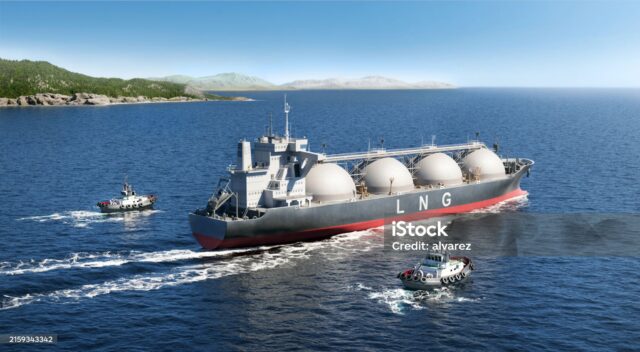
One of the first to go major projects high on the agenda is that of a supporting the Phase 2 of the LNG Canada, the liquified natural gas (LNG) export terminal in Kitimat, British Columbia.
For the next round of announcements, the probabilities are good for a LNG terminal northern Manitoba, Churchill on the Hudson Bay.
This speaks to Carney’s fixation with “drill, baby drill” resembling Trump’s fetish and an affirmation that Canada is the sixth largest natural gas exporter in the world.
To this end, Carney discussed possible LNG exports to Germany while with Chancellor Friedrich Merz in Germany in August 2025.
This is incongruent with EU gas consumption down by 20% between 2021 and 2024; and EU LNG demand is expected to peak in 2025. The EU clean energy goal is that of energy independence, favouring clean energy by 2027.
Likewise decarbonization is a global phenomenon.
Too, it doesn’t seem to phase Mark Carney that methane emission leaks associated with fracking natural gas, through to the LNG export destination and consumption, render LNG as bad as coal.
Methane has a global warming potential 80 times that of CO2 over a 20-year period.
The declining prices of renewables, mean infrastructure for electrical power from gas is headed for stranded assets.
Contrecour
On the first priority “national interest” list is the construction of a second Montreal port terminal at Contrecoeur. This project has plethora of environmental degradation implications, including contravening the federal legislation, Species at Risk, the Canadian Environmental Protection Act and The Fisheries Act. While the project was the object of environmental impact approval in 2021, many authorization requirements remain outstanding.
Oil export pipelines
High on the next phase of projects are cross Canada oil export pipelines comprising:
1) Energy East to cross over most of Canada from Alberta to an export terminal on Canada’s Atlantic coast; and
2) the Northern Gateway with a terminal on the Pacific coast.
Carney’s export pipeline contemplations seemingly don’t take into account the experiences of the Canadian government-owned Trans Mountain pipeline twinning project to the Burnaby, British Columbia Pacific coast. This project, which has been operating under capacity at a loss. It has cost Canadian taxpayers C$50 billion in federal subsidies so far and costs Canadians C$3 billion annually.
How fitting is it for Carney to appoint in August 2025, Dawn Farrell, the till then chair of the board of directors of Trans Mountain, to head up the new Major Projects Office.
Here again the matter of global decarbonization is ignored. There is an existing oil and gas glut on global markets which will get worse as more new suppliers enter global markets while China, the European Union, South Korea, Japan, Southeast Asia, South Asia and other traditional oil and gas importers, are decarbonizing.
Decarbonized oil: An oxymoron
Mark Carney’s drill, baby drill thrust would have us believe that there aren’t serious emissions considerations related to his oil export pipelines because Canada would be exporting “decarbonized oil.” Decarbonized oil doesn’t exist, a Trump-like climate hoax!
Carney was alluding to the next set of announcements to include the carbon capture and storage project of the Pathways Alliance.
Not a single CCS project has met its goals regarding emission reductions, costs and timelines.
The Alliance is made up of 6 major oil sands producers for which the combined revenues were C$35 billion in 2022. Does the Pathways Alliance require government subsidization?
And the “decarbonized oil” does not consider that 75% to 80% of CO2 emissions occur during combustion.
Surely Carney has made a political decision without regard to the environment and economics.
Small modular reactors (SMRs), like Trump
Carney is emulating Trump’s fascination with nuclear energy.
In the works is a nuclear renaissance collaboration deal between the U.S and the United Kingdom. This deal reserves a special focus on small modular reactors (SMRs).
Ontario’s proposal to build 4 SMRs at its Darlington site, are included in the first round of announcements. SMRs are nascent, still experimental, with a track record on costs per unit of energy produced suggesting it should be a no go.
Governments, with the exception of China and Canada’s Ontario Premier Doug Ford, don’t see the case for SMRs for which the costs are five times that of an onshore wind farm or solar project to produce the same amount of energy.
A 2024 report of CSIRO, Australia’s science and research agency, found SMRs to be the most expensive option for power generation. CSIRO predicted SMRs would cost US$382 to US$686 per megawatt hour in 2030.
Pedaling backwards on vehicle emissions, like Trump
The Canadian 2026 requirements for automakers to hit 20% of new vehicle sales to be zero emission vehicles (ZEVs) beginning 2026, was dropped in early September 2025. This adjustment is in line with Trump’s plan for choice between electric and gas-powered vehicles, reversing 2025 vehicle emission rules to 2019 levels.
A Trump conflict with California is ongoing as California’s mandated target market share for ZEVs for 2026 is 35%, with significant incremental increases to 100% by 2035. In 2025, around 25% of new passenger cars in the state are electric.
Carney and Trump and pedaling backwards on the transportation energy transition. Global sales of electric vehicles in the first 7 months of 2025 were up 27% over 2024.
Canadian environmental bottom line
Not surprisingly, the Carney administration cannot commit to meeting the Paris Agreement, according to a statement from the office of Environment Minister, Julie Dabrusin.
Quadrupling military budget to attain 5% of GDP: Aligning with Trump’s Ministry of War
Responding to Trump’s nagging Canada for not spending enough on military capacity, Carney plans to quadruple Canadian spending on defence by 2030, beginning with an increase federal funding for military support by C$9 billion in the upcoming fiscal year 2026/2027, 2% of Canada’s GDP, as part of incrementally increasing military investments to reach 5% of Canada’s GDP by 2035. There isn’t any scientific analysis as the why the military sector should be such a major percentage of GDP.
In keeping with the 5% of GDP objective, Carney’s urgent focus includes the purchasing of 12 submarines to patrol Canada’s three coasts.
This military impetus seems to conveniently ignore that the only potentially “dangerous aggressor” country on Canada’s borders is Russia, in Canada’s Arctic region.
However, submarines on Canada’s Atlantic and Pacific coasts may be justified should Canada be preparing for WWIII, with a Department of War. This resembles Trump’s Department of War with its economic benefits.
Notwithstanding, Carney likes to boast of the economic opportunities, as a sovereign economic agency, associated with new defense spending. Carney speaks of the economic possibilities for innovation and the creation of good new jobs for Canadians. This is similar to the Trump narrative.
Sure, there will be economic opportunities with any type of major fresh government spending.
Why emulate the U.S. military industrial complex when Canadian spending of huge amounts on cleantech innovation and deployment can close the gap in one of the fastest growing sectors in the world, a sector for which Canada is pitifully weak competitor?
Austerity cuts to government services, Trump “light”
To compensate for the sharp hike in the military budget, Carney will be cutting operational funding for federal services by 7% in fiscal year 2026-27, 10% in 2027-28 and 15% in 2028-29.
This dismisses that federal services are cracking across the board because of insufficient financial resources, people and operational needs, unable to accommodate demand. Examples are manifold, ranging from inexpedient reviews of each immigrant’s status request to underfunded public transportation, to inadequate transfers of federal funds to support financially tormented provincial healthcare systems.
Targeting immigrants and border security, Trump “light”
Awaiting approval is Mark Carney’s Bill C-2, the Strong Borders Act, which allows for discretionary retrograding of an immigrant’s status and discretionary deporting of immigrants. This appears to be an “emulation light” of Trump’s chaotic harsh treatments of immigrants.
Other Trump appeasing initiatives
Ceding to Trump’s rants, Carney annulled the implementation of the Digital Services Act, which, like similar Acts in Australia, France and others, would have imposed a 3% tax on digital services such as Netflix, Amazon, Google, Meta, Uber and Airbnb, crossing into Canada, earning revenues in Canada, without paying any taxes. It has taken almost a decade for Canada to adopt this act in 2024, due to heavy lobbying/bullying.
To avoid rattling the beast, Trump, Canada will not apply retaliatory tariffs on Canadian exports to the U.S. that are impacted by U.S. tariffs and not protected by the United States-Mexico-Canada Agreement (USMCA).
Trump implemented 35% tariff on items not protected by the USMCA anyway.
The Takeaway
Mark Carney is Americanizing segments of the Canadian political landscape, but so gradually that it the cumulative results are missed by most Canadians.
Climate change has taken a back seat to Carney’s Trump-like “drill baby drill” “national interests” to favour major oil and gas projects.
Projects that defy economic and/or environmental considerations are being sanctioned, such as small modular reactors.
Hints have been offered that Canada will not comply with the Paris Agreement.
Zero emission vehicle objectives have been abandoned, emulating Trump in the process.
Canadian military spending will be quadrupled while Carney boasts of economic opportunities for doing so. This aligns well with U.S. military-industrial complex mindset and Trump’s Department of War.
The stretched thin government services will be cut to compensate for quadrupling in the military budget. Trump has been shown to be most enthusiastic on cuts to “wasteful” government services.
The Digital Services Act has been abandoned, though long awaited, immediately after Trump threatened more tariffs if the Act was to be implemented.
Discretionary powers to retrograde the status of many immigrants and to deport immigrants are to come, though there is no apparent need for doing so. This may be described as a pale reflection of Trump policies on immigration.
Carney is sleepwalking the Americanization of Canada and action on climate change has been slaughtered on the altar.
Nearly all of this wasn’t laid out in Carney’s election campaign.