Cleantech investments outpacing fossil fuels
Trump invaded Venezuela to assert greater global dominance via subordination of the world’s oil sector, and calls climate change a hoax.
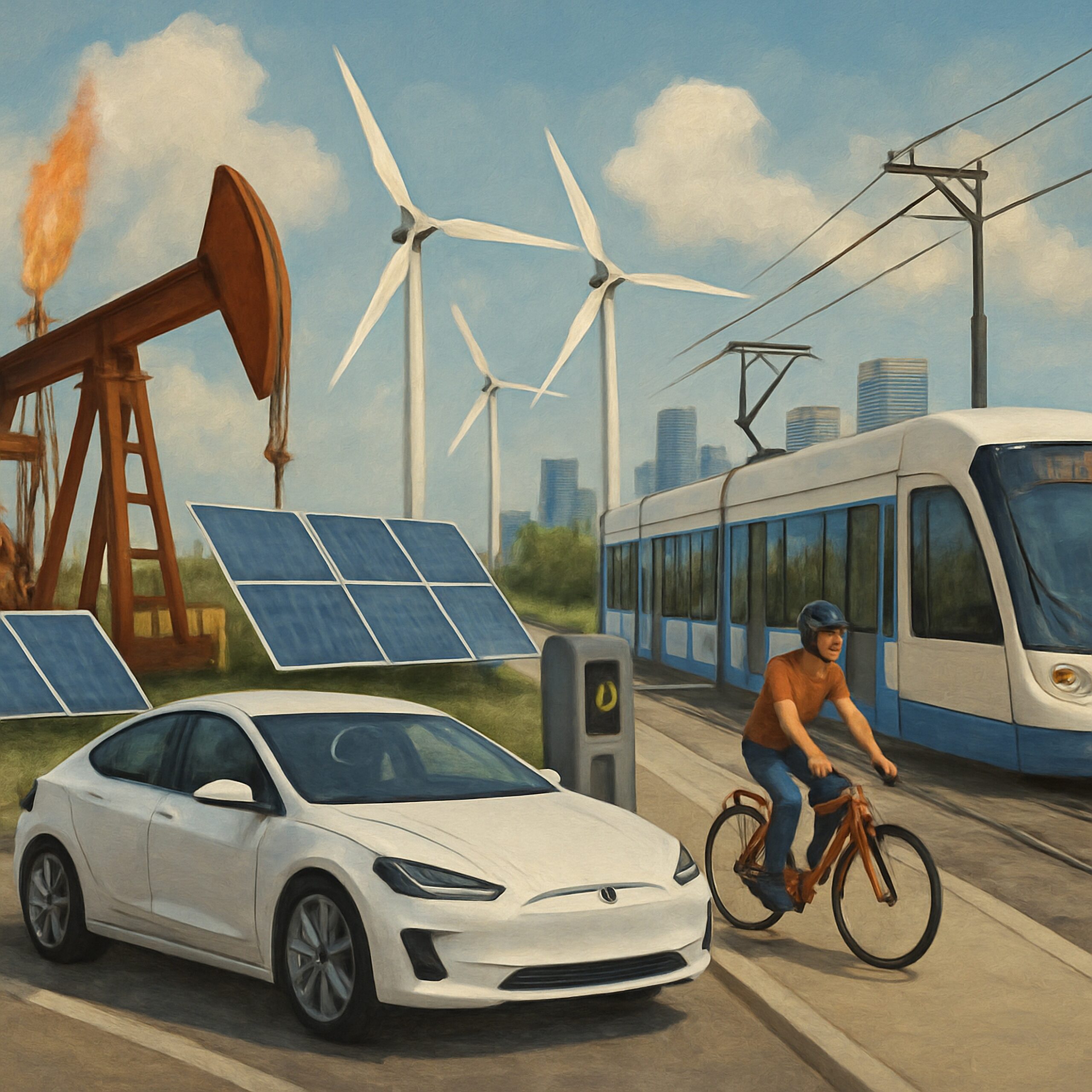
Not as well-known, there is a global green revolution is in progress.
Two-thirds of the 2024 record of $3 trillion invested in energy sources was dedicated to cleantech such as renewables, electric vehicles (EVs), grid storage (batteries) and energy efficiency.
For 2025, estimates of global investments in cleantech range from $2.3 trillion to $3.3 trillion, according to BloombergNEF and International Energy Agency (IEA) respectively.
Renewables progress to-date
In 2024, renewables captured 92% of new global power capacity, adding 518 gigawatts (GW), a 15% increase, bringing total capacity to 4.44 terawatts (TW). Asia, Europe and North America represented 85% of this achievement.
For the period 2010-2023, solar accounted for 80% of the renewables capacity increase.
Ironically, despite Trump, solar and wind were attributable to 94% of U.S. new power capacity installations in Q1 2025 plus an increase of 20% in domestic solar manufacturing. In California where gas is the principle source of power generation, gas consumption between January and August 2025 was 18% lower than for the same period in 2024. In those first 8 months of 2025, California solar generation increased 17%.
China alone consistently represents 60% of global renewable energy capacity growth.
India is aligned with its 2030 goal for 2.5 times renewables growth. This would make India the second largest market for renewable capacity expansion.
The EU renewables capacity is anticipated to amount to 71% of EU electricity generation by 2030.
On a global scale, by 2030, the International Energy Agency (IEA) 2025 annual renewable energy report foresees global renewable capacity to be 2.2 times that of 2022 levels reaching 4.6 TW.
The IEA optimistic scenario suggests 2.8 times growth is possible.
Whatever scenario prevails, it translates into renewable power capacity growing more during 2025 to 2030, than in the previous 5 years. This would be more than China, EU and Japan existing power capacity combined.
Nevertheless, this would not be enough. Global renewables investments would have to double between 2025 and 2030 to meet climate and energy targets.
EVs
For 2025. the IEA and Ember estimated EVs came in at more than 25% of the world vehicle market, 20 million units. That’s a big jump from 2024, for which 20% of global vehicle sales were EVs, 17 million EVs.
This is so despite Trump and Canada’s Mark Carney being instrumental in slowing down EV sales in North America.
Of EVs manufactured in China, 95% are equipped with the more affordable lithium-iron phosphate (LFP) batteries, not requiring the expensive nickel or cobalt. The absence of cobalt addresses ethical considerations.
Other global EV manufacturers are now transitioning to LFP batteries. This is a critical development as the battery typically comes in at 40% of an EV’s cost. Those that don’t get onboard for LFP batteries could experience a “Kodak crisis.” The transition is a challenge since China now produces 99% of LFP batteries in the world.
Ford is preparing to shift to LFP batteries and Tesla is already equipping its standard range Model 3 and Model Y with LFP batteries.
Volkswagen’s battery affiliate, PowerCo, is currently considering a shift to LFP.
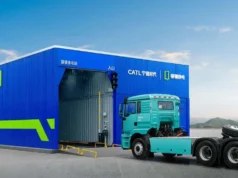
Yet even LFP batteries may soon be history. Sodium-ion batteries, which don’t require any critical minerals, are now market-ready. Up to 2025, sodium-ion batteries have been used for energy storage, but in 2027 China’s CATL will be able to mass produce sodium-ion batteries at a cost less than the LFP versions. EVs so-equipped will be more affordable than gas-powered vehicles and have good cold weather performance.
With advent of more attractively priced EVs, EV sales will take off as is already the case in China.
And China’s BYD is manufacturing highly attractively priced short-haul heavy duty battery electric trucks.
EVs displaced oil demand by 1.5 million barrels/day in 2024. Petroleum demand for road transportation is expected to peak in 2027. Peak passenger vehicle oil demand is projected for 2025.
For 2 and 3 wheelers, peak oil consumption has already been reached.
The exceptions are the U.S. and Canada which are not following global EV sales trends as both countries have abandoned regulations and other initiatives supporting EVs.
Oil exceeding demand
Between January and September 2025, there was an oil glut or surplus of 1.9 million barrels per day, (b/d). The glut is expected to spiral up to an untenable 4 million b/d 2026. Yet in September 2025, the supply increased by 5.6 million b/d more compared to the preceding year.
China will heavily influence global supply and demand as it represents 25% of global crude oil imports and, as of 2025, these imports peaked and started to decline.
Promising oil financial results will increasingly be harder to achieve because of a combination of oil prices at an all-time low, the least costly to exploit wells now being spent, and inflation/geopolitics.
For a profitable trajectory, the oil price/barrel must increase 5% annually, but this is not happening. The breakeven oil price is now $47, and for oil sands, $57.
Renewables displacing natural gas market
As of 2025, U.S. liquified natural gas (LNG) export terminals comprise 8 currently operating, 8 under construction and another 10 approved, but not yet under construction. In addition, the U.S. Dept. of Transportation Maritime Administration is reviewing 5 LNG export terminals.
Globally, there is a plethora of liquid natural gas (LNG) export terminals, approximately 230 are in operation or will be fully operational, within the next few years.
The gas demand side of the equation paints a different picture.
China, the world’s largest energy consumer, experienced a 24% decline in natural gas imports in 2024. Massive deployment of renewables, together with politically motivated imports of Russian gas are behind this.
Japan, Europe and South Korea, which represent half of the world’s natural gas imports, are likely to undergo a 20% drop in LNG use by 2030.
Japan’s gas consumption has dipped 20% since 2018, peaked in 2024, and has since dipped 25% as a consequence of the recommissioning of nuclear capacity.
Japan resells more imported LNG than it uses, 40% of its imports, due to greater domestic renewables and nuclear capacity. But with declining markets for natural gas, import markets being oversupplied and low prices prevailing, this economic direction is now considered high risk.
For the EU, which is entirely dependent on imports for gas supplies, gas consumption dropped by 20% between 2021 and 2024, likely peaked in 2024. By 2030, based on 2024 levels, EU gas use may drop another 29% by 2030, and 67% by 2040.
The U.K., Germany and Chile reduced imports of gas and coal by 1/3 since 2010.
In the U.K., electricity generated by imported fossil fuels dropped from 45% to 25% in the last 10 years.
Bulgaria, Romania and Finland, formerly dependent on gas imports from Russia, have reduced gas imports nearly to zero.
Denmark has cut fossil fuel imports more than half.
Japanese LNG consumption peaked in 2014 after the Fukushima catastrophe,
In India, only 2% of power capacity stems from natural gas. The 32% of power generation from natural gas did not produce any electricity. Consequently, 8% of India’s gas-fired power supplies have become stranded assets.
Pakistan, once a gleam in the eye of LNG exporters, has halted to LNG projects. Pakistan has engaged in a radical transition to renewables. During the last two years Pakistan installed 40 GW of solar. This is extraordinary since its entire power generation capacity in 2023 was 46 GW.
Pakistan now has enough distributed solar power potential to meet all of its needs, including those of isolated communities. Distributed energy now furnishes more energy to the country than power from the grid.
China leading the way
China’s $942 billion investments in cleantech in 2024, was not far off from global fossil fuel investments in that year, $1.2 trillion. If the value of cleantech production and services are included in China’s cleantech thrusts, it comes to $1.9 trillion in 2024, or 10% of China GDP.
In 2025, up to July, China’s cleantech export earnings were $120 billion, an amount which exceeded the U.S. earnings on fossil fuel exports, $80 billion. For 2024, earnings from China’s cleantech exports were $180 billion, and U.S. fossil fuel exports, $150 billion.
And, with critical minerals being the pillars of a green transition, it’s hard to keep up China’s green transition. In this regard, China is the world’s top refiner for 19 of the 20 top minerals and on average accounts 70% of refining market share.
China produces 80% of world solar PV modules and battery cells.
By the end of April 2025, China had 2.02 TW of installed renewables capacity, up from 1.83 TW reached in 2024.
As well, the impressive Chinese cleantech portrait includes 70% of global EV sales and 40% global EV exports. China’s EVs came in at 54% of domestic EV market share in 2025.
On public transportation, China had 48,000 km of high-speed rail at the end of 2024 and will add another 12,000 km by 2030, 50 subway systems with over 10,000 km of track, substantial light rail and had 542,600 e-buses, 84% pure electric, on its roads in 2022.
Heat pumps are massively being deployed in China, replacing coal for household heating.
The cumulative global impacts of these changes are phenomenal.
The result is China is single-handedly reducing global prices of cleantech, EVs and energy storage, thus changing global energy and economic paradigms.
Trump’s enemy within and Canada’s capitulation to fossil fuel sector
The Trump administration views cleantech as an enemy within.
However, the U.S. business community must plan for competitiveness in the global green economy now. They cannot afford to delay a catch up after Trump becomes history.
Because the cleantech manufacturing in the U.S. entails commitments of billions to the green revolution, it cannot be reversed. The timelines for construction of new manufacturing plants are measured in years, and supply contracts can span 5 years.
It is Canada that will be the big loser.
Canada’s “national interest” projects are exempt from other existing legislation, according to Law C-5 and supported by Budget 2025. National interest projects announced so far include the following:
On November 27, 2025 a Memorandum of Understanding (MOU) was signed between Prime Minister Mark Carney and Alberta Premier Danielle Smith, for a new oil pipeline from Alberta to the British Columbia (BC) coast, even though the Canadian government-owned Trans Mountain pipeline from Alberta to the BC coast operates under capacity, cost C$50 billion in subsidies plus Canadian taxpayers contribute C$3 billion/year to operate it.
BC opposes the pipeline.
On December 2, 2025, at a meeting of the Assembly of First Nations in Ottawa, a resolution was adopted objecting to the new pipeline. One should expect other protests to come from First Nations.
The hope is not strong for private industry promoters to step up to the plate.
The MOU also comprises:
Abolition of the regulation not permitting oil tankers along the BC coast: At the December 2 Assembly of First Nations meeting, there was an unanimous rejection of ending the moratorium on tankers floating on BC coasts.
Weakening the Alberta the industrial carbon price, the Output-base Compliance System, that is supposed to increase the industrial carbon price per tonne from C$95 now, to up to $170 by 2030: Under the MOU, the parties will review a proposed on a carbon price of C$130/tonne on or before April 1, 2026.
An Alberta waiver from the clean electricity regulations that set limits on carbon dioxide pollution from almost all electricity generation sources, targeting fossil fuels: The regulations provide a mix of compliance flexibilities and do not prescribe specific technological solutions. The MOU exemption, strictly for Alberta, may translate into weakening of Alberta’s agenda to phase out coal-fired electrical generation. This is nice since Alberta placed a 7-month moratorium on permits for wind energy projects ending February 2025. Nearly half of the projects that were to go ahead before the moratorium have not been placed back on the table.
While both the clean energy regulation and industrial carbon price policies were carved out for Alberta, other provinces would ask for similar treatment.
The abolition of the cap on oil and gas emissions by 2030: The cap would have allowed a 16% increase in oil and gas production by 2030-32, relative to 2019. This magic would be achieved with the application of carbon capture utilization and storage (CCUS) which would supposedly result in a 35% GHG reduction by 2030, based on 2019 levels. Yet not a single CCUS project has met goals for emissions reduction, costs and timelines.
For the new pipeline, Alberta must support the CCUS project of the Pathways Alliance, an Alliance of the 6 major oilsands producers:
An extension of the timeline on methane reduction, strictly carved out for Alberta.
Support for nuclear power in Alberta.
This MOU is a gift from heaven to Paul St-Pierre Plamondon the populist ethnocentric anti-immigrant leader of the Quebec independence party, Parti-Québecois (PQ). St-Pierre Plamondon rejects being associated with a fossil fuel state. He considers federalism to be a malicious ideology. The PQ is in first place in the polls for the upcoming Quebec election around October 2026.
Steven Guilbeault, former minister of Environment and Climate Change Canada, afterwards minister of Canadian identity and culture, has resigned as a cabinet minister.
Other national interest projects are presented below:
1) Phase II of the LNG Canada export terminal on the BC Pacific coast;
2) construction of 4 small modular reactors (SMRs) at the Darlington Ontario site, despite SMRs being an unproven technology with poor economies of scale, such that a SMR cost is 5 times the cost of renewables to produce 1 GW of energy;
3) removal of a cap on oil and gas emissions irrespective of the above-mentioned MOU;
4) Pathways Alliance federal support, whether or not there is a new oil pipeline;
5) less stringent greenwashing clause in the Competition Act, a regulation that had required companies backup their present and future emission reduction claims, and;
6) the Ksi Lisims Pacific coast offshore LNG project with the terminal to be constructed in South Korea and despite Indigenous opposition to the 800-kilometre Prince Rupert Gas Transmission to transport gas from the northeast BC northwest-Alberta northeast border.
Additional “national interest” projects concern critical minerals, a small northern Canada hydro-electric initiative and a possible BC north coast transmission project. The smorgasbord of projects constitute climate minuses cancelling out the few pluses.
In September 2025, Prime Minister Mark Carney “paused” the 20% for 2026 zero emission vehicle (ZEV) mandate. The mandate refers to the percentage of ZEV vehicles each manufacturer must sell in a given year. It had been set for 20% for 2026.
A July 24, 2023 announcement by the former Minister of the environment on the termination of fossil fuel subsidies had so many exemptions, it changed nothing.
The takeaway
To sum up, the oil and gas market will decline, while supply will go up.
The transition to cleantech is unstoppable because of the attractiveness of low prices and energy security that comes with reducing reliance on foreign fossil fuel imports.
Add to that, two-thirds of fossil fuel energy consumed is wasted, or does not contribute to the intended tasks.
Private sector and general public consumers will make the transition to clean solutions when there are price, choice and environmental advantages at the outset. These transition attributes are enhanced by the absence of the volatility lottery of fossil fuel prices.
Many COP30 participating nations, subnational governments, cities, the European Parliament and others that want a roadmap for phasing out fossil fuel are planning the First International Conference on the Just Transition Away from Fossil Fuels, April 28-29, in Colombia. This would leave the fossil fuel export nations out in the cold, while preempting blockage of a phase out roadmap.
As for Canada, the “national interest” projects, especially the federal-Alberta governments’ MOU, are mainly fossil fuel initiatives that head Canada towards stranded assets and national disunity.
Economic and environmental policies among most fossil fuel importing countries are aligned for a global green transition. The remaining nations will have to go with the flow.