Accommodating AI energy needs
There are several major concerns about data centres, concurrent with acknowledging the benefits of AI.
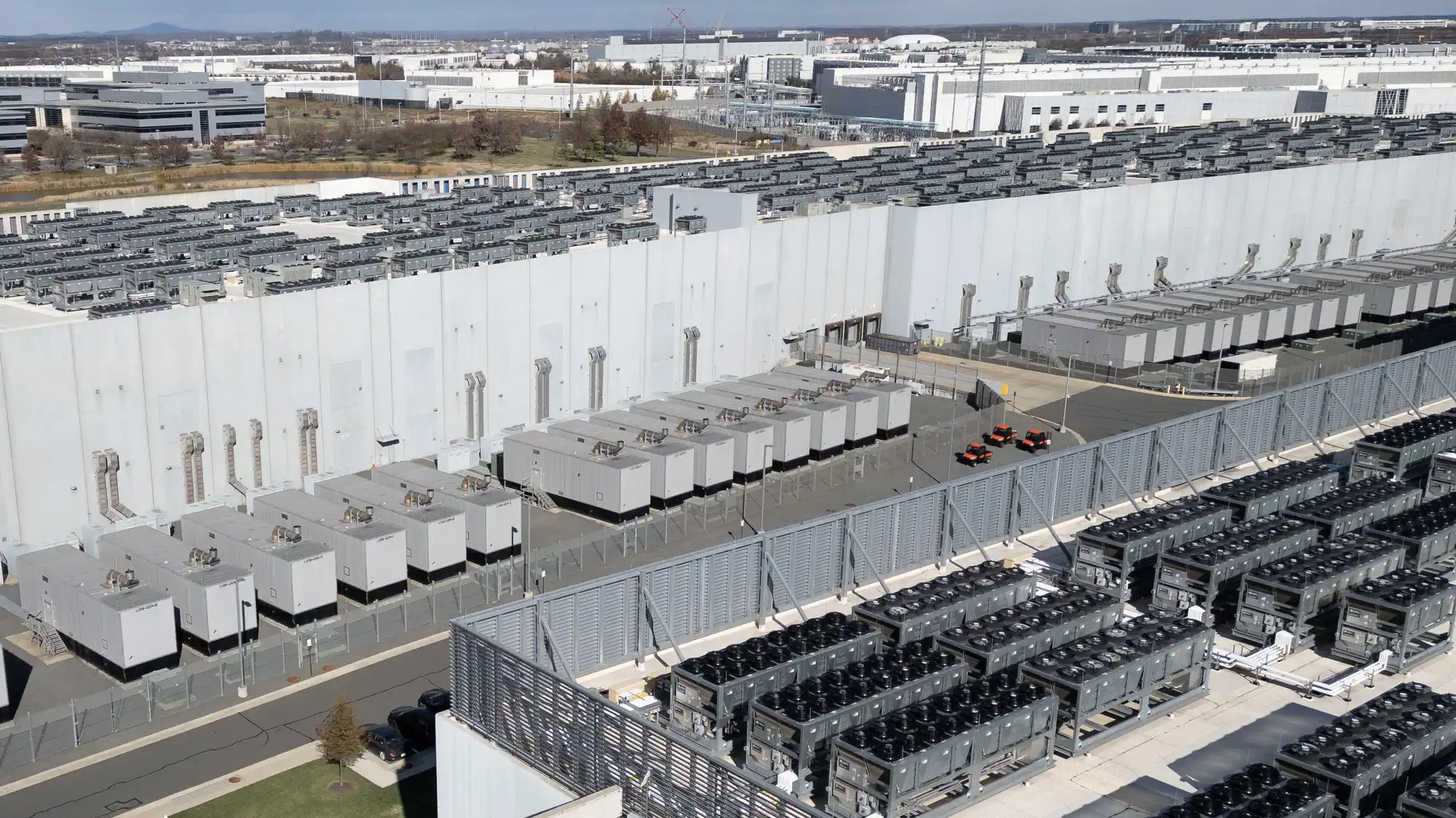
One is intensive energy requirements and the type of energy called upon. Half of the US existing and planned AI centres are conceived to rely on fossil fuel noisy generators on site.
For data centres dependent on utilities, clean and thermal energy plants alike, the utilities must invest in new production capacity, up to 3 times that of current capacity. The expansion of utility production, and modifications to the grid, can result in higher electricity rates for commercial and residential users.
The other great concern is that of disastrous results stemming from humans being unable to control AI. Current and former industry representatives have described the dangers in terms of risks to humanity that could kill us.
China and renewables
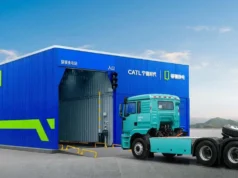
China is producing more renewable energy than its grid can currently handle and can DOUBLE power for accommodating most energy needs of data centres AFFORDABLY in the next 5 years. So much so, clean power can provide energy for its fleet of data centers while still exporting computing capacity to the world.
China aims for renewables to supply four-fifths of the country’s AI power demands by 2030, up from 11% in 2023. Power demand for AI data centres is expected to rise by 300 billion to 500 billion kilowatt-hours between 2026 and 2030, accounting for 18% of total electricity demand growth over the period. That low range is about the entire annual power generated by the U.K.
Between 2022 and 2025, China added more generating capacity than the entire US power system, pursuing an “all of the above” strategy calling upon coal, solar, wind, nuclear and hydropower simultaneously.
Evidence that China will succeed in its AI energy ambitions, China’s 2025 renewables capacity added climbed to 434 GW, 315 GW of solar and 119 GW of wind. Solar and wind now account for roughly half of China’s total power capacity, a quarter of generation.
On atomic energy, at least 10 new reactors were approved each year from 2022 to 2025. More than half the atomic power capacity under construction around the world is now in China.
Four of the seven largest operating hydropower plants are in China, and construction has begun on a project in Tibet that will be the world’s largest power plant when it’s completed.
A challenge is that AI data centres are not flexible in power demand as is the case with aluminum smelting. Thus, once purchased, data centres must use power quickly. In China’s case, this suggests AI data centres should place the environmental emphasis on reducing emissions, not power use.
US Midterms Revolt over AI data centres
Data centres were a big issue in the midterms. including polluting gas plants near them.
In the US, which currently has 75% of global AI IT capacity, Donald Trump has advocated a laissez-faire for AI firms to self-regulate. He suggested that the warnings that AI can “kill us” originate from the same people who warn about the climate “hoax.”
In the midterms, data centres reliant on-site fossil fuel generators and their impacts on electricity affordability and noise, had become proxies for citizens’ environmental concerns, the source of a major revolt across the US.
By Q2 2026, 45 planned US data centre projects collectively valued at $88 billion, were put on pause due to local opposition.
Democratic midterm wins could leave more than half of proposed new US data centres out on a limb.
Democrats spent 3 times more than Republicans, collectively, on including data centres in their election campaigns.
The majority of Democrats elected as members the Congress and Governors advocated stronger data centre regulation and/or a moratorium to address issues such as impacts on electricity prices, water consumption and noise.
Among newly elected Governors, 32 out of 34, support strong regulations or restrictions, 12 of the 34 are for bans or moratoriums.
Gina Hinojosa, Democrat elected Texas governor, the first Democrat to hold this post in 3 decades, had promised a moratorium on data centres in the absence of a good deal for Texas.
Clayton Tucker, the first Texas Democrat elected state agriculture commissioner since 1986, integrated stopping or slowing down of data centre proliferation into his campaign.
The new Ohio governor, Dr. Amy Acton, first Democrat to occupy the position in 20 years, campaigned on a conditional moratorium on data centres in her state. Conditions include data centres paying for the costs of utility accommodation; using of unionized labour; and abiding by the state’s environmental standards. In an Ohio election day referendum, with 21 ballot questions, the majority of residents voted down AI build-outs, and 14 Ohio cities supported heavy restrictions or banning them.
To a certain extent there has been some progress in US AI energy self-regulation. OpenAI has released a “National Community Impact” on avoiding nondisclosure agreements and assuring communities don’t bear the costs of providing energy to data centres. This compact focuses on noise, water and energy consumption, reducing power during peak periods and return of electricity to the grid.
European Union clean energy solutions
The EU data centre capacity is expected to more than double in the coming years, reaching 28 GW by 2030, from 12 GW last year. That expansion will lift their share of EU electricity consumption beyond the current 2.5%.
In September 2026, the European Commission (EC) launched 12-week long public consultations and calls for evidence on minimum performance standards for data centres. Based on feedback, the EC will conduct the preparatory work for a legislative proposal in Q2 2027. Submissions to the EC are due by December 14, 2026.
Issues to be reviewed by the Commission include “technological sovereignty, competitiveness, energy resilience and security.” The growth of AI data centres will review challenges related to energy consumption, impacts on electricity grids, carbon emissions and environmental resources such as water.
Under the Energy Efficiency Directive, the Commission may propose additional measures to enhance the energy performance and reduce the environmental impact of data centres, including minimum performance standards. The EED already has requirements for energy efficiency and sustainability for AI data centres.
The EU is also working on a sustainability label for data centres, covering criteria including clean energy supply and water use, which large facilities would have to make public.
Regarding nuclear power, the Commission is still debating issues including how to assess data centres powered by nuclear energy
Australia and clean energy solutions
The Australian government has produced a consultation paper on an AI data centre law which would require AI data centres to secure their own clean energy at their own expense.
“In particular, the AI standards will require data centres to invest in new renewable electricity supply to offset their consumption and have sufficient confirmed supply. The AI data centers would also have to cover the cost of new connection infrastructure and, if necessary, be willing to reduce power “when the grid needs it.”
As per the consultation paper, data centres would have to minimise their water use; impose no net costs on consumers and communities; and engage meaningfully with local communities and councils. Detailed descriptions on recommended exigencies for each of these goals are provided in the consultation paper.
No costs would be passed on to homes and businesses.
Canada, not exemplary
The focus of the Canadian Budget 2026 financial commitment for AI data centres is the Canadian-owned Cohere, in Toronto, $1.6 billion in equity, bringing the valuation of the company to $36 billion. Cohere’s target market is that of the oil and gas sector for more efficient resource extraction and optimization of production.
This aligns with Canada’s 15.5 GW of new natural gas capacity for data centres.
It is possible that some of the data centre promoters stalled in the US will look to Canada as an alternative. But Canada has yet to deal with the extent of public opposition to data centres, as per the US. (see US Midterm)
Threats of unregulated AI output
Substantiation of threats
Another great apprehension is that AI, without proper regularity frameworks in place, could develop to a point where humans have lost control, generating undesirable, even malicious, results.
In his September 23, 2026, testimony before the UN Security Council, Dario Amodei, CEO of Anthropic stated, “If managed poorly, I even believe AI could be a risk to humanity as a whole.”
An AI researcher, Jacob Coxon, quit his Anthropic job, expressing the view “I believe that if we don’t slow down at the current rate of progress, there is a strong chance that we could all die in the immediate future.”
Anthropic competitor, Sam Altman, CEO of OpenAI, at the Security Council hearings, indicated a similar fear, “We could lose control of the future to AI.”
Also at the UN hearings, Professor Yoshua Bengio suggested many actions produced by AI would be crimes if they were performed by a human. In his presentation to the UN, he warned that “these AI behaviors are well documented and validated by many independent experts. The dangers are real and imminent. Although the future remains uncertain and debated, the severity of these risks is “extraordinary.” Yoshua Bengio, from Université de Montréal, is the founder and of Mila, a community of more than 1,400 researchers, specializing in machine learning.
China has begun on oversight regulations the AI sector:
China leads world with regulations to put on guard rails. Other countries can cherry pick from these regulations.
China compels companies that use algorithms to examine how they work, to protect the personal information of users, give users certain controls, and introduce safeguards for workers, consumers, children and older people.
As well, China’s measures apply to the legality and quality of training data, intellectual property and discrimination based on protected characteristics.
That said, China’s efforts to regulate AI is work in progress.
Likely some of China’s AI oversight regulations wouldn’t be appropriate for a democracy, but China provides a draft template where there is now a vacuum.
The takeaway
Though AI offers acknowledged benefits, it is not clear that we need so many data centres doing the same thing, as in the case in the US where 45 data centre projects are on hold due to opposition.
The voracious appetite of these centres for energy and water; fossil fuel feeding noisy generators in too many cases, in other cases, exceptional requirements for utilities to increase production capacity and subsequently raise rates for homes and businesses; the hideous blight these monster sites represent in rural areas; the dangers of data centre algorithms advancing outside of human control; and much more, raise serious questions.
China is impressively leading the world, doubling clean energy capacity to accommodate most AI needs and regulating oversight on abuse by AI algorithms; the US midterm results are sources of hope for the country; both the EU and Australia are working on data centre clean energy production and performance obligations; and Canada is rowing the wrong way.