ENVIRONMENT

Home ENVIRONMENT

EV slump to dissipate: Delaying EV lineups paints automakers in a corner

Charging an EV

Short lifespan illusions

An imagined slump in fully electric vehicle (EV) sales reflects short-lived illusions of a society-wide osmosis.  According to Cox Automotive report on U.S. EV prospects, 2024 Path To EV Adoption, high EV prices and fear of there not being enough public charging units available have taken hold.

Broken down, the study indicates that currently 45% of those intending to purchase a new vehicle within the next 12 months are considering an EV, that becomes 79% in the 2026 to 2028 period and 90% by 2033.   For used EVs, in 2021, 62% of Considerers were contemplating an EV, in 2024 that rises to 77%.

Carney sleepwalking Americanization of Canada: Fossil fuels, nuclear, vehicles, military, austerity, immigration and more

Mark Carney won the April 28, 2025, federal election, in part, because many Canadians believed he would be the best to face up to Trump.  Trump often refers to Canada as the 51st state. The irony is since then Carney has engaged in a plethora of initiatives to incrementally sleepwalk Canada towards Americanization of segments of the Canadian political energy and economic landscapes.

Bill C-5: Fast-tracking projects of “national interest”

One of Carney first legislative accomplishments was the hastily adopted Bill C-5 in June 2025, also known as the One Canadian Economy Act.  This Act gives Carney absolute power to approve almost whatever major projects he wants in the “national interest,” a very subjective terminology.

Under the umbrella of the Act, nearly all existing legislation can be ignored, and/or rendered ineffective, for major projects of “national interest.”

The primary objective of C-5 is to fast-track major projects such as very large-scale oil and gas export pipelines.  C-5 is in keeping Carney’s aim from the outset to make Canada an energy superpower, U.S. style.

Priority “national interest” projects, environment shoved aside

On September 11, 2025, Carney announced the first round of major projects on his to do list.  Indications were given that projects for the next round of approvals will occur sometime in November 2025.

Natural gas

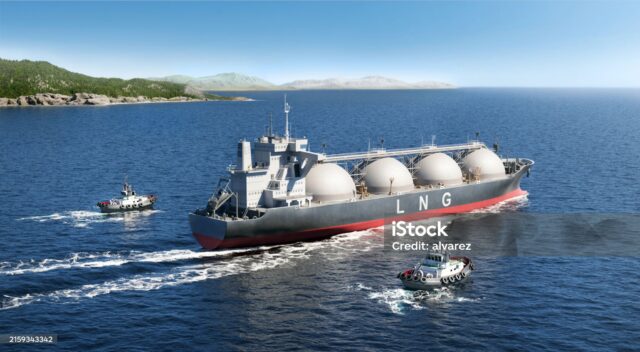
One of the first to go major projects high on the agenda is that of a supporting the Phase 2 of the LNG Canada, the liquified natural gas (LNG) export terminal in Kitimat, British Columbia.

For the next round of announcements, the probabilities are good for a LNG terminal northern Manitoba, Churchill on the Hudson Bay.

This speaks to Carney’s fixation with “drill, baby drill” resembling Trump’s fetish and an affirmation that Canada is the sixth largest natural gas exporter in the world.

To this end, Carney discussed possible LNG exports to Germany while with Chancellor Friedrich Merz in Germany in August 2025.

This is incongruent with EU gas consumption down by 20% between 2021 and 2024; and EU LNG demand is expected to peak in 2025.  The EU clean energy goal is that of energy independence, favouring clean energy by 2027.

Likewise decarbonization is a global phenomenon.

Too, it doesn’t seem to phase Mark Carney that methane emission leaks associated with fracking natural gas, through to the LNG export destination and consumption, render LNG as bad as coal.

Methane has a global warming potential 80 times that of CO2 over a 20-year period.

The declining prices of renewables, mean infrastructure for electrical power from gas is headed for stranded assets.

Contrecour

On the first priority “national interest” list is the construction of a second Montreal port terminal at Contrecoeur.   This project has plethora of environmental degradation implications, including contravening the federal legislation, Species at Risk, the Canadian Environmental Protection Act and The Fisheries Act.  While the project was the object of environmental impact approval in 2021, many authorization requirements remain outstanding.

Oil export pipelines

High on the next phase of projects are cross Canada oil export pipelines comprising:

1) Energy East to cross over most of Canada from Alberta to an export terminal on Canada’s Atlantic coast; and

2) the Northern Gateway with a terminal on the Pacific coast.

Carney’s export pipeline contemplations seemingly don’t take into account the experiences of the Canadian government-owned Trans Mountain pipeline twinning project to the Burnaby, British Columbia Pacific coast.  This project, which has been operating under capacity at a loss.  It has cost Canadian taxpayers C$50 billion in federal subsidies so far and costs Canadians C$3 billion annually.

How fitting is it for Carney to appoint in August 2025, Dawn Farrell, the till then chair of the board of directors of Trans Mountain, to head up the new Major Projects Office.

Here again the matter of global decarbonization is ignored.  There is an existing oil and gas glut on global markets which will get worse as more new suppliers enter global markets while China, the European Union, South Korea, Japan, Southeast Asia, South Asia and other traditional oil and gas importers, are decarbonizing.

Decarbonized oil: An oxymoron

Mark Carney’s drill, baby drill thrust would have us believe that there aren’t serious emissions considerations related to his oil export pipelines because Canada would be exporting “decarbonized oil.” Decarbonized oil doesn’t exist, a Trump-like climate hoax!

Carney was alluding to the next set of announcements to include the carbon capture and storage project of the Pathways Alliance.

Not a single CCS project has met its goals regarding emission reductions, costs and timelines.

The Alliance is made up of 6 major oil sands producers for which the combined revenues were C$35 billion in 2022. Does the Pathways Alliance require government subsidization?

And the “decarbonized oil” does not consider that 75% to 80% of CO2 emissions occur during combustion.

Surely Carney has made a political decision without regard to the environment and economics.

Small modular reactors (SMRs), like Trump

Carney is emulating Trump’s fascination with nuclear energy.

In the works is a nuclear renaissance collaboration deal between the U.S and the United Kingdom.  This deal reserves a special focus on small modular reactors (SMRs).

Ontario’s proposal to build 4 SMRs at its Darlington site, are included in the first round of announcements.  SMRs are nascent, still experimental, with a track record on costs per unit of energy produced suggesting it should be a no go.

Governments, with the exception of China and Canada’s Ontario Premier Doug Ford, don’t see the case for SMRs for which the costs are five times that of an onshore wind farm or solar project to produce the same amount of energy.

A 2024 report of CSIRO, Australia’s science and research agency, found SMRs to be the most expensive option for power generation.  CSIRO predicted SMRs would cost US$382 to US$686 per megawatt hour in 2030.

Pedaling backwards on vehicle emissions, like Trump

The Canadian 2026 requirements for automakers to hit 20% of new vehicle sales to be zero emission vehicles (ZEVs) beginning 2026, was dropped in early September 2025.  This adjustment is in line with Trump’s plan for choice between electric and gas-powered vehicles, reversing 2025 vehicle emission rules to 2019 levels.

A Trump conflict with California is ongoing as California’s mandated target market share for ZEVs for 2026 is 35%, with significant incremental increases to 100% by 2035.  In 2025, around 25% of new passenger cars in the state are electric.

Carney and Trump and pedaling backwards on the transportation energy transition.  Global sales of electric vehicles in the first 7 months of 2025 were up 27% over 2024.

Canadian environmental bottom line

Not surprisingly,  the Carney administration cannot commit to meeting the Paris Agreement, according to a statement from the office of Environment Minister, Julie Dabrusin.

 Quadrupling military budget to attain 5% of GDP: Aligning with Trump’s Ministry of War

Responding to Trump’s nagging Canada for not spending enough on military capacity, Carney plans to quadruple Canadian spending on defence by 2030, beginning with an increase federal funding for military support by C$9 billion in the upcoming fiscal year 2026/2027, 2% of Canada’s GDP, as part of incrementally increasing military investments to reach 5% of Canada’s GDP by 2035.  There isn’t any scientific analysis as the why the military sector should be such a major percentage of GDP.

In keeping with the 5% of GDP objective, Carney’s urgent focus includes the purchasing of 12 submarines to patrol Canada’s three coasts.

This military impetus seems to conveniently ignore that the only potentially “dangerous aggressor” country on Canada’s borders is Russia, in Canada’s Arctic region.

However, submarines on Canada’s Atlantic and Pacific coasts may be justified should Canada be preparing for WWIII, with a Department of War.  This resembles Trump’s Department of War with its economic benefits.

Notwithstanding, Carney likes to boast of the economic opportunities, as a sovereign economic agency, associated with new defense spending.  Carney speaks of the economic possibilities for innovation and the creation of good new jobs for Canadians. This is similar to the Trump narrative.

Sure, there will be economic opportunities with any type of major fresh government spending.

Why emulate the U.S. military industrial complex when Canadian spending of huge amounts on cleantech innovation and deployment can close the gap in one of the fastest growing sectors in the world, a sector for which Canada is pitifully weak competitor?

Austerity cuts to government services, Trump “light”

To compensate for the sharp hike in the military budget, Carney will be cutting operational funding for federal services by 7% in fiscal year 2026-27, 10% in 2027-28 and 15% in 2028-29.

This dismisses that federal services are cracking across the board because of insufficient financial resources, people and operational needs, unable to accommodate demand.   Examples are manifold, ranging from inexpedient reviews of each immigrant’s status request to underfunded public transportation, to inadequate transfers of federal funds to support financially tormented provincial healthcare systems.

Targeting immigrants and border security, Trump “light”

Awaiting approval is Mark Carney’s Bill C-2, the Strong Borders Act, which allows for discretionary retrograding of an immigrant’s status and discretionary deporting of immigrants.   This appears to be an “emulation light” of Trump’s chaotic harsh treatments of immigrants.

Other Trump appeasing initiatives

Ceding to Trump’s rants, Carney annulled the implementation of the Digital Services Act, which, like similar Acts in Australia, France and others, would have imposed a 3% tax on digital services such as Netflix, Amazon, Google, Meta, Uber and Airbnb, crossing into Canada, earning revenues in Canada, without paying any taxes.  It has taken almost a decade for Canada to adopt this act in 2024, due to heavy lobbying/bullying.

To avoid rattling the beast, Trump, Canada will not apply retaliatory tariffs on Canadian exports to the U.S. that are impacted by U.S. tariffs and not protected by the United States-Mexico-Canada Agreement (USMCA).

Trump implemented 35% tariff on items not protected by the USMCA anyway.

The Takeaway

Mark Carney is Americanizing segments of the Canadian political landscape, but so gradually that it the cumulative results are missed by most Canadians.

Climate change has taken a back seat to Carney’s Trump-like “drill baby drill” “national interests” to favour major oil and gas projects.

Projects that defy economic and/or environmental considerations are being sanctioned, such as small modular reactors.

Hints have been offered that Canada will not comply with the Paris Agreement.

Zero emission vehicle objectives have been abandoned, emulating Trump in the process.

Canadian military spending will be quadrupled while Carney boasts of economic opportunities for doing so.  This aligns well with U.S. military-industrial complex mindset and Trump’s Department of War.

The stretched thin government services will be cut to compensate for quadrupling in the military budget.  Trump has been shown to be most enthusiastic on cuts to “wasteful” government services.

The Digital Services Act has been abandoned, though long awaited, immediately after Trump threatened more tariffs if the Act was to be implemented.

Discretionary powers to retrograde the status of many immigrants and to deport immigrants are to come, though there is no apparent need for doing so.  This may be described as a pale reflection of Trump policies on immigration.

Carney is sleepwalking the Americanization of Canada and action on climate change has been slaughtered on the altar.

Nearly all of this wasn’t laid out in Carney’s election campaign.

Electric vehicle transition happening, North America excluded

Chinese EV truck battery swapping

Empirical evidence illustrates that among the 3 main electric vehicle (EV) jurisdictional centres of activity, China, Europe and North America,

  • the China’s EV sector is light years ahead;
  • the EU manufacturing sector is catching up; and
  • North America automakers are falling way behind global EV developments.

These contrasts are well-illustrated what follows by:

  • leading in with what’s behind the Volkswagen metamorphosis;
  • the leveraging of mid-level tariffs on Chinese EV imports to foster local manufacturing;
  • the U.S. and Canada back peddling; and
  • China championing the global EV transition, encompassing electric trucks, as well as cars.

The Volkswagen metamorphous

Less than 2 years ago, the future for Made in EU EVs looked dim.

However, in December 2025, the fully electric battery electric vehicle, battery electric vehicle (BEV), EU market was 22.6%; plug-in hybrid (PHEV) 27%; hybrid electric 33.7%; and the internal combustion engine vehicle (ICEV) percent of overall sales was 22.5%.  How did this disruptive change happen?

Mid-level traffic on EU imports of Chinese EVs changed everything.  The Volkswagen metamorphous is telling.

In 2024, Volkswagen high costs of operating in Europe had resulted in third quarter 42% profits drops, making it unable to plan the future. The Volkswagen brand at that time had a 2.1% margin.

The Volkswagen Group had concluded in 2024 that it would have to close at least 3 factories and cut wages and employee benefits.  This was an astounding shock since Volkswagen had never shut down a plant in the proceeding 87 years.  For Volkswagen, its very survival was in question.

Volkswagen attributed much of its profit declines to heavy investments in transitioning from ICEVs to EVs. With the combination of high EV production costs; underperforming sales of the EV ID lineup; software challenges, a contracting European auto market at-large; and competition with lower priced Volkswagen Group brands, Skoda and Seat in particular; Volkswagen was discouraged from pursuing its EV plans. Volkswagen hesitated to invest in large-scale EV manufacturing.

Too boot, sales in China had plummeted, important since China represents 40% of Volkswagen’s global market. Chinese EV consumers prefer domestic products over foreign owned ones with the exception of Tesla Model 3 and Model Y.

This left Volkswagen with production overcapacity.

Upcoming more stringent EU emission and pollution regulations added to the Volkswagen dilemma.

Volkswagen flipped its outlook 180° in 2025 with the arrival of affordable Chinese imports with tariffs and duties ranging from 18% to 45% and strong market signals.

The EU EV market share spiraled to 34% in 2025 with 18% of EU EV sales stemming from Chinese brands.

In a 2025 about-turn, Volkswagen perceived EVs as a corporate opportunity in both European and Chinese markets.

Year 2025 saw the Volkswagen Group achieve increased EV sales in Europe, in both its car and truck divisions.

The Volkswagen Group delivered one third more EVs in 2025 than in 2024.  European Volkswagen Group EV sales increased by 66%.

Volkswagen brand 2025 EV sales went up 60% in Germany and 49% in Europe.

Bigger 2025 gains stemmed from the Group’s Skoda division. Skoda BEVs and PHEVs accounted for 25% of Skoda sales.

In 2026 Volkswagen began introducing several new EV models to the market.

Overall, the brands that are part of the core of Volkswagen Group achieved an increase in 2025 EV sales of 29%.

By February 2026, Volkswagen had produced its two millionth BEV., placing the company in the BEV big league alongside BYD and Tesla.

By contrast the Volkswagen Group overall vehicle sales slumped in 2025.  Volkswagen Group growth in Europe was associated with EVs only.

The situation was different in China. Volkswagen EV sales declined 44% in 2025.

Not licking its wounds, Volkswagen will be launching 20 new China-specific EV models starting 2026.

From concept to production, Volkswagen Group China came up with a unique China Electronic Architecture (CEA).   Developed with three Chinese partners, the CEA has end-to-end capabilities for Software-Defined Vehicle production that positions Volkswagen to develop and produce an array of new vehicles in its China-specific lineup in just 18 months, from concept and engineering, through to validation and mass production.  This made it feasible to begin offering new models in 2026.

Leveraging tariffs

To avoid EU EV tariffs, Chinese EV brands have plans for factories in Spain, Austria, Hungary and  TurkeyChery is investing in an R & D centre in Spain.

In lieu of EU tariffs on Chinese EV imports, China and the EU are discussing a minimum pricing framework.  The guidelines under development stipulate minimum prices for each EV model and configuration.  Other electrified models such as hybrids would be restricted under a cross-competition umbrellas that would limit sales volumes.

The latter would address the loophole that, in the EU, Chinese EV brands have increased market share, in part, because Chinese PHEVs are exempt for the tariffs, Thus, Chinese PHEVs quadrupled their EU market penetration in 2024, compared to 2023.

Especially noteworthy, it is Volkswagen that has inspired minimum pricing to replace tariffs to facilitate the importing from China of Volkswagen’s Cupra Tavascan electric SUV.

Indonesia too, has benefited from the leverage of tariffs on Chinese imported EVs.   It committed to reduce tariffs for each Chinese EV manufacturer that plans by 2026 to set up factories in the country.  By May 2025, 6 Chinese EV battery manufacturers had divulged intentions to establish manufacturing facilities in the country, including China’s CATL, the world’s largest EV battery producer.

In Canada, Ontario’s Premier Doug Ford expressed openness to eliminating the 100% Canadian tariff for any Chinese EV manufacturer that takes action to open up a factory in his province.

North America in reverse

In North America, investors must consider that 1) US vehicle emission standards are eliminated ;2) the Canadian EV regulated minimum manufacture-specific market shares of 20% by 2026, 60% by 2030 and 100% by 2035 has been scrapped by the Carney administration, as per a new EV strategy; and 3) there are 100% tariffs on Chinese EVs in both the U.S. and Canada.

On February 12, 2026, Trump revoked the vehicle emission regulations as part of a sweeping elimination of the Environmental Protection Agency authority to regulate emissions from any source, specifically the annulation of the greenhouse gas “endangerment finding” under the Clean Air Act.  The Trump administration made it clear that the U.S. will no longer have vehicle tailpipe emission standards.  Bluntly, the Trump administration has halted all action on climate change.

As for Canada’s new EV strategy presented on February 5, 2026, it is very much smoke and mirrors.

The Canadian good news consists of rebates for EVs priced C$50,000 or less if manufactured in a country with which Canada has a trade agreement. The rebate program started in February 2026 and declines each year, ending in 2030.  Made in Canada EVs are exempt from the price ceiling, but that exemption currently only applies to the Dodge Charger EV and Chrysler Pacifica PHEV.  The bad news is the the goal is to achieve 90% EV market share by 2040, which compares poorly to the EU 90% EV target by 2035 and 2) the 100% tariffs on Chinese EVs in Canada remain intact.

For North American shareholders focused primarily on quarterly reports, the aforementioned factors suggest that EVs don’t seem like good bets.

Such perspectives are in conflict with long-term positioning on the global marketplace.

Honda

Honda has put on a 2 year pause a $15.4 billion Ontario set of projects for retooling the Alliston EV production line, a new battery plant in Alliston and 2 battery parts facilities elsewhere in Ontario.

Ford

In August 2025, Ford announced with pomp a $5 billion dollar engagement to build a Ford EV Universal Platform that would enable Ford to produce, at scale, a family of affordable EVs.

The shoe dropped in December 15, 2025, when Ford revealed the company plans to offer fewer EV offerings and enact a $19.5 billion EV write-down.

Ford claimed it loses $50,000 for every EV sold, the long-term return on investment mindset being dropped.  From 2022 to Q3 2025, Ford claimed it lost $15.6 billion attributable to its EV business.

Its change in strategy stems from lower U.S. consumer interest in EVs; Trump policies to abolish emission standards which affects EV availability; the termination of fines for non-compliance with emission standards; and the abolition of the $7,500 rebate.

Ford is now pivoting to more PHEVs and ICEVs and less fully electrics.

Ford anticipates that its global mix of hybrids, extended-range EVs (EREVs) and pure EVs will reach 50% by 2030, up from 17% today.

Surprise, in February 2026, Ford divulged that it intends to build a mid-size electric pickup on the  Ford EV Universal Platform.   Only Ford can explain this schizophrenia.

GM

On January 29, 2026, GM Canada announced it would cut a shift at its Oshawa Ontario plant entailing 1,200 workers throughout the supply chain.

Back in 2020 the Oshawa plant was included in the $9 billion plan slated for investments in retooling 5 GM plants to produce EVs.

To finance the transition, GM counted on the high profits on selling more larger SUVs and pickups that represented 72% of GM’s profits at the time.

In January 2026, GM indicated the Oshawa plant would manufacture the next generation of gas-powered pickups.

Once again, the change in an automaker’s strategy reflects Trump’s tariffs and the abandonment of zero emission vehicle goals in the U.S. and Canada.

China leading global change

There is a widespread belief that Chinese EVs are highly subsidized and use cheap labour, thus are low-priced.  This is hard to validate.

First, U.S. and Canadian EV tax credits and other forms of financial support may be greater than Chinese EV subsidies.

Second, China does subsize innovation and development to a greater extent than any other country.  This means that the timelines for cost recovery on new types of products, such as EVs, are less than for legacy automakers.

Third, the Chinese EV manufacturing paradigm is to maximize the scale of production to lower the cost per unit, thereby making the price on the market very affordable.  With attractive pricing, demand meets supply, not the other way around, as it is in the rest of the world.  The EU is viewed by Chinese EV brands as an ideal market for deployment of overcapacity production.

The export market is critical since EV profit margins in China are very thin, sometimes negligible with there being so much competition of the Chinese EV markets.  Chinese EV manufacturers make up for these low domestic margins by selling their EVs at significantly higher prices in export markets.

Fourth, 95% of Chinese EV are equipped with the less costly lithium-iron phosphate (LFP) batteries. This is important because 40% of the price of an EV is attributable to the batteries.

Fifth, China currently has over 20 million chargers, exceeding the numbers of fuel pumps.

The result, in 2025, 54% of China’s new passenger vehicles sales were EVs.

Sixth, China requires that every Chinese EV be sold above cost and operating expenses, outside of R & D.

Seventh, China’s CATL and BYD are well advanced on the next generation of even more affordable than LFP batteries, sodium-ion batteries.

CATL now offers EV-ready sodium-ion batteries.

Changan is the first Chinese EV manufacturer to feature CATL Nextra sodium-ion batteries in its entire EV lineup, beginning 2027.

As well, Changan will begin equipping EVs with solid-state batteries in 2027. SAIC Motor, GAC Group, CATL, and BYD have similar timelines for solid-state-batteries in their respective lineups.  Solid-state batteries have a range similar to gas-powered vehicles.

Eighth, now China is making global history with electric medium- and heavy-duty trucks capturing over 50% of the domestic market as of the beginning of 2026.  This is an astounding breakthrough because medium- and heavy-duty trucks account for nearly a third of road transportation emissions even though they only represent 3% of vehicles on the road.

An EV truck incentive program, dedicated charging infrastructure for trucks along key freight corridors and the launching of a CATL electric truck battery swapping stations to cover 150,000 km on China’s highways contributed to this success.

China’s electric truck progress has immediate implications for global diesel consumption, cutting global oil demand by an equivalent of one million barrels per day.  Global diesel use fell 11.6% in 2025.

In sum, EVs are now price and charge competitive with ICEV passenger cars and trucks in China, and this will be more so with the arrival of inexpensive sodium-ion batteries.


The takeaway

Clearly, China is several steps ahead of the rest of the world in affordable EVs and batteries.

The mid-level EU tariffs on Chinese EVs and stiff 2025 EU emission standards have been catalysts for European manufacturers to go the full distance to compete with Chinese EVs.

Mid-level tariffs on Chinese EV brands in certain jurisdictions are leveraged for domestic manufacturing of Chinese EV brands.

To thrive in the Chinese market, legacy automakers typically partner with Chinese firms to introduce China-specific models equivalent in sophistication to Chinese EV brands.

In contrast, 100% Chinese EV import tariffs, in addition to weakened U.S. and Canadian governments’ zero emission vehicle goals, have resulted in the North American auto sector going in reverse on EV development, manufacturing, deployment and sales.

The future doesn’t augur well for North American automakers.  The onslaught of continuously more advanced EVs from China, Europe, South Korea and elsewhere in Asia may lead to another crisis for the Big 3.

The global transition is in progress.  There will be winners and losers.

Mark Carney: Climate Duplicity and Canadian election 2025

Mark Carney

The Canadian 2025 election landscape

Midway through the 2025 Canadian election campaign, the discourse is captivated by two themes, 1) Canada’s response to Trump’s tariffs; and 2) an all-party race to the bottom for lowering taxes.  On the latter, information is not provided on cuts in government services and programs required, the consequences of due to less government revenues.

Indeed, the party campaigns offer little on what is proposed for governing over the next 4 years or more.

Collateral damage, the climate change emergency, the largest threat to all life on earth, and the environment at-large, are election campaign afterthoughts, almost forgotten.

This article is on the Prime Minister Mark Carney 2025 election campaign that continues the Liberal tradition, and mirrors Carney’s past roles, of deceit on climate and related issues.

Cap on oil and gas emissions plus carbon capture and storage

Canada’s oil and gas sector drill baby drill plans include 180 Canadian oil and gas firms with agendas to invest C$600B in expansion, excluding existing projects and those under development.

Mark Carney, in his March 21, 2025 press conference repeated the Liberal commitment to place a cap on oil and gas emissions.  This proposed cap was presented as a Liberal draft in November 2024.

This cap would allow a 16% increase in oil and gas production by 2030-32, relative to 2019.  Refineries are excluded from the cap.

The Liberal draft cap text anticipates a 35% GHG reduction by 2030, based on 2019 levels.  This cap doesn’t align with 40% national emission reduction by 2030.  To boot, calculations on cap-related emissions won’t begin until 2026.

The finalization of the legislation on a cap is proposed for Spring 2025, after the upcoming federal election.

Details aside, when asked how this reduction would be achieved, Mark Carney’s solution is carbon capture and storage (CCS) technology.  But not a single CCS project in the world has met its goals for emissions reductions, costs and timelines.

In other words, Canada’s oil and gas sector would not be constrained to reduce oil and gas production because they would be able to continue business-as-usual with a greenwashing technology that would magically reduce emissions, while production increases.

The Liberals know CCS is a dead end.  Nevertheless, under the Trudeau administration, C$7 billion was assigned to CCS by 2030, a new fossil fuel greenwashing subsidy.

Even Pathways Alliance, the CCS tech alliance of the 6 major oilsands stakeholders, doubts the optimistic view for oil and gas industry emissions reductions goals are realistic.  Apparently, Pathways Alliance wants more than the C$7 billion the Liberal government assigned to CCS up to 2030.

Energy East and increasing global oil and gas gluts

Carney, in the aforementioned press conference, alluded to Energy East, an oil pipeline from Alberta to an Atlantic Canada port, to serve overseas export markets, as well Eastern Canada.

Never mind that Trans Mountain pipeline, owned by the Government of Canada, with $50 billion in subsidies, never achieved the intended ambition to distribute oil to Asian markets.  More on this in the segment “Dismal Liberal climate heritage: Additional details”

Indeed, Mark Carney’s Energy East allusions embody a dinosaur project.

There are currently oil and gas global market gluts.

The International Energy Agency concluded that oil supplies will outstrip oil demand through to 2030.

New oil and gas suppliers entering global markets.

The  oil and gas gluts will be exacerbated as the U.S. prepares for exponential growth of gas supplies for export.

Elsewhere, fossil fuel demand is peaking and/or declining in China, the European Union, Southeast Asia, South Asia, Japan and South Korea.

China’s crude oil imports, which represents 25% of world imports, are peaking in 2025. China’s gas imports, accounting for 18% of global demand, is expected to peak soon.

In January 2025, China’ crude oil imports were down 2%.  By 2035, China’s refined oil products consumption will drop 25-40%, based on peak year 2023.

European gas imports were down 20% in 2024.

Throughout Asia, there is an extraordinary massive transition to renewables.

The financial institutions, as well as the oil and gas sector, have blinders on what lies ahead.

The Liberal climate balance sheet

Carney does not have a credible climate plan.  It’s just the same old Liberal movie of choosing “all of the above,” the pluses and minuses cancelling one another out.  In fact, the Liberals have never met their climate targets.

The National Inventory Report 2025 on Canada’s 2023 emissions, published on March 21, 2025 reflects this failure.

Canada’s total emissions declined 8.5%, 65 megatonnes (Mt), in 2023, compared to 2005 levels.  This is a far cry from the Liberal objective of a 40% to 45% reduction by 2030.  The 2030 target requires a reduction of 419 Mt to 457 Mt.

Canada’s overall emissions reduction of 8.5% was primarily attributable to the phase out of coal for electricity generation, an international phenomenon for which the government can take little credit since renewables are cheaper than coal.  In 2024, 92.5% of global new power added was attributable to renewables.

Since 2005, Canadian oil and gas production emissions increased 47%, primarily associated with the oilsands. So it is not surprising that the oil and gas sector represents 30% of total Canadian emissions.

Canada will surely fail to meet its 2030 objective, as has been the baggage of its previous emissions reduction targets.

Worse, more than 85% of oil and gas emissions occur during combustion but are not included in the inventory of Canada’s oil and gas emissions.  That means the combustion of crude oil exports are not incorporated in the national inventory.

The Liberal failure to offer a credible climate action plan to date, is sure to continue under Mark Carney.

Dismal Liberal climate heritage: Additional details

Below is a partial list of convoluted climate actions by the Trudeau administration, not covered in the preceding segments.

Termination of oil and gas subsidies, a broken promise

Steven Guilbeault, as the former environment minister, promised to end fossil fuel subsidies.  But, in his July 24, 2023 press conference on terminating subsidies, he proposed so many exceptions that nothing had changed.

Trans Mountain, C$50 billion in subsidies

The Canadian government-owned Trans Mountain pipeline was constructed with the hope of targeting Asian markets.  However, this objective was never materialised.  In December 2024, an additional subsidy by way of C$18 billion was authorized, $14.7 billion for equity, plus a $3.3 billion loan, bringing the total Canadian subsidies for the pipeline close to C$50 billion.  As if that is not enough for a money losing pipeline, not only do the cumulative $12 billion in loans not have to be repaid until 2043 and 2044, but also, only $479 million must be reimbursed in 2043 and $416 million in 2044.  Transport toll rates don’t cover half of the pipeline’s accumulated construction and operating costs.

Canadian rejection of phasing out oil and gas production

Aligned with the cap on oil and gas emissions being creatively ambiguous, at COP28, the Trudeau administration rejected text in the draft of the COP28 final statement pertaining to the phasing out oil and gas production.

Clean hydrogen

Liberals assigned C$17.7 billion up to 2034-35 for clean hydrogen projects, comprising 15% to 40% investment tax credits.  Clean hydrogen includes natural gas combined with CCS to produce blue hydrogen.  Because blue hydrogen doesn’t reduce emissions, it constitutes another new oil and gas industry subsidy.

Green hydrogen, which involves using clean energy, like wind and solar, to power an electrolyzer to separate hydrogen from oxygen in water, entails at least a 30% energy loss.

Newfoundland Bay du Nord and oil exploration auctions

The Trudeau administration approved 735,000 sq. km of an offshore Newfoundland area for oil exploration auctions.  This initiative is exempt from mandatory requirements for an environmental impact assessment as per the Impact Assessment Act.

In addition, the Trudeau government approved the 1-billion-barrel oil production Bay du Nord project off the coast of Newfoundland.

Methane

In the absence of any system for methane emissions measurement, reporting and verification in place, the Liberal methane objectives are murky.

The International Energy Agency estimates that methane emissions are underestimated by 70%.

Carney’s green reputation credentials

Glasgow Financial Alliance for Net Zero

In his previous role as the UN Climate Envoy, under the UN Race for Zero Campaign, Mark Carney inspired the creation of Glasgow Financial Alliance for Net Zero (GFANZ).

GFANZ, and its sub-sectorial offshoots, on global climate financial alliances never meant much.

GFANZ asserts that it represents 40% of the global private financial assets.

In reality, global banks invested US$680 billion in fossil fuels in 2024, up from US$667B in 2021. And the industry received $7 trillion in subsidies in 2023.

Between 2016 and 2023, the world’s top 60 banks allotted US$7 trillion to oil and gas projects.  Almost half of this amount, US$3.3 trillion, was dedicated to fossil fuel expansion.

According to a Reclaim Finance report of January 2023, of the 161 most prominent members of GFANZ sectoral alliances, GFANZ members have financed 211 of the world’s largest fossil fuel expansion projects.

In December 2024, GFANZ distanced itself from zero targets, dropping requirements to publish firm targets.  Instead GFANZ reinvented its role to that of guidance for financial firms, regardless of whether or not a financial institution had net zero goals.

Net Zero Banking Alliance

The GFANZ counts under its umbrella, dozens of “alliances” covering the various segments of global finance sector, including the Net-Zero Banking Alliance (NZBA).

Mark Carney described NZBA as a “breakthrough in mainstreaming climate finance the world needs”.

Originally, NZBA required new members to submit science-aligned targets within 18 months of joining, comprising disclosing plans for, and status updates on, compliance with its goals.  But bank reporting has been fuzzy, lacking in transparency and coupled with questionable methodologies.

Yet, though the alliances are voluntary, therefore non-binding, in 2022, JPMorgan and Morgan Stanley pressured NZBA to dispense with targets.  NZBA weakened some requirements.  This was a chameleon endeavor in that since the creation of the NZBA in 2021, banks have increased oil and gas investments.

It remains unclear whether NZBA has had any impact, there being no distinguishable difference between NZBA members and non-members.

One report indicated the eco-conscious banks lean more favourbly towards polluting industries than financial institutions that don’t make such claims.

Despite the hollow NZBA climate profile, not wanting to be ill-perceived by the Trump administration, 6 U.S. banks and 4 Canadian banks have withdrawn from NZBA.

Epilogue

Mark Carney represents continuity regarding the appalling Liberal bad movie on action on climate change and reflects his former green charade with financial institution green alliances.

The oil and gas lobbies have won.  They control Carney, and more generally, the Liberal and Conservative vacuity, in addressing climate challenges.

The difference between these two parties is as follows:

The Conservatives vow to increase oil and gas production and build more infrastructure to export fossil fuels.

The Liberals bluff too much,, consistent with the Liberal mediocre performance on the climate.

This election should not be about choosing between two evils, favouring the lesser evil to block the worse one, strategic voting.  Unfortunately the Canadian version of the British parliamentary electoral system is such that votes for other parties in most ridings don’t count for anything.

A minority government remains the best Canadians can hope for.

May as well vote for what one wants, rather than holding one’s nose while voting for a lesser evil, the smell lasting for the next 4-5 years.

It is only when one takes risks that change enters the realm of the possible.

COP29: China, Trump and the EU, each own way: Green vs. stranded fossil assets

Update Dec. 5, 2024 Chart of cargo containers with Chinese, US and European Union flags

For climate action, China has chosen long-term extraordinary innovation investments and scale to wean off fossil fuels.

The European Union (EU) is making progress for energy independence by 2027, though with some Chinese technologies.

Too, the UK and Brazil have set ambitious climate targets

The U.S., Trump administration will enhance paths towards stranded fossil fuel assets. The private sector will continue floundering on clean tech innovation and base performance on the short-term, quarterly reports.

Canada will emulate the U.S.

China

China spent $676 billion on clean tech in 2023, over double that of any other nation.

The good news is that China’s power emissions may peak by 2025, ahead of its 2030 target and the first annual decline since 2016. Should China succeed in plateauing emissions in 2025, the Paris Agreement target to halve emissions by 2030, could have been a possibility, if it weren’t from Trump.

This potential appears unimaginable since China accounted for 30% of global emissions in 2022, 11 billion tonnes.

China’s 2024 drop in annual emissions is anticipated to be about 7.2% or 8.2%.

The bad news are potential impacts on economies outside China regarding their clean tech manufacturers competing with much more affordable and more advanced Chinese exports.

There appears to be a pattern for China’s clean tech successes, high up front government support for research and development plus oversupplying the domestic Chinese market.  This formula has had mixed consequences.

China’s oversupply of clean tech industry typically achieves excellent economies of scale for offering low prices, but often results in profit declines, or even losing money, due to fierce competition in the domestic market.

To make up for the domestic low margins, prices for Chinese export markets are set to be both profitable and affordable choices in these markets.

European Union

The European Union, post Russian invasion of Ukraine, like China, has an agenda to sever dependence on fossil fuels. The EU aims for energy independence via a green transition by 2027.

While there was a 911-like spike in LNG imports from the U.S. immediately after the invasion, thanks to intensive emphasis on renewables, heat pumps, efficiency and other measures, EU gas imports were down 20% in 2023 and anticipated to peak by 2025.

Electric vehicle (EV) sales trends indicate a displacement in European oil consumption of 3.3 million barrels/day by 2030.

U.S. and Canada

Trump promised to pull out of the Paris Agreement.

Though the Inflation Reduction Act (IRA) and Bipartisan Infrastructure Law (BIL) have been outstanding in supporting the building of clean tech factories, EV purchases and the installation of home energy saving solutions, e.g. heat pumps, and solar panels, Trump wants to water down these milestone laws to suit his agenda.

Nonetheless, Trump will have to take into account that in 2023 the clean energy sector, including storage and EV charging, came in at 40% of U.S. energy jobs, with a 200% growth in that year.

The EV and battery projects announced and associated with the Inflation Reduction Act and Bipartisan Infrastructure Law will create of 201,900 jobs.  This sector could generate another 931,000 jobs.

Still, since the U.S. innovation gap with China widened even with the original IRA and BIL in place, expect that gap to grow when Trump unbelievably dilutes the legislation.

Trump referred government backing of the green economy as a “green new scam.”

Further contributing to the innovation gap, emission standards across all sectors will become more lenient.

Most notably, the overriding energy themes will be in “drill, baby drill,” for increasing oil and gas production.

What will Trump do when global fossil fuel demand peaks and U.S. clean tech jobs outnumber oil industry employment?

Sadly, Canada will follow in U.S., as always, and continue to be a fossil fuel exporting nation.  The next likely Prime Minister, Pierre Poiliève, will make sure of that.

UK and Brazil step up at COP29

At COP29, the UK pledged to reduce emissions by 81% by 2035 from 1990 levels and Brazil has prepared a comprehensive climate plan for a 59% to 67% GHG reduction by 2035 based on 2005 levels.

Electric Vehicles and batteries

China’s dominance in affordable electric vehicle (EV) and battery sectors are prominent examples of technological leadership and the Chinese oversupply business models.

At first glance, one might get the impression that China is an unlikely leader in these sectors.

Compared to Western economies, China has considerably fewer cars, vans, buses, freight and other trucks per 1,000 inhabitants at 231, very low compared to the U.S. 908; Canada 790; Germany 628; and  U.K. 600.

In part, low vehicle ownership in China is a consequence of being the global leader public transit. China has 46,000 km of high-speed rail, 50 subway systems with over 10,000 km of track, substantial light rail and had 455,000 e-buses on its roads in 2022.

Yet, with EVs having reached 53% of the Chinese vehicle market in September 2024, China represented 69% of the global EV registrations in 2024, up until October.  That’s because Chinese EVs are considerably more affordable than EVs in other countries.

China’s EV tech lead goes back to the 1990’s when China started to invest in EV research.  Back then, China had realized Chinese manufacturers of internal combustion engine vehicle (ICEV) models could not compete in export markets that are too overcrowded with competitors.

Thereupon, China developed a complex compilation of measures that pushed manufacturers towards producing New Energy Vehicles (EVs), the consequences being manufacturing of ICEVs became more expensive to produce and EVs less expensive.

Today, additional more compelling contributing factors to Chinese affordable EVs and batteries include government support for quickly getting over the time hump to get a return on investment. Overall, China’s EV financing covers innovation, development, minimizing production costs and start-ups.

China’s holistic long term vision has been a key to reducing EV battery costs.  China has invested more on battery research than all other nations combined and has a plethora of EV R & D programs.

Unimageable in Western economies, China’s CATL, the largest battery producer in the world, has 20,000 employees dedicated to R & D.

BYD, the largest EV manufacturer in China and second biggest battery producer, is a rare integrated EV and battery firm making most parts in-house.  These achievements are thanks to its 900,000 employees, of which more than 110,000 are R & D staff.

By early 2022, China accounted for 80 percent of global battery production capacity and controls, 75% of battery cell manufacturing, 90% of anode and electrolyte production, 60% of battery component manufacturing, and refining for more than half of global lithium, cobalt and graphite.

The battery technology-related savings have manifested into 95% of Chinese made EVs equipped with the less costly lithium iron phosphate (LFP) batteries.  LFP batteries are nearly exclusively manufactured in China.

Outside China, NMC batteries (lithium-nickel-manganese-cobalt-oxide) are typically used.

Compared to the NMC batteries, LFP batteries are cheaper to manufacture, have higher stability and are easier to recycle.

However, on performance, LFP batteries are not yet as good as lithium-ion ones.  But technological advances are in the process of closing the performance gap.

CATL and BYD alone, have 90% of the LFP market.

The results are battery costs are about 18% less in China than elsewhere.  This is critical for the pricing of an EV since the battery typically comes in at 40% of an EV’s cost.

However, until now, China’s LFP batteries have been destined for the more affordable entry level small low- to mid-cost models.

Hyundai is about to change all that, challenging China’s LFP cartel with an ultra-high capacity 300 Wh/kg LFP battery to be produced without Chinese components by end 2025.  Average Chinese LFP battery capacity is 200 Wh/kg.

If Hyundai succeeds in its LFP development plan, it will have a LFP battery with longer range than the typical NMC battery and would be the first LFP battery for high performance EVs.

If all goes according to plan, Hyundai may be able to produce affordable EVs with LFP batteries for both entry level and performance models, with impressive range and not subject to tariff barriers.

Also in progress, BYD is constructing a factory for third generation batteries, sodium-ion batteries, for scooters and micro vehicles, for starters.  BYD believes it could eventually produce sodium-ion batteries that will be less than the cost of LFP in the long term.

CATL is working on its improved new enhanced version of sodium-ion batteries for small and short range vehicles and China’s Chery will have a factory for the fourth generation, solid-state batteries.

As well, China’s EVs benefit from better economies of scale associated with oversupplying. Chinese EV manufacturers bet attractive pricing will create demand to meet supply.  Oversupply may be an understatement as China’s 200 EV manufacturers will have launched about 110 EV models by end 2024.  With all the competition, the average domestic profit margin is slim, averaging 5% in 2023, with some models sold below cost.

As indicated above, the profits are made on exports, while still maintaining a price advantage.  The BYD lineup average price is $30,000.

While the U.S. and Canada have imposed 100% tariffs on Chinese EVs, BYD is entering a new foreign market nearly every week, launches about 10 new models/year, and has an operating manufacturing plant in Thailand, plus facility projects in Mexico, Hungary, Turkey, Brazil and Indonesia.

These are important considerations, since the revenues of legacy automakers depend on global markets, not North America alone.

Legacy EV and battery manufacturers outside Asia cannot compete with the scale, pace of innovation and/or vertical integration of their Asian competitors.

Legacy firms depend on a plethora of external suppliers.

All the more for making the future of Western legacy automakers uncertain.

Tariffs and other barriers to affordable EVs

The U.S. and Canada 100% tariffs on China’s EVs, batteries and components will boomerang regarding a growing innovation gap and legacy automakers’ competitivity in critical global markets.

Not bothered by the United States-Mexico-Canada Agreement on trade, Biden and Trump intend to keep Chinese EVs made in Mexico out of the U.S.

Since the U.S. also has a trade agreements with Morocco and South Korea, many Chinese EV components investors had been planning to build plants in these countries.

A Trump reworking of the Inflation Reduction Act and Bipartisan Infrastructure Law, upon which the Moroccan and South Korean projects are premised, may see the aforementioned investments put on pause.

The Biden administration has already implied that Chinese EVs manufactured elsewhere would not be eligible for $7,500 consumer credit applicable to North American built vehicles.

Trump may put the final nail on this escape route.

The Trump additional 25% import tariffs for all goods from Canada and Mexico might apply to Canadian EVs and batteries too.

Contrasting the U.S. an Canada, the European Union has manufacturer-specific trade barriers on Chinese EVs, the EU varying tariffs range from 8% to 35%, on top of an existing 10% duty.  The highest tariff is aimed at SAIC Motor Corp, likely because the company is state-owned.

The EU doesn’t want to set the tariffs too high because the EU hopes to attract China’s manufacturers to invest in factories in the EU.  Production of Chinese EVs in Europe would remove tariffs and many Chinese EV manufactures are doing just that.

In addition to the BYD EV plants planned for Hungary and Turkey, other Chinese EV stakeholders, such as Geely vehicles and CATL, are engaged in major investments in Europe.

Even with the EU tariffs, many Chinese EV imports will still be somewhat more affordable than their European competitors.

The European Commission (EC) concluded that the average Chinese EV battery electric vehicle (BEV) imports cost 32% less than European EVs in 2023.

The 2024 prognosis is that China’s EV imports will come in at 25% of the European EV market share.

A large portion of these imports are Tesla, Dacia and BMW EVs.

Legacy automakers

The China advantage spells trouble for EVs produced by legacy automakers.

Battery projects in Western economies may be outdated before production begins.

Better technology and better prices cannot be stifled by protectionism.

Many legacy automakers have not gotten over the hump for a return on investment.

In June 2024, Ford claimed it loses $100,000 for every EV sold, its EV division lost $4.7 billion in 2023 and expected losses to hit $5.5 billion in 2024.  Thus, Ford plans to offer more of the more profitable plug-in hybrids.

Meanwhile, GM is mumbling about offering different battery chemistries and enlarging its plug-in hybrid lineup.

Volkswagen, the largest German employer with 10 factories in the country, is experiencing economic troubles too and looking to plug-in hybrids as the way forward.

In late October 2024, Volkswagen announced it will be shutting down 3 plants in Germany and cut wages by 10% for 140,000 employees.

Among other things, Volkswagen cited a drop in third quarter 2024 profit levels by 42% associated with lower then projected, or insufficient, EV sales, to recover the high EV transition costs; increased competition from European EV imports from China; and sharp declines in the Volkswagen market in China, where EV sales now exceed ICEVs.

Since traditionally 40% of Volkswagen sales have been in China, the deterioration of the Volkswagen market in China constitutes a heavy blow for the company.

Likewise, BMW and Mercedes Benz are dependent on the Chinese market, for 32% of global sales and 28% respectively.

This puts Volkswagen, Mercedes Benz and BMW in a conundrum.

Germany opposed EU tariffs on EV imports from China.

Oversupply in renewables

China is determined to reduce its dependence on fossil fuel imports while Trump aims to increase oil and gas production.

Accordingly, the China clean tech oversupply business model applies to the solar panel, and wind turbine sectors.

In the China’s wind sector, production overcapacity during 2022 and 2023 brought about low domestic market profit margins, while in the U.S. and Europe, the margins were 2 to 3 times higher.

Consequently, the Chinese turbines prices in Europe and the U.S. were lower than their European and U.S. competitors.  Six of the 10 top windpower producers are Chinese.

For solar panels, despite China’s mindboggling increases in the annual solar installation rate, China’s solar manufacturers were caught with an oversupply having exceeded China’s storage and transmission capacity.

In the coming two years, the Chinese solar modules manufacturing capacity may actually double world demand.

As is the case with the Chinese EV sector, excessive renewables competition within China has led to unprofitably low domestic prices, compensated by exports of more profitable and affordable exports.

Trump’s proposed 20% tariffs on all solar and wind imports from China could affect the prices of renewables in the U.S.

The takeaway

China, the EU, the UK and Brazil will accelerate weaning off fossil fuels, leaving the U.S., and Canada too, to increase the production of these fuels as the market for these fuels dwindles.

China will persist in manufacturing more clean tech, solar, wind, EVs, batteries/storage, plus electrifying its industries at levels greater than the rest of the world combined.

For the U.S., action on climate change to compete with China, will take inconceivable huge hits with Trump, while fossil fuel production will be administered steroids.  The U.S. clean tech private sector will continue to lag on innovation, constrained by an investment community which only understands  quarterly reports.  The U.S. will continue to lose ground on clean tech leadership.

Canada has much to lose, especially with Conservative Pierre Poiliève, the likely next Prime Minister, aligned with Trump on denial of climate change, increasing oil and gas production and many other issues.

The EU seeks win-win formulae with rational environmental and economic considerations.  The EU may show the way forward.

China, the EU, UK and Brazil will stand out as global climate leaders.

China’s electric vehicles go global: Protectionism won’t work

BYD Seal

Electric vehicle (EV) imports from China will account for 25% of EV sales in Europe in 2024.

Now China-based EV and battery firms are on the verge of coming to North America and there is no such thing as batteries without content from China.  This is the context for U.S. protectionist legislation.

What follows is a most comprehensive plethora of reasons on why 1) protectionism won’t work and 2) North American and European EV manufactures are vulnerable to disruptive market threats from inexpensive Chinese EV alternatives.

China green shift global impact greater than COP

Expectations for COP29 in Azerbaijan, based COP28 in the United Arab Emirates?

The light getting in though the cracks is few countries are immune to competition with China’s sweeping expeditious green transition.

China’s brisk energy transition intentions are three-fold, decarbonization of its economy, domination of global clean tech manufacturing and reduced dependence on imported fossil fuels.

Renewables

The COP28 final statement calls for a tripling of renewables capacity by 2030.  China had an objective to triple renewables capacity by 2030 too, but China will reach its 2030 renewables capacity target in 2025, 1,2 TW (terawatts). The country will continue to increase capacity sharply thereafter.  By 2030, the forecast is for China is to hit 3.9 TW.  The aforementioned COP28 global ambition was for 11 TW by the end of the decade.

According to the IEA, China now accounts for 60% of global renewables capacity installed in 2023 and this will carry over into 2024.  The expansion of capacity is outpacing rising demand.  For 2023, China investments in renewables will attain the summit of US$177 billion.

For 2023, BloombergNEF projected China solar capacity additions to reach 208 gigawatts (GW), twice the entire U.S. solar capacity.

China’s new wind and solar capacity installations for 2023 may amount to 300 GW, astronomical compared to the global capacity increase of 338 GW in 2022.

By September 2023, total installed wind and solar capacity was 400 GW and 520 GW, respectively.  To put this in perspective, Hydro-Québec, one of the largest utility companies in North America, has a total production capacity of 47.5 GW.

All together, China is installing 20 GW of wind and solar per month.

By the third quarter of 2023, 53% of China’s power sources were wind, solar, hydro and nuclear.  That’s a giant leap from 2011 when coal accounted for 80% of the country’s power supply.

The scale of some of the renewables projects is staggering.  The Golmud Solar Park in Qinghai, the world’s largest solar park, has a capacity of 2.8 GW with 7 million solar panels spread over sands.  Even that is just the beginning.  The plan calls for expanding this park 6-fold in the next 5 years.

In 2022, plans were announced for 500 GW of onshore solar and offshore wind projects for Gobi Desert across Xinjiang, Inner Mongolia, and Gansu provinces.

To transport gargantuan new capacity, ultrahigh-voltage (UHV) lines projects are eye-popping.  State Grid Corp of China, the country’s largest State-owned utility, has started construction on 13 UHV lines covering 30,000 km.

China catapults economy-wide electrification

China is electrifying its economy at a mind-boggling rate, with 1.1 million electric buses and trucks; two-thirds of the global market for light EVs; electric subways and light rail; and 42,000 km of electric high speed passenger and freight rail.

Consequently, China’s Sinopec, a large petroleum refiner and distributor, anticipates peak gasoline will occur in 2023.

Coal

China’s electric power carbon emissions will peak in 2023 or 2024, ahead of the 2030 target, plateau for a while, and then enter an exponential decline.  This is attributable to mindboggling increases in renewables capacity, and an uptake in hydro capacity.

True, China has the world’s largest coal power plant fleet.  Yet, the opening of 2 coal plants per week or 106 GW of new power plants in 2022, responds to peaking requirements only.  While China reached 1,100 GW of coal power plants functioning in 2022, 775 GW of operational coal plants were shut down or were projects that never made it to construction.

Consequently, coal plants in China on average run 50% of the time.  Carbon Tracker has divulged that 40% of China’s coal plants are losing money.  The 5 major state-owned coal power plant companies are also experiencing heavy losses.

The capacity usage will fall further to 25% over the next two decades.

These contradictions are largely the result of provincial governments supporting their local coal enterprises and jobs.

A forthcoming plateau in infrastructure projects translates into less coal for cement production, a 2.7% reduction in 2023 and 61% reduction by 2036.  Likewise, petrochemical and aluminium production drops will contribute to lower demand for coal.

These factors should result in a decline in coal demand by 2024, as alluded above.  Not only many coal plants permitted up to 2023 will never get built, but also many existing coal plants will become stranded assets.

In China, likewise for Europe and India, 90% of coal plants will be uncompetitive by 2025.

EVs

The BloombergNEF Electric Vehicle Outlook 2023 reported that EV growth rates for 2022 were 62% world-wide and 95% in China.

In 2022, China had 600,000 electric buses on the road, at least 99% of the world total.  That year, it manufactured 138,000 e-buses for the domestic market.

There were 400,000 electric trucks on China’s roads in 2022.

China’s rate of light-duty EV growth is 4 times that of the U.S.  Total EVs sold in China are greater than in the rest of the world.  For the end of 2023, it is projected plug-ins will have reached 38% of sales.

Too, China is now the world’s largest exporter of EVs.  For 2022, exports from China acquired 11% of the European market.  An irony of sorts, Tesla’s Shanghai factory is China’s largest EV exporter.

North America is vulnerable to an invasion of EVs from China too.  China’s BYD will soon launch the BYD Seal in North America to compete with the Tesla Model 3.  Other Chinese EV brands are planning international expansion.  By contrast, North American EV and battery investments related to the U.S. Inflation Reduction Act and Canada’s Budget 2023 await production start-up dates.

Fascinating is the electrification of the three-wheelers for which China and India account for 90% of the global fleet.   There were 117 million 3-wheelers on the roads in the world by 2022, 70% of which were electric, though most with lead-acid batteries.  That jumps to 300 million if two-wheelers are included.

The 3-wheeler sales in 2022 were over 12 million units encompassing a major migration to lithium-ion batteries.  For the short-term, it is the two- to three-wheelers that will generate a noticeable decline in oil consumption.

The global share of EVs in two- and three-wheeler sales increased from 34% in 2015 to 49% in 2022.

Clean tech manufacturing

China has 9 of the 13 largest solar manufacturers in the world and 7 of the top 10 global wind manufacturers are in China.

Solar panels production was 310 GW in 2022; were about 500 GW for 2023; and 1000 GW in 2025, the latter 4 times the output worldwide.

Energy storage battery capacity to accommodate intermittent renewables power will go from 550 GWh in 2022; to 800 GWh in 2023, and 3,000 GWh in 2025.

By early 2022, China accounted for 80 percent of global battery production capacity.

China had 125 battery factories in 2022 and more than double are in the planning or construction phases  This despite, China having only 10% of lithium raw material, while Australia has 50%.

Lower battery prices give China an EV edge in global markets.  The average price of a Chinese EV battery is US$26,500.  That is one third of the transaction price in Europe and half that of the U.S.

An astonishing next generation battery head start is that of China’s BYD breaking ground in January 2024 for the first sodium-ion gigafactory, a technology still in the development stage for most. Sodium-ion batteries are composed of abundant iron and sodium, free the more expensive lithium plus nickel, cobalt and graphite.  This technology replaces lithium cathode material and can be combined with hard carbon anode.  It is less vulnerable to cold weather.  BYD will initially use these batteries for scooters and micro-vehicles.

Also, China’s leadership comprises a long-term view, having issued rules that all battery powered vehicle manufacturers must be responsible for battery recycling.  The policy also directs that the design of batteries facilitates recycling.  China is experimenting with a battery recycling framework.

Decarbonization

By far, China dominates global industrial production, 61% of global steelmaking, 57% aluminium manufacturing and 52% cement output, collectively more than half of global production.  The chemical and paper sectors represent 40% of the global share in these sectors.

China’s wide array of state-owned enterprises (SOEs) are pillars for backing a decarbonization goal under the umbrella of China’s 14th 5-year plan.  Under this plan, carbon neutrality will be accomplished by 2060, CO2 emissions will peak by 2030 and 50% of increased energy consumption will stem from renewables by 2025.

As for energy SOEs, they are immune to the straitjacket of oil and gas companies, incapable of changing their increased fossil fuel trajectories.   In this regard, SOEs are diversifying their portfolios, with a strong push for renewables and massively investing in research and development and innovation of clean technologies.

Belt and Road Initiative (BRI)

BRI is by far the most ambitious global economic development program involving over 115 countries.

From 2013 to 2022, fossil fuel infrastructure accounted for two-thirds of BRI power sector investments.

In September 2021, China announced it will not support new coal plants abroad, though not all new coal projects were shut down.

China has since established the BRI International Green Development Coalition with 134 international partners.  UN Environment will facilitate BRI recipients to achieve UN Sustainable Development Goals including green finance and energy, plus energy efficiency.

For the first half of 2023, 56% of the US$12.3 billion in BRI energy investments were allotted to renewables.  Colour coded prioritization of projects favours green ones. 

At COP29 in Azerbaijan, November 2024, China let it be known that since 2016, it invested $24 billion in developing countries.

China emissions to-date 

There are those who suggest China must act first before their own countries take action on climate change and China is addicted to coal.  China is acting first, leaving no excuses for the climate naysayers.

Granted, China emitted 31% of global emissions, 11,397 metric tonnes (Mt) in 2022.  This is more than twice as much as the U.S. for 2022 at 13.6%, with 5057 Mt.

This does not tell all.  On a per capita basis, China’s emissions are half that of the U.S.  Since 1751, China is responsible for  half the cumulative emissions as the U.S.

But this is history, China is migrating into a green transition quicker than most can assimilate.

The takeaway

The U.S.$369 billion Inflation Reduction Act (IRA) which is spurring a tsunami of investments in clean tech plus manufacturing of EVs and batteries is largely about closing the green economy gap with China.  One year after the IRA passage, in August 2023, private sector investment announcements in U.S. clean tech projects totaled up to US$278 billion and 170,000 jobs.

The domino effect on the European Union is such that it is exploring how to close the clean tech investment gap with the U.S.  The EU “lost” its solar industry in favour of China, European wind manufacturers are struggling to compete with lower cost Chinese turbines and 11% of the European EV market is represented by Chinese imports.

China’s march to dominate the green economy suggest a green transition will become a global competition imperative.

China will change the course of the global energy geopolitical titanic.

By contrast, the exclusion of reducing fossil fuel production in the COP28 final statement is not a milestone.

Shell, two CEOs, two cultural shifts: Green transition to business-as-usual

Updated, October 27, 2023

New vison, clean tech acquisitions and fossil fuel divestments

Under the leadership of Shell CEO, Ben van Beurden, 2014 to 2022, it really seemed that Shell was taking climate change seriously.  In 2017, Ben van Beurden purported that the “biggest challenge” for the company was to acquire public acceptance.  He asserted “If we are not careful, broader public support for the sector will wane.”

Perhaps, the most astonishing component of the new orientation was the Ben van Beurden plan to divest of US$30 billion of assets.  Amazingly, Shell had decided to sell its US$8.5 billion in assets in Canada’s oil sands.

Likewise encouraging, Shell assured it would comply with the Paris Agreement; concluded peak oil would occur in the next few years; set a goal to cut its carbon emissions by 20% by 2035, 50% by 2050, issued a joint statement with lead investors for Climate Action 100+  representing US$32 trillion in assets, to deliver on the Paris Agreement; withdrew from the far right climate denial organization, the American Legislative Exchange Council; and advised the Canadian Association of Petroleum Producers (CAPP) that the CAPP climate and energy-transition-related policy positions constitute a “misalignment.”

The flip side to the disavowal of traditional paths was the awesome pro-active Shell clean tech firms investment spree, entailing clean tech acquisitions, mergers and partnerships.  Many on the lengthy list of new clean tech can be found in my 2019 article.

In 2018, Martin Westelaar, then head of Shell’s gas and new energy division, described Shell’s green transition as one of modestly beginning with a budget of US$1-2 billion year up to 2020, to prepare the case for shareholders to get on side for a doubling of such investments to US$4 billion annually after 2020.

In 2019, Westelaar gave reason to believe that the Shell acquisition of First Utility, the largest electricity supplier in the UK, was a steppingstone for entry into a global solar market, presuming solar would become the biggest source of low carbon energy.

Westelaar had exclaimed “electrification is the biggest trend in energy … it’s easier to grow in growing markets”.  And Shell wants to play a lead role in the new energy landscape to become “largest electricity power company in the world in the early 2030s.”

In April 2019, Brian Davis, formerly Global Vice President, Energy Solutions from 2016 to 2020, vaunted the Shell vision of a global transition to electrification, including electric vehicles, batteries, microgrids.   

February 11, 2021 press release officializes green transition

Boasting Shell’s new vision as an oil and gas industry energy transition leader, in a Shell February 11, 2021 media release, Ben van Beurden, is quoted as saying “Our accelerated strategy will drive down carbon emissions and will deliver value for our shareholders, our customers and wider society.”

This announcement indicated Shell that Shell’s corporate-wide carbon emissions peaked in 2018, its oil production peaked in 2019 and the firm would pursue divestments averaging US$4 billion a year.  Doing so, he portrayed Shell becoming less vulnerable to oil and gas prices.

Ben van Beurden, depicted the Shell makeover crystal clear in the dispatch: “We must give our customers the products and services they want and need – products that have the lowest environmental impact.  At the same time, we will use our established strengths to build on our competitive portfolio as we make the transition to be a net-zero emissions business in step with society.”

Accordingly, the communiqué implies the integration of environmental and social ambitions.

This integration proposal comprises linking 10% of the bonuses of directors to lowering carbon emissions; US$2-3 billion annually for Renewables and Energy Solutions to become a world leader in clean power as a service; and 500,000 charging stations by 2025.

New CEO, “ruthless” transition to oil and gas prioritization and clean tech fire sale

All changed when Wael Sawan became the CEO of Shell in January 2023.

Beginning June 2023, Wael Sawan implemented corporate reorganizational changes to put the emphasis on the “ruthless” approach to maximising value, specifically “absolutely committed to our upstream business.”  This new approach entailed a shift priorities in favour of oil and gas production and scaling back renewables.  Sawan prescribed a ‘fundamental cultural shift” critical to re-establish investor confidence.

That meant that only green power projects with high returns or in sync with the value chain of Shell would get corporate support.  Sawan even had the audacity to declare that these changes would benefit schoolchildren in countries like Pakistan!

To greenwash  the environmental consequences of the makeover, Shell announced it had not abandoned its goal to becoming a net-zero company by 2050.

But the bluffing in that message became obvious in September 2023 when news broke out that Shell aimed to divest its majority or all shares in Sonnen, a major competitor with Tesla in the energy storage sector.

Just prior to the revelations on Sonnen, Shell sold Octopus Energy, a German and UK retail energy business, meaning 1,800 employees were no longer with Shell. 

Flurry of resignations

In June 2023, Thomas Brostrom, who had been the Shell, VP for renewable generation, and head of offshore wind, quit after his position was downgraded to a new regional role.  Brostrom had been Ørsetd North America wind chief until joining Shell in 2021.  The Danish Ørsetd is the world leader in offshore wind development.

Also in June 2023, Shell’s power trader, Steffen Krutzinna resigned over what for him was “heart-breaking,” to the effect that Shell was putting short-term profits over social and environmental responsibilities.  He posted on LinkedIn “I perceive that as a pivotal shift in corporate values.” “I don’t want to be part of that, so I’m out.”

Not long after in July 2023, Melissa Reid, who had been Shell’s UK offshore wind manager chief, left too.  She had led Shell’s successful bid for the ScotWind seabed license.

A year earlier, Caroline Dennett, a consultant for an independent agency Cloutt, terminated her working relationship with Shell with an open letter to Shell executives and its 14,000 employees regarding Shell’s “double-talk on climate.”  Expressing her disgust, “…they are not winding down on oil and gas but planning to explore and extract much more.”

Aside from the aforementioned resignations, anxieties of Shell staff still with the company were reflected in posts by employees.

Virtual “A Conversation with Wael”: Staff pacification

Responding to internal anxiety over Shell’s recentering Shell’s goals, Wael Sawan planned a virtual meeting with staff,  “A Conversation with Wael” for October 17, 2023.  The advance promotion advised the meeting would “deepen our conversation on the opportunities and dilemmas we face as we position Shell to win in the energy transition.”

The Wael Sawan October 17, 2023 message confirmed Shell believes in “urgent climate action” notwithstanding the about-face.

Sawan assured Shell staff that Shell is simply modifying the strategy delivery.

He explained this second cultural shift as the challenge of the affordability of clean tech.

These are lies.

Major job cuts in low carbon unit, not strategy tweaking

The Wael “conversation” sequel on tweaking the strategy, came quickly, on October 25, 2023, when Shell announced that it will cut 200 jobs in its low carbon solutions unit, originally known as Shell New Energies.  Some of these jobs will be transferred to other corporate divisions, and an additional 130 position roles are “under review” in 2024.  Ergo, anxieties among employees will go up many notches.

Ideological shift, not clean tech affordability or potential, nor belief in urgent climate action

Renewables are now the least expensive sources of power and 90% of the sources of global annual newly installed electrical generation capacity has been renewables since 2022.

Sawan conveniently ignored the growth curve of electric vehicle (EV) sales to-date, EVs having reached an inflection point.  EV sales in China and EU may reach 50% of the market in 2025.  In North America, there is an ongoing tsunami of investments in EV and battery production facilities because EV demand exceeds supply.

Most automakers are committed to a full transition of their respective lineups to electrification.

This is the backdrop for the year 2022 being an historic year.  For the first time ever, investments in the green transition, US$1.7 trillion, exceeded those unabated fossil fuel supply and power at US$1 trillion.

Since 2021, the growth of investments in clean tech have outpaced those of fossil fuels three-to-one

The greenwashing is self-evident.

The takeaway

1) It is possible for a fossil fuel company to become a diversified energy company committed to the Paris Agreement.

2) The old guard fundamentalists remain in denial and, guided by the rearview mirror, believe the future must be like the past.

3) Powerful shareholders having the characteristics described in item #2, plus addiction to quarterly reports, are among the biggest hurdles to a fossil fuel firm migration to clean tech.

Ukraine green reconstruction: Global model opportunity

Updated July 20, 2023

Many stakeholders from Ukraine, the European Union and around the globe, including just-in-time working groups, international financing institutions and the private sector, are currently engaged in “Made in Ukraine” green reconstruction agenda.  The challenges are colossal.

Half of Ukraine’s power generation infrastructure has been destroyed or badly damaged.  It makes little sense to reconstruct a tangled web of centralized energy distribution networks.  Rather the emerging consensus among key players is for decentralized area-specific clean energy solutions that can be built quickly, secure energy independence and offer less vulnerability to attacks by aggressors.

Equally important, energy inefficient buildings have been destroyed beyond repair in many entire cities and/or districts.  Interdisciplinary international groups are in place to plan the rebuilding of communities respecting circular economy and energy efficient criteria and Ukrainian architectural history.  These strategies call for using up to 90% of the rubble to minimize emissions during the construction process and the manufacturing of building materials.

Regarding farming equipment and practices, drones conceived, manufactured and precision operated in Ukraine, along with imports, positions Ukraine to be a world leader in applying drones for agricultural tasks without the need for heavy equipment and airplane dust spraying.

As well, green steelmaking, critical minerals and many other possibilities will be integrated into the transition.

No guarantees, but all pertinent players are readying in sync for the humongous tasks ahead.

Perfect storm for the green economy and fossil fuels alike

perfect storm: updated July 7, 2023

Investments in clean tech deployment in 2022, US$1.1 trillion, were for the first time ever, equivalent to that spent on fossil fuel production.  The story behind these historic stats is that of a current perfect storm and circumstances leading up to the present.

The combination of the Ukraine war; high fuel prices; European Union energy independence and electric vehicle (EV) strategies; the U.S Inflation Reduction Act and Bipartisan Infrastructure Law; China’s new 5-year plan; and tectonic changes in other countries have created the perfect storm for:

  • Renewables to overtake coal by 2027;
  • Strong EV sales in China and Europe while the North American new “normal” EV wait times for delivery ranging from 6 months to 2 years or more; and
  • Intensified climate action plans around the globe.

Paradoxically, the same perfect storm has given rise to the oil and gas industry’s 195 fossil fuel carbon bombs underway and planned, many of them in Canada.

Electric vehicles and equipment for mining decarbonization

MacLean Engineering Transmixer electric vehicle

As with most environmental solutions, electric mining equipment (EME) offers opportunities for reducing capital and operating expenditures, while providing a host of solutions to address risks. These lower risks include decarbonization; curtailment of colossal ventilation expenses to evacuate fumes, particulate matter and heat from diesel engines; and improved employee health and working conditions.  Higher profits, diminished risks and enhanced social acceptability associated with EME, are hard to beat.

Critical minerals: Global and Canadian portraits

Updated May 1, 2023, Pure lithium

Global developments in a nutshell

For the rest of this century, most of the world’s needs for critical minerals can be accommodated from mined resources in democratic countries and 95% recycling of battery content.  China and the European Union have policies in place to optimize electric vehicle (EV) battery recycling.

Australia towers above the rest as a source of half of global lithium resources.

Canada and the U.S. provide financial support for advancing critical minerals activities.

Howbeit, China’s critical mineral importation practices are admittingly problematic.  The antidotes are critical mineral deposits and policies of democratic counties plus EV manufacturers being sensitive to such concerns as integral parts of their public DNA image.

Too, South American lithium extraction practices pose large-scale unresolved environmental perils.

Canada’s indecent descent on climate since 2021 fed election

Forest Wildfire

The Canadian federal election of September 20, 2021 brought the Liberals back to power, once again as a minority government.  As with previous elections, the Liberal election campaign leading up to voting day, placed a major emphasis on addressing climate change.  Though the Liberals failed to deliver on previous emission reduction targets, this time things appeared to be different in that a former climate activist, Steven Guilbeault, was appointed the Minister of the Environment and Climate Change Canada.

What has happened since this nomination constitutes a sad tale of giant steps backwards.  These are presented hereafter.

China: Largest emitter to green gamechanger, but…

China climate emergency global influence

China is several years ahead of other developed countries on the migration to a green economy, in clean technology production capacity, massive market penetration and green investments. China already has an extraordinary global green export potential. China leads in renewables, electric vehicles and battery production, incrementally regulating plastic solutions, high-speed rail, private clean tech investment, government environmental support and green bonds.  China’s concurrent climate actions are gamechangers destined to have huge global competition impacts on energy, economic, transportation, industrial and other paradigms, perhaps more so than the climate crisis.  But there are simultaneous contradictions. China is the world’s largest liquified natural gas importer, once again ramping up coal production and certainly not a leader on human rights.

Electric vehicle battery recycling: Competing with mined materials

electric vehicle battery recycling facility

The environmental footprint of an electric vehicle represents a sectorial industrial revolution, including the first lifecycle end of an EV battery.  With existing technologies, 95% of an EV battery can be recycled for inclusion in a new EV battery and/or energy storage.  The remaining 5% can be handled by third party recyclers.  Because the price of mined lithium is rising exponentially, recycled EV battery materials are set to compete with mined content.  With high recycled content, the emissions of a new battery can be reduced by 64%. The result is massive battery recycling investments and recycling agreements with EV manufacturers are underway and planned, especially in China, Europe and the U.S.  In the U.S., the Inflation Reduction Act (IRA) offers tax credits that can be stacked on top of each other for the EV battery supply chain.  An IRA proviso is that the raw materials, including materials derived from battery recycling, be sourced in the U.S.  In addition, the U.S. Bipartisan Infrastructure Act allots US$7 billion for all battery supply chain stages, including battery recycling.  To counterbalance the IRA, the Canadian 2022 Fall Economic Update includes a 30% Investment Tax Credit covering clean technologies.  But the Canadian tax credits may fall short compared to the cumulative eligibility criteria impacts of the two U.S legislative initiatives. The U.S. initiatives, alongside the monumental head start in China and Europe, auger for a colossal challenge for the Canadian national and provincial governments to assure Canada is a major battery recycling player, despite two prominent existing Canadian recycling firms.

Canada’s 2030 climate plan: Designed to fail

Oil sands development

Canada’s 2030 Emissions Reduction Plan (ERP) was made public March 29, 2022.  Since the country’s oil and gas sector with methane included, plus transportation components, together, represent about half of Canadian emissions, one would have thought these sectors would be objects of strong climate initiatives.  Yet, for these sectors, the ERP appears to be the product of accommodation of industry lobbies.  The action items stupendously lack integrity and are weak.  As such, the ERP like all previous government emission reduction targets, will not achieve its goals.

Fossil fuel methane climate emergency: Solutions

Methane emissions underestimated

Methane emissions are underrated at one third of global warming gases, largely because fossil fuel sector methane emissions are underestimated by 70 percent.  Current data indicates the energy sector accounts for 40 percent of man-made methane.  Consequently, the COP26 non-binding pledges of over 100 nations for a 30 percent reduction by 2030 are not only dreadfully inadequate, but also, without standardized measuring, reporting and verification standards, oil and gas industry methane greenwashing is rampant.  The draft European Union (EU) plan to reduce methane emissions up to 80 percent by 2030 zeros in on methane accountability norms and establishes transparent extraterritorial requirements to cover imports.  The U.S. too, with the backing of the Inflation Reduction Act and the Bipartisan Infrastructure Law, now has the foundation for vigorous proposal to update its regulations and investments in methane reduction.  Sadly, Canada’s methane ambitions procrastinate and are fuzzy.  Lastly, stringent government actions would be less critical if the oil and gas industry applied existing technologies to capture fossil fuel methane and sell it for a net profit.

Green hydrogen, no panacea: Deep dive

Green hydrogen offshore wind powered

Green hydrogen, produced with electrolysers to separate hydrogen from water, uses clean energy as a power source.  Green hydrogen will not be with cost competitive with grey hydrogen for some time, perhaps not until 2030.  Grey hydrogen, derived from steam reformation of natural gas, represents 98 percent of global hydrogen consumption, and is primarily used for industrial processes.  To replace grey hydrogen with green hydrogen would require a doubling of global electricity generation with primarily solar and wind sources.  This would pre-empt the use of renewables for electrical power, with energy losses totaling up to 75% when green hydrogen is reconverted into electricity!  The result would be more use of natural gas for power production.  And there are extraordinary inefficiencies and technological challenges for green hydrogen use, while there is no shortage of affordable and efficient clean technologies alternatives.  Nevertheless, US$30 billion has been committed to-date for green hydrogen through government stimulus packages.  Is green hydrogen a fossil fuel industry trojan horse for gas derived hydrogen and the use of gas for electrical power?

Carbon capture and storage: Greenwashing, subsidies and carbon pricing

Carbon capture and storage site

Carbon capture and storage (CCS) technologies are the darling of the fossil fuel industry since CCS offers the opportunity to continue increasing production, with the support of gargantuan government subsidies, while appearing to be green and gaining carbon price credits. But all CCS projects to-date have failed to live up to emissions reduction expectations and CCS is energy intensive.  As such, CCS is a greenwashing narrative.

Renewables, not gas, for Southeast Asia: Vietnam

Rooftop solar surge

The global natural gas industry, including that of Canada, has high hopes for weaning Southeast Asia from coal dependency.  Concurrently, low-cost renewables are swiftly changing the electrical power landscape in this part of the world.  Vietnam, caught in the squeeze between the two competing types of power sources, is favouring a clean energy metamorphosis.  The country now has the greatest installed solar energy capacity in Southeast Asia.  Government policies are both supportive and handicaps.  Grid infrastructure is woefully insufficient.  International support is critical to solidify the transition to clean energy.