Economics

Home Economics

CSRD: EU revolutionizing corporate sustainability accountability and decisions

Introduction

The EU Corporate Sustainability Reporting Directive (CSRD), many years in the making, is revolutionary.  CSRD will replace the questionable smorgasbords of stand alone inserts on corporate sustainability profiles.  It does so by requiring firms to provide detailed framed descriptions on integrating sustainability into all facets of corporate decision-making.

This includes Scope 3 considerations on suppliers and end-users.

Most important, CSRD will become an international gold standard since all firms with significant business in the EU most submit CSRD reports.

In total, CSRD obliges disclosures on 13 different areas.

With CSRD, sustainability will be at the forefront in recording past and planning future endeavours.

Because it is highly complex to systemize descriptions of sustainability for every aspect of company activities and decision-making, the reporting process will be phased in and will organically evolve.

Beyond doubt, CSRD is a radical departure from ESG, which, for many companies, has become a public relations exercise.

CSRD overview

The Corporate Sustainability Reporting Directive (CSRD) became effective January 5, 2023.  It replaces the Non-Financial Reporting Directive (NFRD).  EU Members States had until by July 2024 to integrate CSRD into their laws.

CSRD goes much beyond NFRD by requiring the integration of risks, targets  opportunities and due diligence, relative to environment and people, in corporate strategies and business models.  This includes global financial activities and short- and medium term data to guide decision making.

Consequently, CRSD assists investors, civil society organizations consumers and other stakeholders assess and compare the sustainability performance of firms, based on standardized reporting.

These common standards pre-empt adhering to multiple voluntary criteria common to ESG.  The voluntary ESG boundless characteristics typically result in gaps in accountability.  This is especially so since ESG offers little or nothing on comparing annual sustainability performances.

Firms falling under the umbrella of CSRD are large companies previously subject to the NFRD; other listed companies;  listed small and medium size enterprises; large private European firms; and non-European corporations with significant business in the EU.

Companies outside the EU with significant business in the EU that must comply with CSRD stipulations are those having securities listed in a EU market; a huge EU subsidiary; and a large connection to an EU group such as a holding company, or a EU parent group. 

CSRD reporting

The essential information must cover quantitative, qualitative descriptions on 1) sustainability themes such as climate change; pollution; biodiversity and ecosystems; water waste and marine resources; plus resources use and circular economy; 2) social challenges including working conditions of a firm’s own workforce and workers in the value-chain, diversity, consumers/end users and community impacts; and 3) governance related to human rights and business ethics, all integrating Scope 3.

The technical reporting rules known as the European Sustainability Reporting Standards (ESRS) became law in December 2023.

Apart from general disclosures, all ESRS standards necessitate a materiality assessment.  Should such assessments not apply, an explanation must be provided.  Also, some reporting components are voluntary.

The draft ESRS standards were originally conceived by the European Commission with the technical advice of the group previously known as the European Financial Reporting Advisory Group (EFRSG). The EFRSG was a multi-stakeholder independent body including investors, companies, auditors, civil society, trade unions, academics and national standard-setters.

A hefty multi-stage series of EFRSG consultations followed and terminated in June 2023 with a 4-week public consultation.

Refinements of the EFRSG became the blueprint point of departure for an organic continuing process for improvements and clarifications that, among other things, optimize interoperability with International Sustainability Standards Board (ISSB) standards and the Global Reporting Initiative.  This facilitates matters for those companies that wish to comply with one and/or the other.  The EU aims for a seamless global compatibility and comparability framework on sustainability reporting.

Accordingly, not only will the evaluation criteria become an evolving/living universal foundation for rating the sustainability of companies, but they will also guide firms on how to improve their practices and standings.

A company has the option of having its draft CSRD report audited by a third party.  Material so collected must appear in annual reports and are subject to audit.

Penalties for non-compliance are determined by EU Member States.

Scope 3 inclusion sets CSRD apart

Scope 3 emissions dive into the entire value chain of a firm, from suppliers to end-users, typically representing the majority of emissions associated with a company.

The most flagrant example of the importance of including Scope 3 in corporate sustainability descriptions is that of fossil fuels, the dominant global warming sources.  It is estimated that 75% of total emissions, and 90% of a fossil fuel firm’s emissions, are attributable to the burning of these fuels.

Across all categories of firms, Scope 3 represents an average of 70% of company-specific emissions.

By including Scope 3 in a firm’s sustainability statements, at the very least, creates an incentive for companies to put emissions reduction pressure on suppliers and/or change certain suppliers.

Year-by-year reporting comparisons helps guide corporate investment choices.

Phased-in start timelines

Recognizing that extensive sustainability reporting could be especially burdensome for firms with less than 750 employees, the ESRS makes way for a phased-in reporting process.

The first phase of CSRD reports will begin in 2025, based on 2024 corporate performances.  This phase covers firms listed on an EU-regulated market that have more than 500 employees.

Large companies with less employees, listed as well as non-EU listed, must submit their first report in 2026, for the financial year 2025.  Such companies must meet two of the following criteria: over 250 employees, €50 million ($55 million) in turnover, €25 million ($28 million) in total assets.

Listed and non-EU listed small and medium size enterprises (SMEs), along with small and non-complex credit institutions, and captive insurance undertakings, will have the obligation to submit their CSRD reports in 2027, with respect to the 2026 fiscal year.  Plus they will have a 2-year opt-out option after that.

SME reporting standards are more supple and will be capped.  Draft versions of these less demanding standards are underway.

For non-listed SMEs that may have to submit sustainability information to banks, investors, customers and other stakeholders, the EFRSG conceived a simpler voluntary guide.

Non-EU companies with net revenues over €150 million ($165 million) annually earned in the EU; have a branch with either a turnover exceeding €40 million ($44 million); or a subsidiary that is a large company or a listed SME, will have to report on the sustainability impacts at the group level of that non-EU company, starting with the financial year 2028.  The first sustainability statement is to be published in 2029.  There will be different standards for such cases.

For EU firms not listed, such as an EU subsidiary of a non-EU headquartered company, reporting is obligatory for firms having two of the following characteristics in their profiles for two consecutive fiscal years.  These characteristics are 1) total assets €25 million ($28 million) as of December 2023; 2) net revenue €50 million ($55 million) as of December 2023; and an average of 250 employees.

The takeaway

The CSRD will be an effective international corporate sustainability crusader because it applies to all large companies and SMEs doing business in the EU.  Since the overwhelming majority of multinational large firms and SMEs with international markets conduct significant business in the EU, the CSRD impacts are world-wide.

The thoroughness of the CSRD process lends credibility to corporate descriptions of sustainability progress to-date and influences on a broad sphere of decision-making.  Without the CSRD portrait requirements on sustainability risks and opportunities, it is hard direct firms towards more sustainable practices.

The CSRD is much more than a compliance exercise with lofty ESG narrations.

Oil & gas decline: Cracks where light gets in (not Canada)

Cleantech investments outpacing fossil fuels

Trump invaded Venezuela to assert greater global dominance via subordination of the world’s oil sector, and calls climate change a hoax.

Not as well-known, there is a global green revolution is in progress.

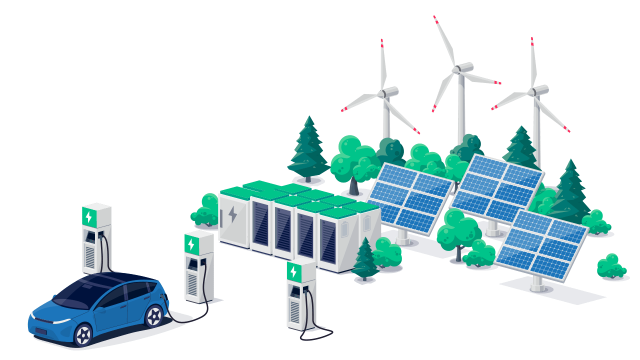
Two-thirds of the 2024 record of $3 trillion invested in energy sources was dedicated to cleantech such as renewables, electric vehicles (EVs), grid storage (batteries) and energy efficiency.

For 2025, estimates of global investments in cleantech range from $2.3 trillion to $3.3 trillion, according to BloombergNEF and International Energy Agency (IEA) respectively.

Renewables progress to-date

In 2024, renewables captured 92% of new global power capacity, adding 518 gigawatts (GW), a 15% increase, bringing total capacity to 4.44 terawatts (TW).  Asia, Europe and North America represented 85% of this achievement.

For the period 2010-2023, solar accounted for 80% of the renewables capacity increase.

Ironically, despite Trump, solar and wind were attributable to 94% of U.S. new power capacity installations in Q1 2025 plus an increase of 20% in domestic solar manufacturing. In California where gas is the principle source of power generation, gas consumption between January and August 2025 was 18% lower than for the same period in 2024.  In those first 8 months of 2025, California solar generation increased 17%.

China alone consistently represents 60% of global renewable energy capacity growth.

India is aligned with its 2030 goal for 2.5 times renewables growth.  This would make India the second largest market for renewable capacity expansion.

The EU renewables capacity is anticipated to amount to 71% of EU electricity generation by 2030.

On a global scale, by 2030, the International Energy Agency (IEA) 2025 annual renewable energy report foresees global renewable capacity to be 2.2 times that of 2022 levels reaching 4.6 TW.

The IEA optimistic scenario suggests 2.8 times growth is possible.

Whatever scenario prevails, it translates into renewable power capacity growing more during 2025 to 2030, than in the previous 5 years.  This would be more than China, EU and Japan existing power capacity combined.

Nevertheless, this would not be enough.  Global renewables investments would have to double between 2025 and 2030 to meet climate and energy targets.

EVs

For 2025. the IEA and Ember estimated EVs came in at more than 25% of the world vehicle market, 20 million units.  That’s a big jump from 2024, for which 20% of global vehicle sales were EVs, 17 million EVs.

This is so despite Trump and Canada’s Mark Carney being instrumental in slowing down EV sales in North America.

Of EVs manufactured in China, 95% are equipped with the more affordable lithium-iron phosphate (LFP) batteries, not requiring the expensive nickel or cobalt.  The absence of cobalt addresses ethical considerations.

Other global EV manufacturers are now transitioning to LFP batteries.  This is a critical development as the battery typically comes in at 40% of an EV’s cost.  Those that don’t get onboard for LFP batteries could experience a “Kodak crisis.”  The transition is a challenge since China now produces 99% of LFP batteries in the world.

Ford is preparing to shift to LFP batteries  and Tesla is already equipping its standard range Model 3 and Model Y with LFP batteries.

Volkswagen’s battery affiliate, PowerCo, is currently considering a shift to LFP.

Yet even LFP batteries may soon be history.  Sodium-ion batteries, which don’t require any critical minerals, are now market-ready.  Up to 2025, sodium-ion batteries have been used for energy storage, but in 2027 China’s CATL will be able to mass produce sodium-ion batteries at a cost less than the LFP versions.  EVs so-equipped will be more affordable than gas-powered vehicles and have good cold weather performance.

With advent of more attractively priced EVs, EV sales will take off as is already the case in China.

And China’s BYD is manufacturing highly attractively priced short-haul heavy duty battery electric trucks.

EVs displaced oil demand by 1.5 million barrels/day in 2024.   Petroleum demand for road transportation is expected to peak in 2027.  Peak passenger vehicle oil demand is projected for 2025.

For 2 and 3 wheelers, peak oil consumption has already been reached.

The exceptions are the U.S. and Canada which are not following global EV sales trends as both countries have abandoned regulations and other initiatives supporting EVs.

 Oil exceeding demand

Between January and September 2025, there was an oil glut or surplus of 1.9 million barrels per day, (b/d). The glut is expected to spiral up to an untenable 4 million b/d 2026.  Yet in September 2025, the supply increased by 5.6 million b/d more compared to the preceding year.

China will heavily influence global supply and demand as it represents 25% of global crude oil imports and, as of 2025, these imports peaked and started to decline.

Promising oil financial results will increasingly be harder to achieve because of a combination of oil prices at an all-time low, the least costly to exploit wells now being spent, and inflation/geopolitics.

For a profitable trajectory, the oil price/barrel must increase 5% annually, but this is not happening.  The breakeven oil price is now $47, and for oil sands, $57.

Renewables displacing natural gas market

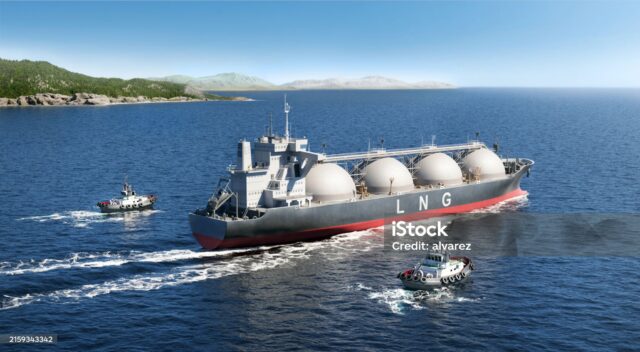
As of 2025, U.S. liquified natural gas (LNG) export terminals comprise 8 currently operating, 8 under construction and another 10 approved, but not yet under construction.  In addition, the U.S. Dept. of Transportation Maritime Administration is reviewing 5 LNG export terminals.

Globally, there is a plethora of liquid natural gas (LNG) export terminals, approximately 230 are in operation or will be fully operational, within the next few years.

The gas demand side of the equation paints a different picture.

China, the world’s largest energy consumer, experienced a 24% decline in natural gas imports in 2024.  Massive deployment of renewables, together with politically motivated imports of Russian gas are behind this.

Japan, Europe and South Korea, which represent half of the world’s natural gas imports, are likely to undergo a 20% drop in LNG use by 2030.

Japan’s gas consumption has dipped 20% since 2018, peaked in 2024, and has since dipped 25% as a consequence of the recommissioning of nuclear capacity.

Japan resells more imported LNG than it uses, 40% of its imports, due to greater domestic renewables and nuclear capacity.   But with declining markets for natural gas, import markets being oversupplied and low prices prevailing, this economic direction is now considered high risk.

For the EU, which is entirely dependent on imports for gas supplies, gas consumption dropped by 20% between 2021 and 2024, likely peaked in 2024.  By 2030, based on 2024 levels, EU gas use may drop another 29% by 2030, and 67% by 2040.

The U.K., Germany and Chile reduced imports of gas and coal by 1/3 since 2010.

In the U.K., electricity generated by imported fossil fuels dropped from 45% to 25% in the last 10 years.

Bulgaria, Romania and Finland, formerly dependent on gas imports from Russia, have reduced gas imports nearly to zero.

Denmark has cut fossil fuel imports more than half.

Japanese LNG consumption peaked in 2014 after the Fukushima catastrophe,

In India, only 2% of power capacity stems from natural gas. The 32% of power generation from natural gas did not produce any electricity.  Consequently, 8% of India’s gas-fired power supplies have become stranded assets.

Pakistan, once a gleam in the eye of LNG exporters, has halted to LNG projects.   Pakistan has engaged in a radical transition to renewables.  During the last two years Pakistan installed 40 GW of solar.  This is extraordinary since its entire power generation capacity in 2023 was 46 GW.

Pakistan now has enough distributed solar power potential to meet all of its needs, including those of isolated communities. Distributed energy now furnishes more energy to the country than power from the grid.

China leading the way

China’s $942 billion investments in cleantech in 2024, was not far off from global fossil fuel investments in that year, $1.2 trillion.  If the value of cleantech production and services are included in China’s cleantech thrusts, it comes to $1.9 trillion in 2024, or 10% of China GDP.

In 2025, up to July, China’s cleantech export earnings were $120 billion, an amount which exceeded the U.S. earnings on fossil fuel exports, $80 billion.  For 2024, earnings from China’s cleantech exports were $180 billion, and U.S. fossil fuel exports, $150 billion.

And, with critical minerals being the pillars of a green transition, it’s hard to keep up China’s green transition.  In this regard, China is the world’s top refiner for 19 of the 20 top minerals and on average accounts 70% of refining market share.

China produces 80% of world solar PV modules and battery cells.

By the end of April 2025, China had 2.02 TW of installed renewables capacity, up from 1.83 TW reached in 2024.

As well, the impressive Chinese cleantech portrait includes 70% of global EV sales and 40% global EV exports. China’s EVs came in at 54% of domestic EV market share in 2025.

On public transportation, China had 48,000 km of high-speed rail at the end of 2024 and will add another 12,000 km by 2030, 50 subway systems with over 10,000 km of track, substantial light rail and had 542,600 e-buses, 84% pure electric, on its roads in 2022.

Heat pumps are massively being deployed in China, replacing coal for household heating.

The cumulative global impacts of these changes are phenomenal.

The result is China is single-handedly reducing global prices of cleantech, EVs and energy storage, thus changing global energy and economic paradigms.

Trump’s enemy within and Canada’s capitulation to fossil fuel sector

The Trump administration views cleantech as an enemy within.

However, the U.S. business community must plan for competitiveness in the global green economy now.  They cannot afford to delay a catch up after Trump becomes history.

Because the cleantech manufacturing in the U.S. entails commitments of billions to the green revolution, it cannot be reversed.  The timelines for construction of new manufacturing plants are measured in years, and supply contracts can span 5 years.

It is Canada that will be the big loser.

Canada’s “national interest” projects are exempt from other existing legislation, according to Law C-5 and supported by Budget 2025.  National interest projects announced so far include the following:

On November 27, 2025 a Memorandum of Understanding (MOU) was signed between Prime Minister Mark Carney and Alberta Premier Danielle Smith, for a new oil pipeline from Alberta to the British Columbia (BC) coast, even though the Canadian government-owned Trans Mountain pipeline from Alberta to the BC coast operates under capacity, cost C$50 billion in subsidies plus Canadian taxpayers contribute C$3 billion/year to operate it.

BC opposes the pipeline.

On December 2, 2025, at a meeting of the Assembly of First Nations in Ottawa, a resolution was adopted objecting to the new pipeline.  One should expect other protests to come from First Nations.

The hope is not strong for private industry promoters to step up to the plate.

The MOU also comprises:

Abolition of the regulation not permitting oil tankers along the BC coast:  At the December 2 Assembly of First Nations meeting, there was an unanimous rejection of ending the moratorium on tankers floating on BC coasts.

Weakening the Alberta the industrial carbon price, the Output-base Compliance System, that is supposed to increase the industrial carbon price per tonne from C$95 now, to up to $170 by 2030: Under the MOU, the parties will review a proposed on a carbon price of C$130/tonne on or before April 1, 2026.

An Alberta waiver from the clean electricity regulations that set limits on carbon dioxide pollution from almost all electricity generation sources, targeting fossil fuels: The regulations provide a mix of compliance flexibilities and do not prescribe specific technological solutions. The MOU exemption, strictly for Alberta, may translate into weakening of Alberta’s agenda to phase out coal-fired electrical generation.  This is nice since Alberta placed a 7-month moratorium on permits for wind energy projects ending February 2025.  Nearly half of the projects that were to go ahead before the moratorium have not been placed back on the table.

While both the clean energy regulation and industrial carbon price policies were carved out for Alberta, other provinces would ask for similar treatment.

The abolition of the cap on oil and gas emissions by 2030:  The cap would have allowed a 16% increase in oil and gas production by 2030-32, relative to 2019.  This magic would be achieved with the application of carbon capture utilization and storage (CCUS) which would supposedly result in a 35% GHG reduction by 2030, based on 2019 levels.  Yet not a single CCUS project has met goals for emissions reduction, costs and timelines.

For the new pipeline, Alberta must support the CCUS project of the Pathways Alliance, an Alliance of the 6 major oilsands producers:

An extension of the timeline on methane reduction, strictly carved out for Alberta.

Support for nuclear power in Alberta.

This MOU is a gift from heaven to Paul St-Pierre Plamondon the populist ethnocentric anti-immigrant leader of the Quebec independence party, Parti-Québecois (PQ).  St-Pierre Plamondon rejects being associated with a fossil fuel state. He considers federalism to be a malicious ideology. The PQ is in first place in the polls for the upcoming Quebec election around October 2026.

Steven Guilbeault, former minister of Environment and Climate Change Canada, afterwards minister of Canadian identity and culture, has resigned as a cabinet minister.

Other national interest projects are presented below:

1) Phase II of the LNG Canada export terminal on the BC Pacific coast;

2) construction of 4 small modular reactors (SMRs) at the Darlington Ontario site, despite SMRs being an unproven technology with poor economies of scale, such that a SMR cost is 5 times the cost of renewables to produce 1 GW of energy;

3) removal of a cap on oil and gas emissions irrespective of the above-mentioned MOU;

4) Pathways Alliance federal support, for a $16.5 billion project, whether or not there is a new oil pipeline;

5) less stringent greenwashing clause in the Competition Act, a regulation that had required companies backup their present and future emission reduction claims, and;

6) the Ksi Lisims Pacific coast offshore LNG project with the terminal to be constructed in South Korea and despite Indigenous opposition to the 800-kilometre Prince Rupert Gas Transmission to transport gas from the northeast BC northwest-Alberta northeast border.

Additional “national interest” projects concern critical minerals, a small northern Canada hydro-electric initiative and a possible BC north coast transmission project. The smorgasbord of projects constitute climate minuses cancelling out the few pluses.

In September 2025, Prime Minister Mark Carney “paused” the 20% for 2026 zero emission vehicle (ZEV) mandate.  The mandate refers to the percentage of ZEV vehicles each manufacturer must sell in a given year.  It had been set for 20% for 2026.

A July 24, 2023 announcement by the former Minister of the environment on the termination of fossil fuel subsidies had so many exemptions, it changed nothing.

The takeaway

To sum up, the oil and gas market will decline, while supply will go up.

The transition to cleantech is unstoppable because of the attractiveness of low prices and energy security that comes with reducing reliance on foreign fossil fuel imports.

Add to that, two-thirds of fossil fuel energy consumed is wasted, or does not contribute to the intended tasks.

Private sector and general public consumers will make the transition to clean solutions when there are price, choice and environmental advantages at the outset.  These transition attributes are enhanced by the absence of the volatility lottery of fossil fuel prices.

Many COP30 participating nations, subnational governments, cities, the European Parliament and others that want a roadmap for phasing out fossil fuel are planning the First International Conference on the Just Transition Away from Fossil Fuels, April 28-29, in Colombia.  This would leave the fossil fuel export nations out in the cold, while preempting blockage of a phase out roadmap.

As for Canada, the “national interest” projects, especially the federal-Alberta governments’ MOU, are mainly fossil fuel initiatives that head Canada towards stranded assets and national disunity.

Economic and environmental policies among most fossil fuel importing countries are aligned for a global green transition. The remaining nations will have to go with the flow.

India: Coal monopolizes, solar goals stymied

123rf

Renewables and Reality

In May 2025, India announced it has raised its renewables target of 500 gigawatts (GW) by 2030 to 900 GW. The Indian government claimed it is on track with 475 GW of installed renewables capacity in 2025, making it the world’s third-largest producer of wind and solar energy.

India’s Nationally Determined Contribution calls for 50% of the country’s energy requirements stemming from non-fossil fuels by 2030.

This where the narrative gets complex.  Renewables are underutilized.  Actual renewables power generation capacity is not reflected in the country’s power market share.

With many unsigned clean energy contracts, and a pipeline for many new renewables initiatives, between April 2024 and April 2025, only 30 GW of clean energy was installed, and coal still generated more than 75% of total output.

Energy Demand

Forecasts are such that India’s energy consumption will quadruple by 2047.

India’s power supply has increased 6% over the past decade while demand rose 5.6%.  This looks good, but this doesn’t consider dreadful heat waves caused by climate change.

Ultra extreme heat waves translating into high demand for electricity, especially for air-conditioning, can account for 50% of a household’s energy needs,

For India at-large, peak demand occurred at 250 GW in May 2024, an increase of 46 GW from the previous year.  This trend suggests energy demand could increase 50 to 80 GW by 2027. Despite India’s 2027 new capacity plan for 100 GW of renewables 28 GW of thermal and 13 GW of hydroelectric, this would still leave 20-40 GW of power shortages or about 8-12% as of 2026.

The good news is that solar costs are going down, so much, as to compete with coal.

Too, while thermal and hydroelectric plants have construction timelines of 5-8 years, solar projects can be completed in 1-2 years.

Coal remains on top of the power pyramid

In 2024, India’s power from coal and lignite thermal plants rose 5%, hitting a record of 1,357 billion kWh, up from 1,293 kWh in 2023.

Coal represents 79% of power sources and a 42% increase in coal production is planned for next 5 years.  The goal is to raise coal-fired power supply by 80 GW by FY 2031-32.

India has the second largest coal-fired fleet in the world at 240 GW of installed capacity.  In 2024, 100 GW of new coal-fired generation had been proposed or was under construction.

Fossil fuels has accounted for two-thirds of power capacity expansion.

Industry’s coal stakeholders reflect mixed signals.

Tata Power, India’s largest private power producer, had announced in 2021 that it would not be building any new coal plants.

In 2025, Tata divulged the construction of its first coal plant project in 6 years, since acquiring Prayagraj Power Generation Co Ltd (PPGCL) in 2019 through a joint venture.

Adani, one of the largest coal producers in India, in 2020, was a new player in the Indian solar market with the creation of Adani Green Energy Limited (AGEL).  AGEL aimed to have 25 GW of installed renewable energy by 2025.

In 2025, Adani power secured a $2 billion contract from the state-run Uttar Pradesh Power Corporation Ltd. for a 1,5 GW for a supper ultracritical coal power plant  Utter Pradesh estimated it will require 11 GW of thermal power by 2033-34.

Compounding the coal challenges, India is the world’s second largest producer of steel and the industry uses coal for steelmaking.  The steel sector relies on imports for its coking coal requirements.  Australian exports represented 53% of Indian coking coal supplies.

Though India has the fifth largest coal reserves in the world, it has to import coal to meet its needs!

Coal generation is projected to substantially increase until 2030 even if its share of installed capacity declines over this period.

India’s economy is expanding quickly while domestic coal is abundant and cheap, including low upfront costs.  India is the second-biggest coal consumer, behind China.

India relies on coal to improve the living standards of its population.

 Renewables Capacity and market share not the same

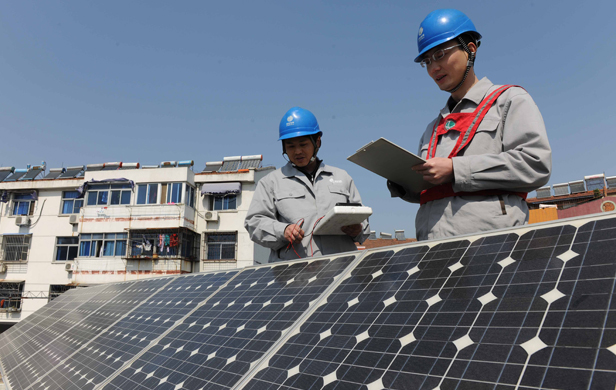
India is the third largest generator of solar power with more than 100 GW of capacity, behind China, the U.S.  This is quite the leap from 2014 when India only had 2.82 GW of solar capacity.

With solar prices continuing to decline, solar may appear to be taking on coal dominance in India, with a 100.33 GW of new capacity for FY 2024-25, up from 66.78 GW in FY 2022-23.

In the 2025 solar pipeline comprised 84 GW is under construction and 47.5 GW is out for tendering. Between 2018 and 2024, India added 113 GW of new power capacity, more than two-thirds from renewables, 88 GW, mostly solar coming in at 77 GW.

Why is it that between April 2024 and April 2025, 30 GW of clean energy was installed, but coal still generated more than three-quarters of total output.

Renewables use expansion is colossally impeded because India’s renewable energy sector has been experiencing many hurdles in 2025, including weak demand for tenders;land acquisition issues for projects; power agreement delays; grid integration complexities; minimal energy storage capacity; and project cancellations.

Especially noteworthy, the cost of capital for grid-scale renewable energy in India is 80% higher than in advanced economies, though low compared to emerging and developing economies.  The latter impacts on real and perceived risks for projects.

If matters would be going according to the national government’s plan, coal would represent 55% of India’s power market by 2030.  But will this be the case?

Renewables haven’t replaced coal, rather it has supplemented the power supply to keep pace with increasing electricity demand.

True, wind has progressed slowly, now representing 10.3% of the country’s capacity.

India is trying to incentivize solar tech manufacturing with its National Manufacturing Mission introduced in 2023.  The program has supported 48 GW of module manufacturing capacity.

One of the incentive success stories on solar tech domestic manufacturing is that of Tata Power’ s subsidiary, TP Solar.  TP Solar has a 4.3-GW solar cell and module manufacturing facility in the state of Tamil Nadu in southeast India.  This is the largest such facility in India.

Another beneficiary of the national program is Jupiter Renewables with a $231 million cell and module plants with production capacities of 4.2 GW and 3.6 GW respectively.

Most of the new projects planned support rural economic growth including job creation.

Energy Storage

India is barely implementing energy storage policies, energy storage being a nascent solution at this point.

Shortfalls can be avoided in the immediate future should India install and utilize 50 GW of new solar capacity with 15-30 GW of energy storage.

Unfortunately, only 4.86 GW of energy storage capacity was in place in India in December 2024.

India obviously needs to put its weight behind standalone energy storage systems. (SESS)

Accordingly India put out 11 tenders for 6.1 GW of SESS in Q1 2025.    This capacity surpassed energy storage tenders in 2024.  An incentive in the form of Viability Gap Funding (VGF) offers 30% support for standalone battery ESS capital expenditures.

Persistent execution and commercial bottlenecks have sabotaged the tenders and new funding.  Delays and cancellations of power sale and storage agreements, often associated with falling battery prices, are major obstructions.

Other barriers are inadequate battery supply chains, manufacturing and financing.  Battery cell manufacturing capacity is limited and depends on imported lithium and cobalt.  Refining and commercialization timelines and affordable financing constitute further roadblocks.

No wonder, awarded capacity of 6.4 GW had been cancelled.

With both solar and storage costs declining rapidly, moving quickly on combined solar and energy storage capacity is the rationale option.

While battery manufacturing and supply chains in India manufacturing leaves much to be desired, global battery manufacturing overcapacity will keep battery energy storage system (BESS) prices low until 2030.  More than enough low-cost BESS are on the market to meet India’s immediate needs.

Energy storage capacity in India in December 2024 was merely 4.86 GW.  For 500 GW of renewables capacity, India would require 364 GW of solar and 121 GW of wind, necessitating 73.93 GW/411.4 GWh of storage capacity.

India’s Ministry of Power issued energy storage guidelines which will be mandatory for future solar projects, but does not apply to existing solar installations.   This advisory applies to all power distribution companies and renewable energy implementing agencies (REIAs) to have a minimum of 2-hour located energy storage systems equivalent to 10% of solar capacity installed for all future projects.  The intention is to both address intermittence from solar sources plus electricity prices to ensure reliability of grid supply and reduce dependence on peak hour sources.

Distribution licences would include storage capacity guidelines for rooftop solar as well.

The takeaway

Should India be able to align renewables capacity targets with power market share, this would be a good news story.

Multiple bureaucratic, project and private sector cognitive dissonance impede renewables from having impacts such that coal would no longer occupy over 75% of power output.

Renewables have not replaced coal, rather it has contributed to the extraordinary additional power India requires for its needs.

These challenges are compounded by failure to beef up energy storage capacity to maximize the delivery of power from intermittent renewable energy sources.

Too many problems to solve, the renewables political hype doesn’t deliver.

Should India miraculously overcome the obstacles for a green transition, the country would concurrently become energy self-sufficient and tackle climate change.

That India is in second place as a global leader in solar power installed capacity is obviously insufficient.

China green shift global impact greater than COP

Expectations for COP29 in Azerbaijan, based COP28 in the United Arab Emirates?

The light getting in though the cracks is few countries are immune to competition with China’s sweeping expeditious green transition.

China’s brisk energy transition intentions are three-fold, decarbonization of its economy, domination of global clean tech manufacturing and reduced dependence on imported fossil fuels.

Renewables

The COP28 final statement calls for a tripling of renewables capacity by 2030.  China had an objective to triple renewables capacity by 2030 too, but China will reach its 2030 renewables capacity target in 2025, 1,2 TW (terawatts). The country will continue to increase capacity sharply thereafter.  By 2030, the forecast is for China is to hit 3.9 TW.  The aforementioned COP28 global ambition was for 11 TW by the end of the decade.

According to the IEA, China now accounts for 60% of global renewables capacity installed in 2023 and this will carry over into 2024.  The expansion of capacity is outpacing rising demand.  For 2023, China investments in renewables will attain the summit of US$177 billion.

For 2023, BloombergNEF projected China solar capacity additions to reach 208 gigawatts (GW), twice the entire U.S. solar capacity.

China’s new wind and solar capacity installations for 2023 may amount to 300 GW, astronomical compared to the global capacity increase of 338 GW in 2022.

By September 2023, total installed wind and solar capacity was 400 GW and 520 GW, respectively.  To put this in perspective, Hydro-Québec, one of the largest utility companies in North America, has a total production capacity of 47.5 GW.

All together, China is installing 20 GW of wind and solar per month.

By the third quarter of 2023, 53% of China’s power sources were wind, solar, hydro and nuclear.  That’s a giant leap from 2011 when coal accounted for 80% of the country’s power supply.

The scale of some of the renewables projects is staggering.  The Golmud Solar Park in Qinghai, the world’s largest solar park, has a capacity of 2.8 GW with 7 million solar panels spread over sands.  Even that is just the beginning.  The plan calls for expanding this park 6-fold in the next 5 years.

In 2022, plans were announced for 500 GW of onshore solar and offshore wind projects for Gobi Desert across Xinjiang, Inner Mongolia, and Gansu provinces.

To transport gargantuan new capacity, ultrahigh-voltage (UHV) lines projects are eye-popping.  State Grid Corp of China, the country’s largest State-owned utility, has started construction on 13 UHV lines covering 30,000 km.

China catapults economy-wide electrification

China is electrifying its economy at a mind-boggling rate, with 1.1 million electric buses and trucks; two-thirds of the global market for light EVs; electric subways and light rail; and 42,000 km of electric high speed passenger and freight rail.

Consequently, China’s Sinopec, a large petroleum refiner and distributor, anticipates peak gasoline will occur in 2023.

Coal

China’s electric power carbon emissions will peak in 2023 or 2024, ahead of the 2030 target, plateau for a while, and then enter an exponential decline.  This is attributable to mindboggling increases in renewables capacity, and an uptake in hydro capacity.

True, China has the world’s largest coal power plant fleet.  Yet, the opening of 2 coal plants per week or 106 GW of new power plants in 2022, responds to peaking requirements only.  While China reached 1,100 GW of coal power plants functioning in 2022, 775 GW of operational coal plants were shut down or were projects that never made it to construction.

Consequently, coal plants in China on average run 50% of the time.  Carbon Tracker has divulged that 40% of China’s coal plants are losing money.  The 5 major state-owned coal power plant companies are also experiencing heavy losses.

The capacity usage will fall further to 25% over the next two decades.

These contradictions are largely the result of provincial governments supporting their local coal enterprises and jobs.

A forthcoming plateau in infrastructure projects translates into less coal for cement production, a 2.7% reduction in 2023 and 61% reduction by 2036.  Likewise, petrochemical and aluminium production drops will contribute to lower demand for coal.

These factors should result in a decline in coal demand by 2024, as alluded above.  Not only many coal plants permitted up to 2023 will never get built, but also many existing coal plants will become stranded assets.

In China, likewise for Europe and India, 90% of coal plants will be uncompetitive by 2025.

EVs

The BloombergNEF Electric Vehicle Outlook 2023 reported that EV growth rates for 2022 were 62% world-wide and 95% in China.

In 2022, China had 600,000 electric buses on the road, at least 99% of the world total.  That year, it manufactured 138,000 e-buses for the domestic market.

There were 400,000 electric trucks on China’s roads in 2022.

China’s rate of light-duty EV growth is 4 times that of the U.S.  Total EVs sold in China are greater than in the rest of the world.  For the end of 2023, it is projected plug-ins will have reached 38% of sales.

Too, China is now the world’s largest exporter of EVs.  For 2022, exports from China acquired 11% of the European market.  An irony of sorts, Tesla’s Shanghai factory is China’s largest EV exporter.

North America is vulnerable to an invasion of EVs from China too.  China’s BYD will soon launch the BYD Seal in North America to compete with the Tesla Model 3.  Other Chinese EV brands are planning international expansion.  By contrast, North American EV and battery investments related to the U.S. Inflation Reduction Act and Canada’s Budget 2023 await production start-up dates.

Fascinating is the electrification of the three-wheelers for which China and India account for 90% of the global fleet.   There were 117 million 3-wheelers on the roads in the world by 2022, 70% of which were electric, though most with lead-acid batteries.  That jumps to 300 million if two-wheelers are included.

The 3-wheeler sales in 2022 were over 12 million units encompassing a major migration to lithium-ion batteries.  For the short-term, it is the two- to three-wheelers that will generate a noticeable decline in oil consumption.

The global share of EVs in two- and three-wheeler sales increased from 34% in 2015 to 49% in 2022.

Clean tech manufacturing

China has 9 of the 13 largest solar manufacturers in the world and 7 of the top 10 global wind manufacturers are in China.

Solar panels production was 310 GW in 2022; were about 500 GW for 2023; and 1000 GW in 2025, the latter 4 times the output worldwide.

Energy storage battery capacity to accommodate intermittent renewables power will go from 550 GWh in 2022; to 800 GWh in 2023, and 3,000 GWh in 2025.

By early 2022, China accounted for 80 percent of global battery production capacity.

China had 125 battery factories in 2022 and more than double are in the planning or construction phases  This despite, China having only 10% of lithium raw material, while Australia has 50%.

Lower battery prices give China an EV edge in global markets.  The average price of a Chinese EV battery is US$26,500.  That is one third of the transaction price in Europe and half that of the U.S.

An astonishing next generation battery head start is that of China’s BYD breaking ground in January 2024 for the first sodium-ion gigafactory, a technology still in the development stage for most. Sodium-ion batteries are composed of abundant iron and sodium, free the more expensive lithium plus nickel, cobalt and graphite.  This technology replaces lithium cathode material and can be combined with hard carbon anode.  It is less vulnerable to cold weather.  BYD will initially use these batteries for scooters and micro-vehicles.

Also, China’s leadership comprises a long-term view, having issued rules that all battery powered vehicle manufacturers must be responsible for battery recycling.  The policy also directs that the design of batteries facilitates recycling.  China is experimenting with a battery recycling framework.

Decarbonization

By far, China dominates global industrial production, 61% of global steelmaking, 57% aluminium manufacturing and 52% cement output, collectively more than half of global production.  The chemical and paper sectors represent 40% of the global share in these sectors.

China’s wide array of state-owned enterprises (SOEs) are pillars for backing a decarbonization goal under the umbrella of China’s 14th 5-year plan.  Under this plan, carbon neutrality will be accomplished by 2060, CO2 emissions will peak by 2030 and 50% of increased energy consumption will stem from renewables by 2025.

As for energy SOEs, they are immune to the straitjacket of oil and gas companies, incapable of changing their increased fossil fuel trajectories.   In this regard, SOEs are diversifying their portfolios, with a strong push for renewables and massively investing in research and development and innovation of clean technologies.

Belt and Road Initiative (BRI)

BRI is by far the most ambitious global economic development program involving over 115 countries.

From 2013 to 2022, fossil fuel infrastructure accounted for two-thirds of BRI power sector investments.

In September 2021, China announced it will not support new coal plants abroad, though not all new coal projects were shut down.

China has since established the BRI International Green Development Coalition with 134 international partners.  UN Environment will facilitate BRI recipients to achieve UN Sustainable Development Goals including green finance and energy, plus energy efficiency.

For the first half of 2023, 56% of the US$12.3 billion in BRI energy investments were allotted to renewables.  Colour coded prioritization of projects favours green ones. 

At COP29 in Azerbaijan, November 2024, China let it be known that since 2016, it invested $24 billion in developing countries.

China emissions to-date 

There are those who suggest China must act first before their own countries take action on climate change and China is addicted to coal.  China is acting first, leaving no excuses for the climate naysayers.

Granted, China emitted 31% of global emissions, 11,397 metric tonnes (Mt) in 2022.  This is more than twice as much as the U.S. for 2022 at 13.6%, with 5057 Mt.

This does not tell all.  On a per capita basis, China’s emissions are half that of the U.S.  Since 1751, China is responsible for  half the cumulative emissions as the U.S.

But this is history, China is migrating into a green transition quicker than most can assimilate.

The takeaway

The U.S.$369 billion Inflation Reduction Act (IRA) which is spurring a tsunami of investments in clean tech plus manufacturing of EVs and batteries is largely about closing the green economy gap with China.  One year after the IRA passage, in August 2023, private sector investment announcements in U.S. clean tech projects totaled up to US$278 billion and 170,000 jobs.

The domino effect on the European Union is such that it is exploring how to close the clean tech investment gap with the U.S.  The EU “lost” its solar industry in favour of China, European wind manufacturers are struggling to compete with lower cost Chinese turbines and 11% of the European EV market is represented by Chinese imports.

China’s march to dominate the green economy suggest a green transition will become a global competition imperative.

China will change the course of the global energy geopolitical titanic.

By contrast, the exclusion of reducing fossil fuel production in the COP28 final statement is not a milestone.

Big Oil, renewables, electric vehicles + clean tech: Fossil fuel windfalls

Wind, solar, storage + electric vehicle

Prior to the Russian barbaric invasion in Ukraine, announcements made by the oil and gas majors seemed to imply they were engaged in energy diversification.  This diversification has been typically presented as that of increasing the proportion of their assets in clean technologies while reducing the exploitation of fossil fuel reserves.

Now, with the oil and gas companies earning windfall profits linked to the Ukraine war, inflation and European urgent short-term requirements for fossil fuel sources substitutes, the real truth is coming out.  High fuel prices have revealed opportunist short term thinking prevails over lofty long-term goals.

China: Largest emitter to green gamechanger, but…

China climate emergency global influence

China is several years ahead of other developed countries on the migration to a green economy, in clean technology production capacity, massive market penetration and green investments. China already has an extraordinary global green export potential. China leads in renewables, electric vehicles and battery production, incrementally regulating plastic solutions, high-speed rail, private clean tech investment, government environmental support and green bonds.  China’s concurrent climate actions are gamechangers destined to have huge global competition impacts on energy, economic, transportation, industrial and other paradigms, perhaps more so than the climate crisis.  But there are simultaneous contradictions. China is the world’s largest liquified natural gas importer, once again ramping up coal production and certainly not a leader on human rights.

Putin losing energy war: European climate emergency

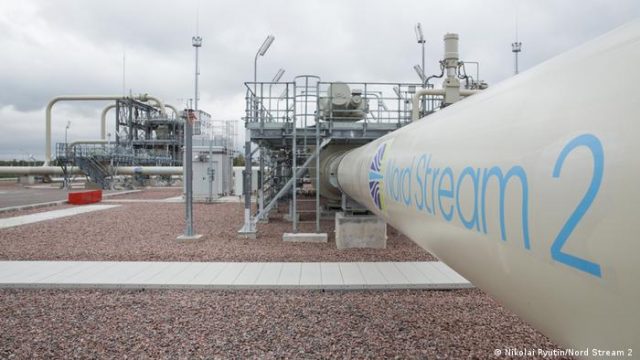
Nord Stream 2 gas pipeline padlocked

Putin’s war has created an electroshock for Europe because it depends on fossil fuel imports for 60% of its energy, one-third of which comes from Russia.  Organically evolving European Union (EU) plans target 2027 for a massive and rapid transition to a green economy and energy independence.  Renewables, electric vehicles, clean technologies and energy efficiency will all play major roles in the creation of fast-forward paradigms for global emulation.  For the immediate, by the end of 2022, EU plans entail cutting Russia gas imports by two-thirds, substitution fuel sources plus ramping up renewables and energy efficiency.  These EU plans will be devastating for the Russian economy.  Russia needs European oil and gas revenues more than Europe needs these fuels.

Green hydrogen, no panacea: Deep dive

Green hydrogen offshore wind powered

Green hydrogen, produced with electrolysers to separate hydrogen from water, uses clean energy as a power source.  Green hydrogen will not be with cost competitive with grey hydrogen for some time, perhaps not until 2030.  Grey hydrogen, derived from steam reformation of natural gas, represents 98 percent of global hydrogen consumption, and is primarily used for industrial processes.  To replace grey hydrogen with green hydrogen would require a doubling of global electricity generation with primarily solar and wind sources.  This would pre-empt the use of renewables for electrical power, with energy losses totaling up to 75% when green hydrogen is reconverted into electricity!  The result would be more use of natural gas for power production.  And there are extraordinary inefficiencies and technological challenges for green hydrogen use, while there is no shortage of affordable and efficient clean technologies alternatives.  Nevertheless, US$30 billion has been committed to-date for green hydrogen through government stimulus packages.  Is green hydrogen a fossil fuel industry trojan horse for gas derived hydrogen and the use of gas for electrical power?

Shipping sustainability: Oxymoron but paradigm to change

Container ship powered by dirty oil, updated April 27, 2023

Cargo and cruise ships represent 2.6 percent of global emissions and could reach 17 percent by 2050.  Nearly all these ships use cheap dirty heavy oil with high sulphur content.   International regulations aren’t helpful as they are lax and difficult to enforce.  Fortunately, Maersk, the largest container shipping company in the world, has created the conditions for an industry-wide sectoral revolution by setting 2040 as a target to achieve net-zero emissions, requiring all new vessel acquisitions be carbon-neutral and has already ordered 12 green methanol powered ships.  Concurrently, many new technological solutions are under development including ones associated with electric, wind and biofuel energy sources.  Stringent territorial waters and docking standards, Maersk technological catalysts, financing of emerging remedies, could advance clean technologies quickly.  Finally, open-loop scrubbers are widely used as a band-aid to remove sulphur from the exhausts to transfer the pollutants into the sea.

Investing responsibly, in the Canadian green economy, not easy: Policy solutions

Canada compares poorly in buttressing clean tech firms.

Reliable standards for environmentally sound investments do not exist and very few Canadian clean tech firms are listed on a stock exchange.  Too often, Canadian clean tech firms must go outside Canada for financial support and/or to enter the stock market.  This article presents solutions for investors and clean tech companies alike, but these solutions require government action. 

Green economy: Financial sector zigzags

Green financing improves but has a long way to go

BlackRock, the world’s largest investment firm, has indicated that those that don’t tackle climate change will lose money in 5 years. Some financial institutions have made multi-trillion commitments from now to 2030 to invest in the green economy while still focusing the majority of investments in fossil fuels. Canadian banks are among the global top fossil fuel investors.

Fossil fuel sector contrasts: Green transition engaged, but not enough

Not all fossil fuel companies the same

Not all Big Oil firms are alike. Some are engaged in a rapid green migration, many are sitting on the fence and others are still in climate denial. Meanwhile, the value of fossil fuel assets are declining but the industry is camouflaging this by selling assets and debt financing to keep shareholders happy.

Green jobs see huge growth globally: Why is Canada missing out?

There are those like Stephen Harper who repeatedly say we must choose between economic development and sustainable development.

And there are those who, concerned about the environment and the latest reports from the International Panel on Climate Change, suggest that economic development and sustainable development should be reconciled.  Countries such as Germany are often cited as cases in point.  Most environmental organizations fall into this latter reconciliation category.

China’s chaotic leap forward to a green economy

When most people talk of China and its environmental and energy challenges, they tend to paint a very bleak picture.  While this view is historically justified, things are changing fast in today’s China.

Criticism of China’s environmental record has been traditionally well-justified. After all, China:  1) displaced the US as the world’s largest energy consumer as of 2009 – doubling its energy consumption between 2000 and 2009; 2) produces the world’s  highest pollution levels, with 16 of the top 20 most-polluted cities in the world being in China; and 3) now has total annual vehicle sales higher than that of the US.

Canada’s Green Economy needs public investment

Both the Intergovernmental Panel and Climate Change and the International Energy Agency have concluded that public policies, rather than the availability of resources, are among the key determinants for a shift from fossil fuels to clean technology development and deployment.  Public banks are critical agents for change along these lines.

Public financial institutions and the green economy around the world

Starting with some of the largest public banks, in July 2013, both the World Bank and the European Investment Bank announced that they will limit to the bare minimum investments in fossil fuel projects, while shifting the lion’s share of their respective energy investments to renewables.